



















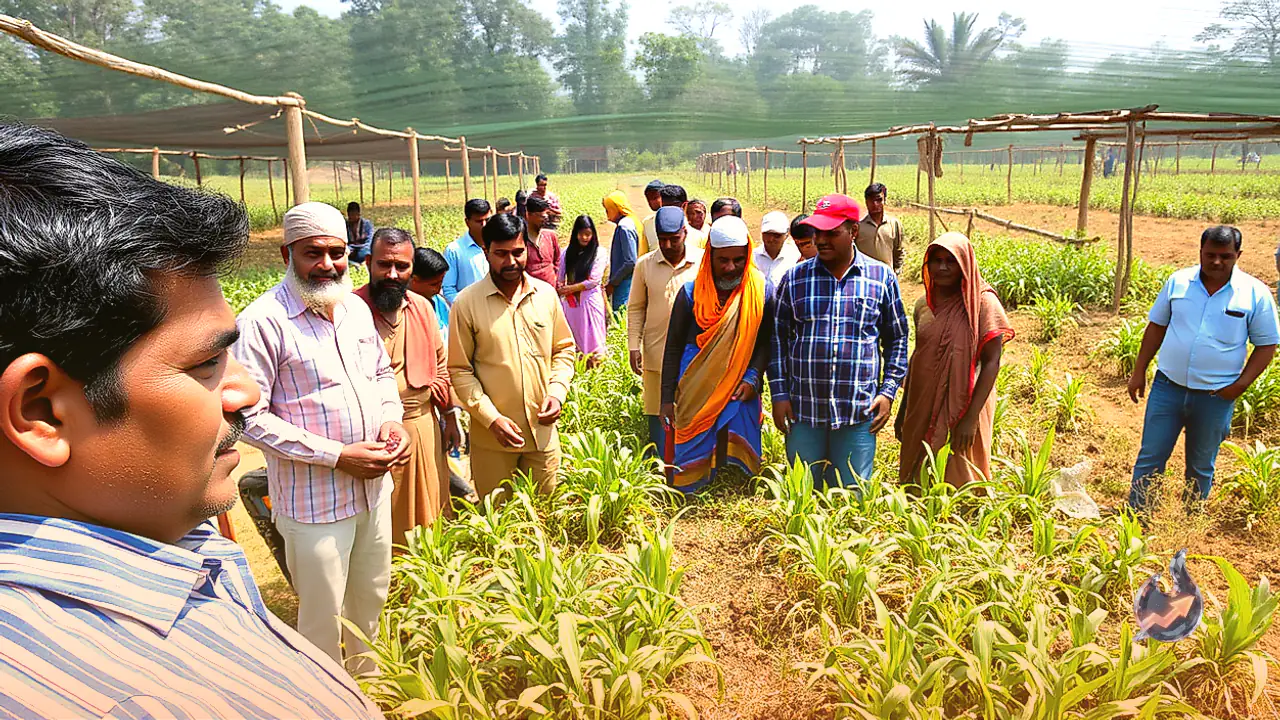

Farming in Bhojpur district has traditionally revolved around conventional crops such as paddy, wheat, and maize. However, breaking away from the standard routine, a successful trial of makhana cultivation has been carried out for the first time in the district through the Krishi Vigyan Kendra. This innovative step has opened new horizons for local farmers, offering them an alternative agricultural option. The crop, which was planted back in February, has now fully matured, and preparations for harvesting are actively underway. This breakthrough has given a fresh direction to agricultural possibilities in the region.
A Successful Experiment Across One Acre
The makhana cultivation trial was conducted over a one-acre plot at the Krishi Vigyan Kendra facility. Initiated in February, the project has now reached its final growth stage, with the crop fully prepared for harvest. Because this marks the first time such a crop has been grown on a commercial scale in the area, the journey has provided crucial insights for agricultural experts. The robust growth of the crop indicates a strong potential for expanding this farming practice among local cultivators in the near future.
Providing New Alternatives for Farmers
With rising cultivation costs, unpredictable weather patterns, and shifting market demands, crop diversification has become increasingly essential for farmers. The introduction of makhana in Bhojpur is not merely an experiment in growing a new crop, but a strategic initiative to link farmers with alternative livelihood options. Nevertheless, experts note that before adopting this on a massive scale, various aspects such as production costs, harvesting techniques, processing requirements, and market access must be carefully evaluated to ensure sustainable profits.
Insights From Agricultural Scientists
Dr. A.K. Maurya stated that makhana farming was attempted in Bhojpur district for the first time and has yielded remarkable success. The crop grown on the one-acre area has developed exceptionally well, and harvesting is the next immediate step. This trial has greatly helped in understanding how local climatic and geographical conditions support makhana production. Moving forward, the practical knowledge gained from this experience will be utilized to formulate expansion plans and encourage more farmers to adopt this crop.
Harvesting and Processing Learnings
The conclusion of this one-acre pilot project paves the way for harvesting operations. Since this is the inaugural attempt at growing the crop locally, the harvesting phase and the subsequent processing procedures will reveal critical practical data. These insights will prove invaluable in streamlining production and guiding farmers through the intricacies of makhana processing in subsequent seasons.