























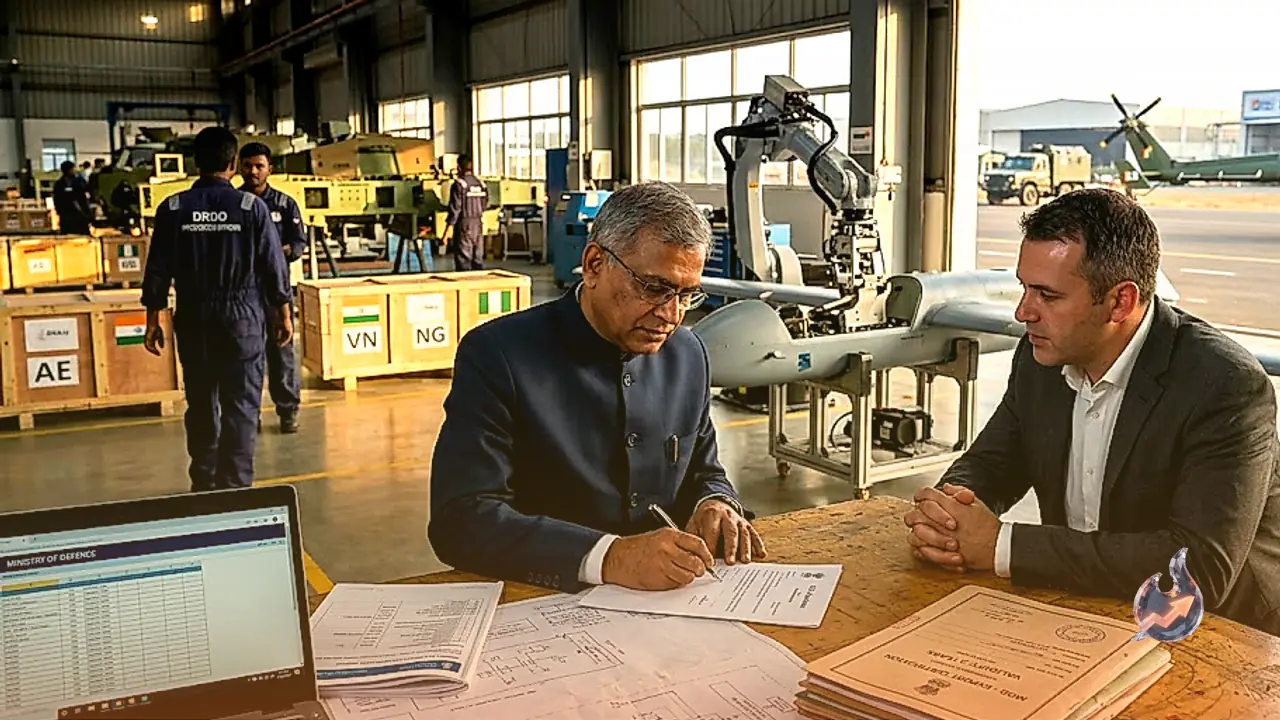

The Government of India has introduced a comprehensive overhaul of its defense export framework to strengthen the nation's footprint in the global military marketplace. The Department of Defence Production, operating under the Ministry of Defence, has thoroughly streamlined the Standard Operating Procedure (SOP) and Open General Export License (OGEL) mechanisms. This policy reform aims to eliminate bureaucratic hurdles for domestic defense manufacturers, particularly entities in the Micro, Small, and Medium Enterprises (MSME) sector, facilitating seamless international sales of military hardware and components. Spearheaded by Defence Minister Rajnath Singh, these measures remove the requirement for companies to secure separate government approvals for every individual shipment, significantly expediting participation in international defense tenders and global exhibitions.
Streamlining Paperwork and Consultation Norms
The revised guidelines issued by the Department of Defence Production eliminate regulatory bottlenecks that previously slowed export timelines. Under the simplified framework, Indian exporters are no longer required to seek separate inter-ministerial consultations for shipping non-lethal defense items to most partner nations. This shift allows domestic manufacturers to fulfill international orders without procedural delays, ensuring timely delivery to foreign buyers.
Furthermore, the government has eased permissions required for participating in foreign tenders and hosting displays at international defense expos. Indian defense firms can now showcase their systems, weapons platforms, and technological innovations at defense exhibitions across the globe with minimal administrative friction. This heightened presence is expected to enhance the global visibility and commercial viability of Indian-made military hardware.
Single-Window Integration and Extension of OGEL Validity
To establish a cohesive regulatory environment, the Ministry of Defence consolidated the Open General Export License (OGEL) system into a unified single-window framework. Previously, defense exports were categorized under three distinct approval channels covering major military platforms, components/spares, and technology transfers. The updated framework merges these three separate channels into one integrated licensing portal.
Along with structural integration, the government extended the operational validity of the OGEL from two years to three years. This additional year reduces the administrative burden of frequent license renewals, saving operational costs and time for defense enterprises. The extended tenure provides companies with greater predictability, enabling them to execute multi-year supply contracts with international clients effectively.
Expanding Reach Beyond 41 Countries to Global Scale
In another major shift, the geographic scope of the OGEL facility has been expanded significantly. Previously restricted to 41 designated nations, the license now covers nearly all global markets, excluding countries under United Nations sanctions or regions classified as sensitive. This expansion unlocks new market opportunities for Indian defense exporters across multiple continents.
Additionally, Indian companies holding long-term supply agreements with foreign Original Equipment Manufacturers (OEMs) will receive special export clearances. This provision is designed to integrate Indian manufacturers more deeply into global defense supply chains, enabling domestic firms to act as tier-1 and tier-2 suppliers for major international defense contractors.
Rules for Civilian Security Gear and Small Arms Components
The amended policy also permits the export of select components for small-caliber arms alongside security gear intended for civilian applications. Opening these categories allows Indian manufacturers to tap into legitimate international commercial and civilian security markets, broadening their revenue streams.
The Ministry of Defence clarified that regulatory relaxation does not imply any dilution of national security standards. Stringent oversight, physical verification, and strict scrutiny will remain active for sensitive defense hardware, lethal weaponry, and strategic technologies. The primary goal of the policy remains the elimination of red tape from low-risk defense items while maintaining absolute security protocols.
Record High Defense Production and ₹50,000 Crore Export Target
These policy measures coincide with unprecedented financial growth across India's domestic defense industrial base. In Financial Year 2025-26, total defense production in the country reached a record figure of ₹1.78 lakh crore (₹1,78,000 crore), reflecting rapid strides in domestic manufacturing capacity.
Parallelly, India's defense exports achieved a historical peak of ₹38,424 crore. With the implementation of these streamlined SOPs, extended license validities, and expanded market access, official projections indicate that India's defense exports are positioned to cross the ₹50,000 crore threshold in the coming years.