






















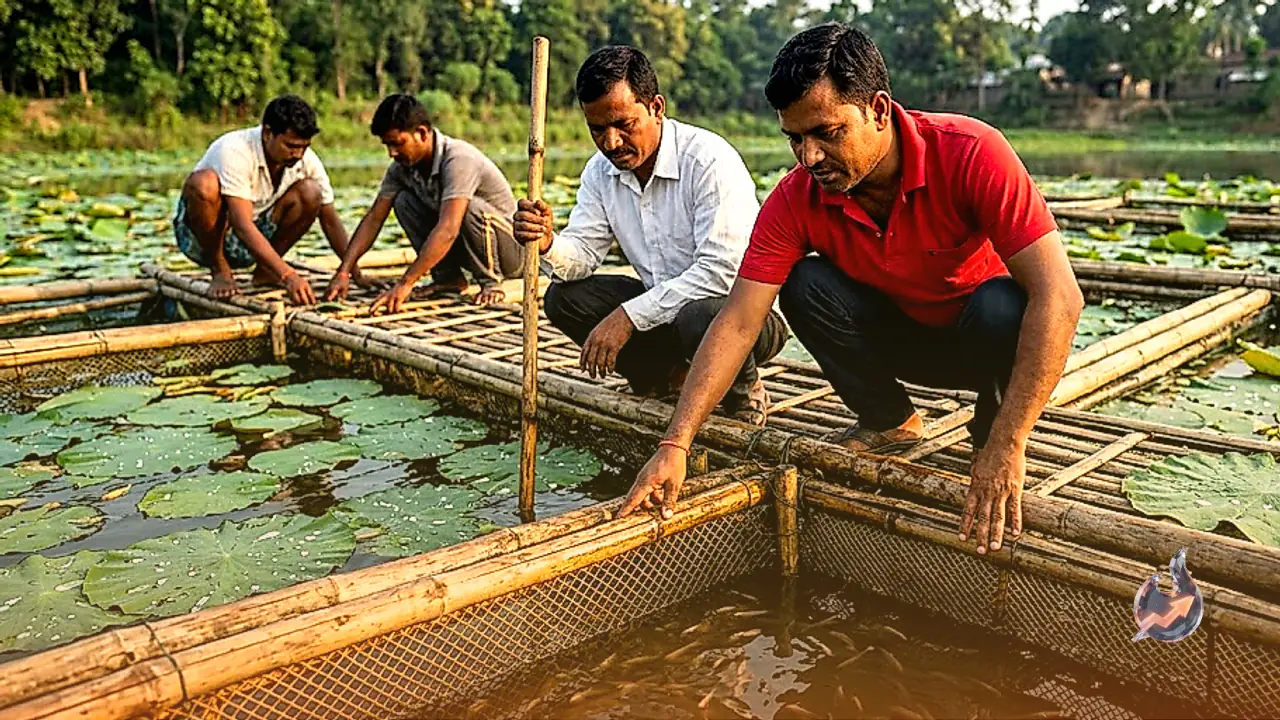

Farmers in Bhojpur are increasingly embracing modern techniques to maximize their agricultural returns. Moving beyond traditional farming, they are now leveraging their ponds for dual-purpose production, allowing them to generate income from two different sources simultaneously. The cultivation of makhana, which was once largely restricted to the Mithilanchal region, is now rapidly gaining popularity across various other districts. When managed with precision, this integrated approach of farming makhana alongside fish cultivation can prove to be highly profitable for the agricultural community.
Managing Dual Crops in One Waterbody
The concept of combining makhana production with aquaculture has become a financial success story for many farmers. Fisheries officer Krishna Kanhaiya has highlighted four fundamental guidelines that must be followed to ensure that this integrated farming model yields high output without resulting in losses.
- Selecting the Right Fish Variety: It is critical to choose fish species that naturally inhabit the middle or bottom layers of the pond. This ensures that the fish do not interfere with the makhana plants growing on the surface.
- Allocating Space: If a farmer operates a one-acre pond, it is necessary to keep a designated area of 20 by 20 feet vacant. Alternatively, the farmer can leave two separate patches of 10 by 10 feet empty.
- Technique of Bamboo Enclosure: This vacant area should be properly fenced off using bamboo. This barrier prevents makhana from growing in that specific spot, allowing fish enough space to surface and breathe without causing damage to the plants or themselves.
- Avoidance of Pesticides: The use of chemical pesticides in makhana fields is strictly forbidden. These chemicals are lethal to fish, and their application can lead to significant stock loss. Since fish naturally consume the pests found on makhana crops, the need for chemical intervention is entirely eliminated.
The trend of pond-based integrated farming is spreading rapidly. If farmers adhere to these guidelines with careful planning and consistency, they can successfully secure substantial profits from both fish and makhana production simultaneously.