





















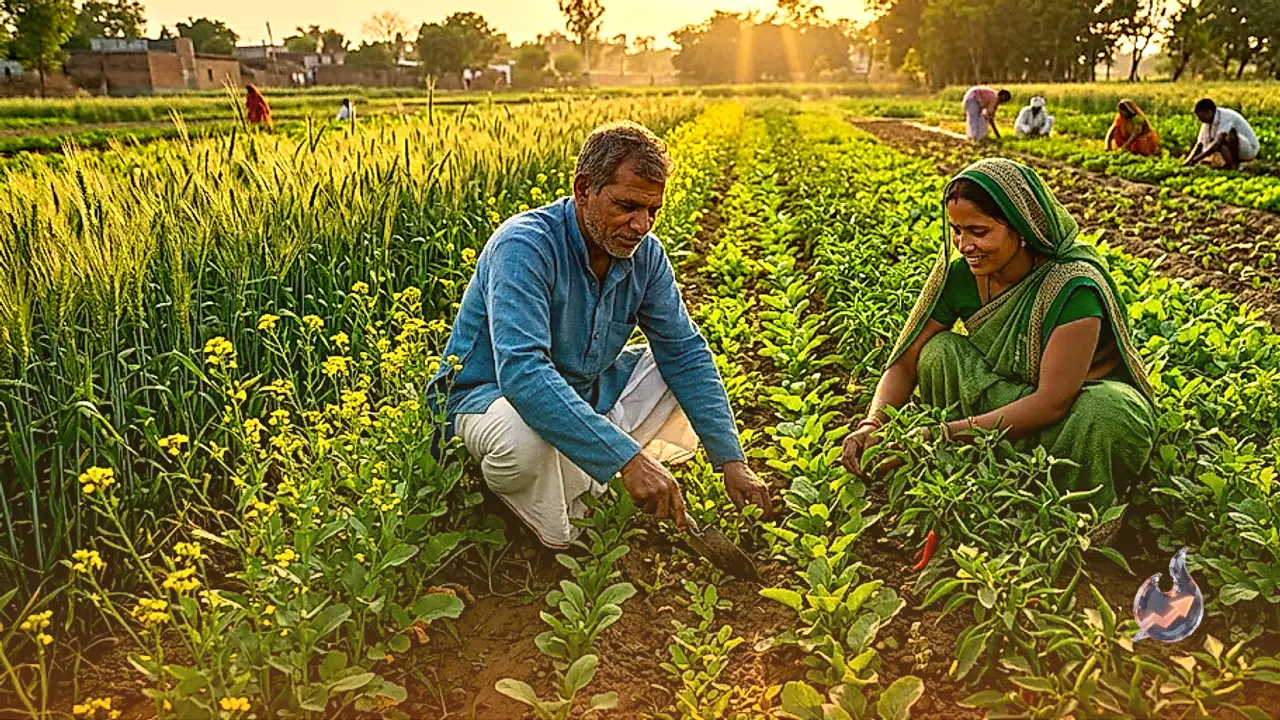

Agricultural practices are undergoing a significant transformation as farmers seek new methods to achieve higher yields and better financial returns from limited land resources. In the Gonda district, a distinct technique known as 'Panchratna' farming has emerged as a successful model. Under this innovative approach, farmers cultivate five different crops simultaneously on the same plot of land. This strategy not only promotes crop diversity but also significantly minimizes the financial risks typically associated with mono-cropping.
The Success of the Panchratna Model
Kapish Jaiswal, a Block Coordinator for the Itiyathok development block, explained that this farming model offers substantial benefits to the agricultural community. A critical aspect of this method is the strategic selection of crops that can grow harmoniously together without depleting the soil's resources. Typical crops included in this model are Arhar (pigeon pea), Sawa, Ragi, maize, and pearl millet. Arhar is considered the core component of this system because it is a long-duration crop that provides structural stability to the planting arrangement.
Mitigating Agricultural Risks
According to Kapish Jaiswal, intercropping on a single field ensures that the land is utilized to its full potential. Often, farmers face severe losses if a single crop fails or if market prices for that specific commodity drop suddenly. Panchratna farming acts as a safety net in such scenarios. Since the reliance is spread across five distinct crops, a decline in one does not translate to total failure. The diversity ensures that farmers maintain a steady flow of income regardless of market fluctuations or minor yield variations.
Benefits for Soil Health
Beyond its economic advantages, the Panchratna model is highly beneficial for soil health. Since different crops possess roots that penetrate the soil at varying depths and have unique nutrient requirements, this system helps maintain the soil's natural balance and long-term fertility. Additionally, this approach yields a variety of pulses and millets, both of which are highly nutritious and currently enjoy strong market demand.
Essential Guidelines for Success
Transitioning to the Panchratna method requires meticulous planning. Kapish Jaiswal advises farmers to pay close attention to essential steps, including proper land preparation, the procurement of high-quality seeds, timely sowing, and consistent field maintenance. By adopting these scientific practices, farmers can achieve higher output while keeping operational costs low. With proper planning and technical knowledge, this model has the potential to significantly strengthen the economic stability of small-scale farmers in the future.