























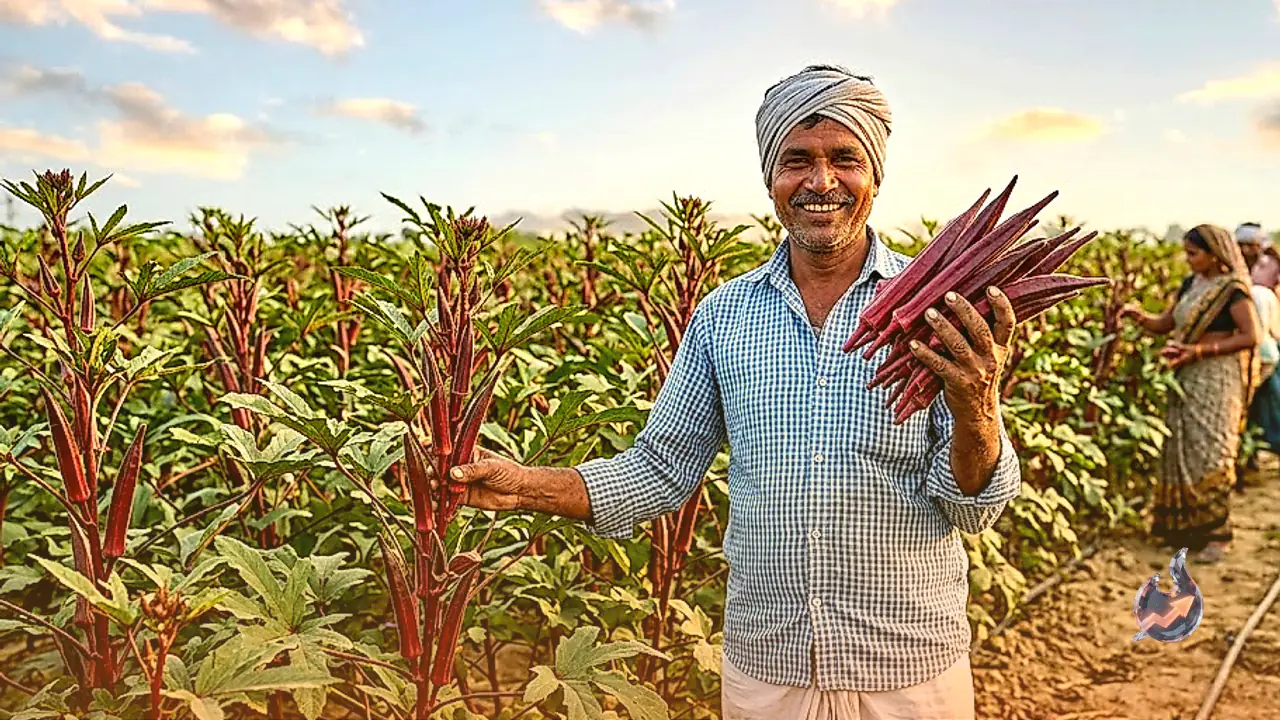

Many progressive agriculturalists are transitioning from conventional grain farming to vegetable cultivation due to the significantly higher profit margins. Cultivating vegetables can generate four to six times more income compared to traditional crops. Among these high-value vegetables, okra is an exceptionally popular option because of its year-round demand in Indian households. While green okra has long been a staple in local kitchens, a newer, highly nutritious variant known as red okra is gaining massive traction. Developed by Indian agricultural research institutes, this vibrant red variety is helping farmers secure superior crop yields and maximize their financial returns.
The Science Behind Red Okra and Key Varieties
According to agricultural experts, including scientist Dr. K.S. Yadav from the Sagar Krishi Vigyan Kendra, red okra is highly superior to its green counterpart in terms of nutritional value. Dr. Yadav explains that two specific varieties of red okra have been introduced to help farmers. The first is Pusa Lal Bhindi 1, which was developed by the Indian Agricultural Research Institute (IARI). The second variety is Kashi Lalima, developed by the Indian Institute of Vegetable Research (IIVR) based in Varanasi. The prominent red hue of these varieties is due to the high presence of anthocyanin, a powerful antioxidant that is incredibly beneficial for human health. Additionally, this crop is packed with essential nutrients, making it highly sought after by health-conscious consumers.
The Economic Advantage of Open-Pollinated Seeds
One of the most significant benefits of cultivating these two specific varieties of red okra is that they are not hybrid crops. Instead, both Pusa Lal Bhindi 1 and Kashi Lalima are open-pollinated varieties. This genetic characteristic is extremely advantageous for small and medium-scale farmers because it allows them to harvest and save their own seeds for the next sowing season without any loss in quality. Traditional hybrid seeds must be purchased fresh every season, which significantly inflates cultivation costs. These open-pollinated varieties, however, deliver a bumper yield comparable to high-performing hybrids while keeping the input costs exceptionally low. The Sagar Krishi Vigyan Kendra actively facilitates the distribution of Kashi Lalima seeds to local agriculturalists to support this sustainable farming model.
A Lucrative Opportunity in Seed Production
For farmers looking to diversify their income streams, producing and selling red okra seeds can be highly profitable. Since the crop is open-pollinated, farmers can easily set aside a portion of their harvest to develop high-quality seeds. While commercially available hybrid okra seeds command a very high price in the market, ranging anywhere from Rs 5,000 to Rs 8,000 per kilogram, the open-pollinated red okra seeds produced by research stations or the farmers themselves are available for a highly affordable rate of Rs 1,000 per kilogram. Farmers who specialize in seed production can sell their own harvested seeds at this rate of Rs 1,000 per kilogram, establishing a highly reliable and lucrative secondary revenue source.
Optimal Cultivation Practices and Soil Requirements
Achieving a bumper harvest of red okra requires adhering to specific agronomic practices and soil management techniques. This crop thrives best in rich black loamy soil, which provides the ideal texture and nutrient balance for robust plant development. Before commencing the sowing process, it is highly recommended to enrich the soil by applying approximately 8 to 10 tons of well-decomposed cow dung manure per acre. This organic matter significantly enhances soil structure and fertility. When sowing the seeds, maintaining the correct spacing is crucial for ensuring adequate sunlight and air circulation. The recommended row-to-row spacing is 45 to 60 centimeters, while the individual plants should be spaced about 30 to 45 centimeters apart. A single acre of land generally requires a seed rate of approximately 3 to 4 kilograms of red okra seeds.
Quick Returns and Market Potential
Red okra cultivation is a highly attractive venture because of its short growth cycle, with harvesting and earnings starting in as little as 50 days after sowing. Because of its intense nutritional profile and eye-catching appearance, red okra commands a premium price in local and urban markets compared to traditional green okra. By making the switch to this colorful crop, farmers can utilize the same land area and labor to generate substantially higher profits with minimal initial investment. This agricultural innovation not only enhances the financial well-being of the farming community but also delivers a nutrient-rich, healthy vegetable option to society, creating a win-win situation for both producers and consumers.