























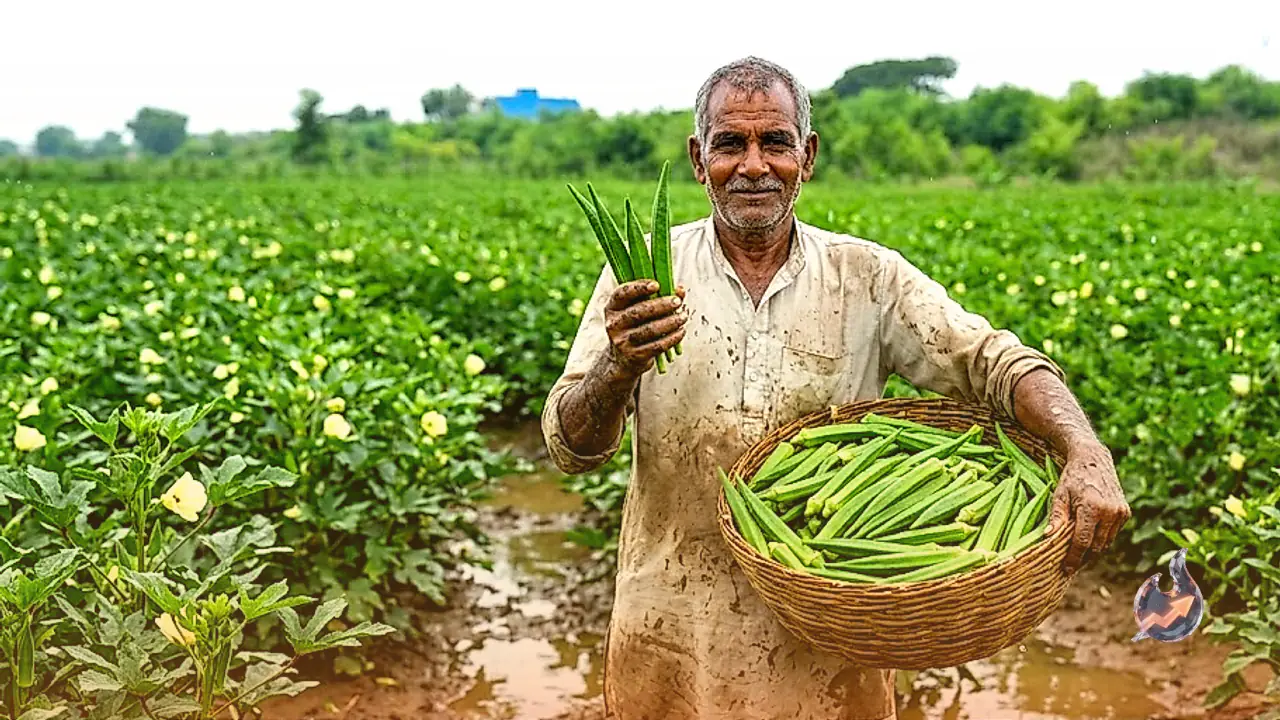

A significant transformation is currently underway in the agricultural landscape of Bihar. Farmers across the state are rapidly shifting their focus away from traditional long-term crops and are instead embracing short-term cultivation methods. The primary goal of this transition is to secure a better and more frequent income stream. Within this short-term farming model, vegetable cultivation has emerged as the most popular choice among the farming community. The ongoing rainy season presents unique challenges due to excessive moisture and frequent flooding. Consequently, farmers are selectively planting crops that can thrive specifically in these harsh weather conditions. Okra farming during the monsoon has proven to be an exceptionally profitable venture. Anjani Sinha, a progressive farmer hailing from the Punpun block in Jehanabad, has successfully adopted this strategy by planting okra on his one-acre plot.
The Namdhari 862 Advantage
For the past five years, Anjani Sinha has relied on a specific variety of okra that guarantees an excellent yield even during the heavy rains. His entire approach is based on smart farming principles. He prioritizes the cultivation of fruits, vegetables, and cash crops that generate substantial income in a very short period. Recognizing the risks of the monsoon season, he specifically chose the Namdhari 862 variety for his one-acre land. The seeds of this premium variety are quite expensive, commanding a maximum market price of 3300 rupees per kilogram. However, this high initial investment is justified because this specific strain is highly suitable for the volatile rainy season.
Surviving Waterlogged Fields
The most remarkable feature of the Namdhari 862 variety is its extreme resilience to excess water. The geographical location of Anjani Sinha's field puts it at a disadvantage because the land lies in a slightly lower elevation. This results in heavy waterlogging every single year during the monsoon. Traditional crops would easily rot under such conditions. To counter this annual problem, he strategically planted this specific okra variety. The crop continues to fruit abundantly regardless of how much water accumulates in the field. By making this calculated choice, he ensures that his agricultural income does not stop even when the weather is entirely unfavorable.
A Rapid 40-Day Harvest Cycle
This particular okra species is outstanding for generating steady daily earnings. When planted across a single acre, a farmer can harvest a massive yield of four to five quintals every single day. There is an enormous demand for this crop in the local market. Buyers prefer it because every single piece of okra produced by this variety is of excellent quality. Furthermore, okra is one of the fastest maturing vegetables available to farmers. The plucking process begins just 40 days after the initial sowing. Anjani Sinha planted his seeds in the month of May and was able to start harvesting on the very first day of July. He now plucks quintessential volumes of the vegetable daily and supplies it directly to the market.
Diversification and the Smart Farming Vision
The core of Anjani Sinha's success lies in his implementation of smart agricultural techniques. He is working on a diversified farming model that other cultivators can follow to achieve massive financial benefits. At present, his agricultural activities are not restricted solely to okra. He has expanded his farming portfolio to include guava, jackfruit, banana, and various other types of fruits. He firmly believes that earning a high income is impossible unless farmers modernize their cultivation practices. He notes that many cultivators continue to repeat outdated and traditional farming habits, which ultimately yield very low profit margins. His core message is that if farmers step away from the conventional path and adopt innovative methods, they can unlock tremendous profitability from their land.