






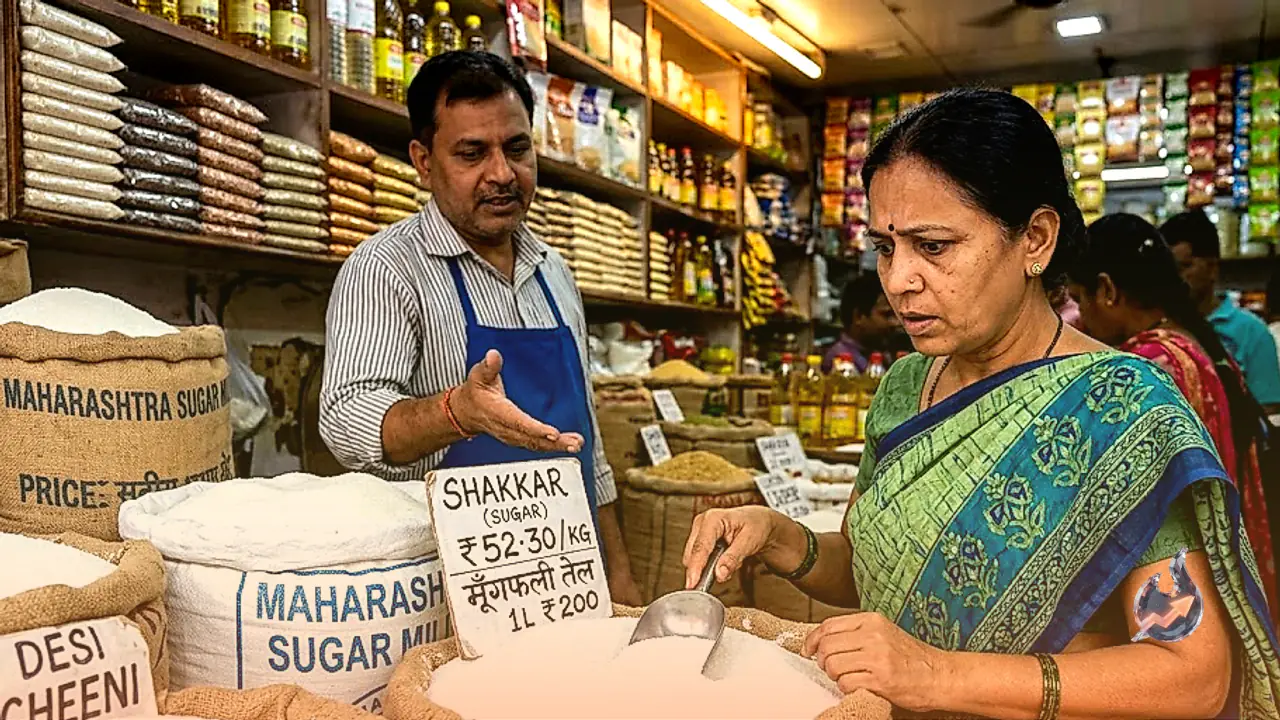

















Domestic sugar markets are witnessing significant tightness as concerns grow over depleted opening stocks for the upcoming 2026-27 season. Average sugar mill prices across India have scaled record highs in wholesale trade, translating into immediate retail price inflation for consumers. Anticipation of constrained supplies ahead of the new crushing period beginning October 1 has exerted steady upward pressure on mill-gate quotes.
Record Mill Rates and Double-Digit Retail Price Hike
Data from industry bodies shows that average mill-gate sugar rates surged to an all-time peak of ₹5,400 to ₹5,500 per quintal on Tuesday. This marks a substantial year-on-year increase compared to the average mill price of ₹3,900 per quintal recorded during the same period last year. Escalating wholesale costs have swiftly reflected in retail markets nationwide. Figures maintained by the Ministry of Consumer Affairs indicate that average retail sugar prices jumped to ₹52.3 per kg on August 18, up 13 percent from ₹46.34 per kg reported a year earlier.
Divergent Stock Estimates Highlight Impending Deficit
The primary driver behind the price surge is the prospect of opening carryover stocks falling short of domestic requirements for the 2026-27 marketing year, which spans October to September. The country typically requires a baseline opening stock of at least 50 lakh tonnes to maintain market equilibrium. While official government figures are yet to be finalized, market estimates reflect notable variation. Section of the sugar industry projects carryover inventory between 40 and 42 lakh tonnes, whereas independent market researchers estimate a tighter buffer of 32 to 35 lakh tonnes. By comparison, the preceding 2025-26 season opened on October 1, 2025, with a healthy carryover stock of 47 lakh tonnes.
Analyzing the Domestic Demand and Supply Balance Sheet
A closer examination of the supply-demand balance sheet for the 2025-26 season illustrates the structural tight supply. Beginning with an initial stock of 47 lakh tonnes, alongside an estimated production of 280 lakh tonnes and exports of 7 lakh tonnes, total domestic availability stands at 320 lakh tonnes. Against this supply, annual domestic consumption requirement in India is pegged at 285 lakh tonnes. Deducting domestic demand leaves a closing inventory of just 35 lakh tonnes. Falling short of the targeted 50 lakh tonne buffer, this reduced carryover has intensified pricing pressure at the mill level.
Food Ministry Imposes Stricter Monitoring on Mill Dispatches
In response to supply concerns, the Union Food Ministry has stepped up regulatory oversight on commercial transactions across all operational sugar mills. Authorities have directed mills to report precise metrics regarding volume sold and actual stocks lifted by buyers. To ensure operational transparency and establish an accurate accounting of nationwide stock levels, sugar mills are required to submit these verified figures through mandated online portals and authenticated email addresses.