




















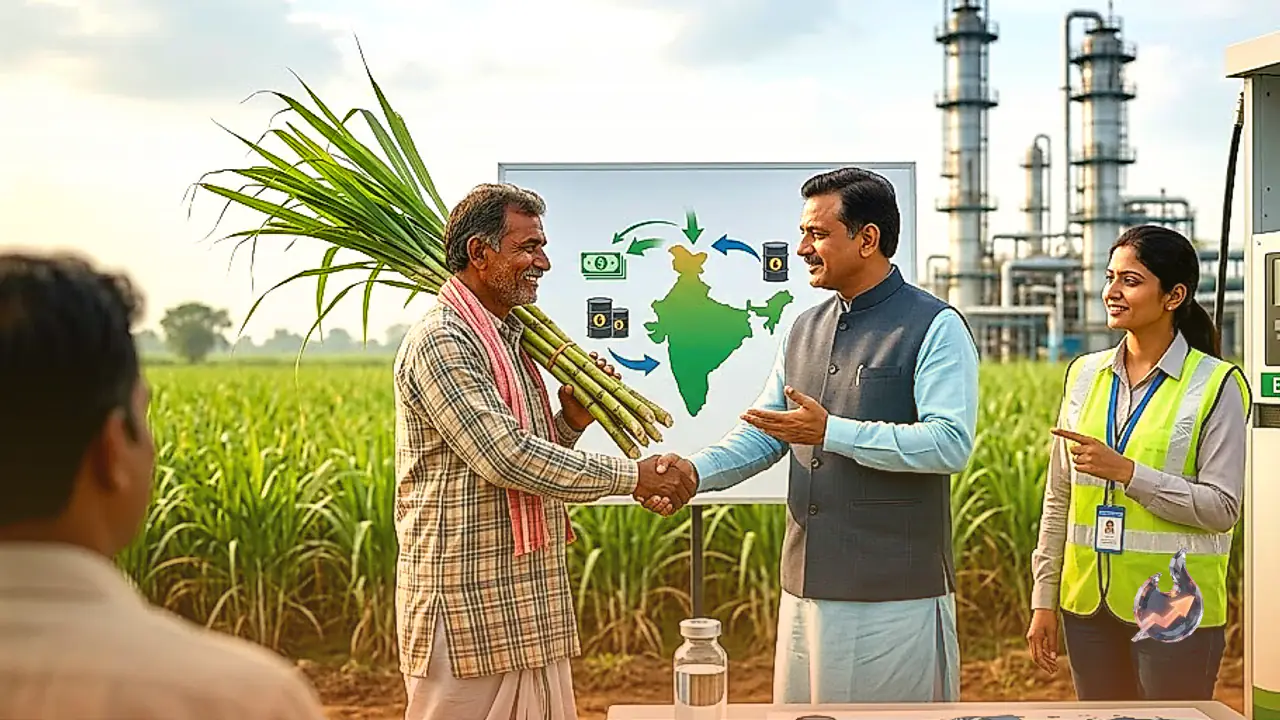

New Delhi. The government recently defended its Ethanol Blended Petrol (EBP) program, highlighting that the initiative has not only strengthened the sugar industry but also provided a major boost to farmers' earnings. According to Ashwini Srivastava, Joint Secretary in the Ministry of Food, the program has been a cornerstone of the agricultural economy, resulting in over 1.90 lakh crore in foreign exchange savings since the 2014-15 financial year.
Reducing Dependency on Crude Oil
Ashwini Srivastava explained that ethanol has transformed into a vital component of the agricultural economy, creating new markets for surplus crops while simultaneously reducing the nation's reliance on crude oil imports. Data indicates that between 2014-15 and 2026, the supply of ethanol has reduced the demand for more than 31 crore tonnes of crude oil. Beyond economic benefits, the program has played a significant role in environmental sustainability, contributing to a reduction of approximately 93 crore tonnes in carbon dioxide emissions during this period.
Support for Sugarcane Farmers
The EBP program has ensured timely payments to sugarcane farmers and significantly improved the financial viability of the sugar industry. Srivastava noted that dues for sugarcane farmers are currently at an all-time low. Historically, the central government provided nearly 14,600 crore in subsidies to sugar mills between 2014-15 and 2020-21. However, since 2021-22, the diversion of surplus sugar toward ethanol production has made export subsidies unnecessary.
Growth in Feedstock and Capacity
Maize has emerged as a key raw material for ethanol production. In 2024-25, maize accounted for 47 percent of the ethanol supplied to oil marketing companies, and it continues to contribute 36 percent in the current supply year, ensuring better prices for farmers. The country's total ethanol production capacity has surged from approximately 21 crore litres in 2013-14 to nearly 2,000 crore litres today. Furthermore, the recent decision to reduce the broken rice limit in the Pradhan Mantri Garib Kalyan Anna Yojana from 25 percent to 10 percent ensures higher quality rice for consumers while allowing surplus broken rice to be utilized for industrial ethanol production.
Policy Based on Rigorous Testing
C.K. Jain, President of GEMA, emphasized that the ethanol blending program was implemented only after extensive research and is not a hasty decision. He stated that the E20 blending policy underwent four years of study between 2014 and 2018, involving long-distance vehicle testing. The E20 petrol was found to be safe for all engines following technical studies, pilot projects, and policy deliberations. Addressing concerns regarding vehicle performance, Jain asserted that discussions on the subject must remain grounded in factual evidence rather than speculation and misconceptions.