






















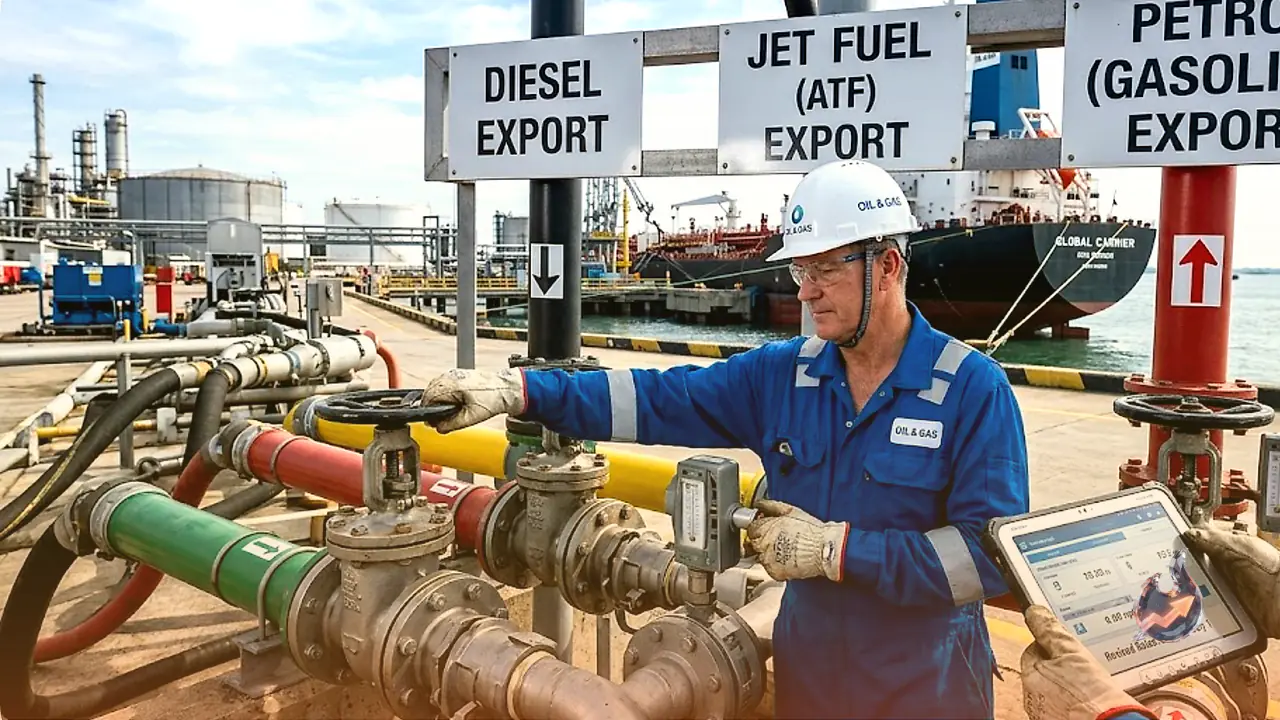

With crude oil prices easing and global markets staying choppy, the central government has taken a significant decision affecting the country's oil companies. Through a fresh official notification issued on Tuesday, it has sharply reduced the windfall tax charged on exports of diesel and aviation turbine fuel (ATF). At the same time, to make sure there is no shortage of fuel within the country, the duty on petrol exports has been raised. According to the Finance Ministry, these new rates will come into force from July 1, 2026.
As part of its fortnightly review, the Finance Ministry has made the following changes to the Special Additional Excise Duty (SAED) structure:
- Diesel exports: The tax on shipping diesel abroad has been lowered from ₹14 per litre to ₹8.5 per litre.
- Aviation fuel (ATF): The duty on ATF exports has been cut from ₹12.5 per litre to ₹7.5 per litre.
- Petrol exports: In contrast, the duty on petrol exports has been pushed up from ₹1.5 per litre to ₹4 per litre.
Why the government made this move
Amid the ongoing geopolitical tension and uncertainty in West Asia, the government wants to keep enough petrol and diesel available in the domestic market. The reasoning is simple: when global crude prices climb steeply, oil firms tend to ship fuel overseas instead of selling it at home, pocketing outsized profits in the process. This revised duty structure is meant to discourage companies from exporting excessively, so that the country does not run short of fuel. The government has also clarified that there is no change to the existing duty rates on petrol and diesel meant for domestic consumption, meaning ordinary consumers will feel no pinch.
Special relief for these countries
The government has also extended a major concession to friendly nations under this policy. When the export levy was first imposed in March, fuel sent by public sector oil companies (PSUs) to Nepal, Bhutan, Bangladesh and Sri Lanka was kept outside the tax net. Now, widening the scope of that exemption, Mauritius and the Maldives have also been added to the list.