























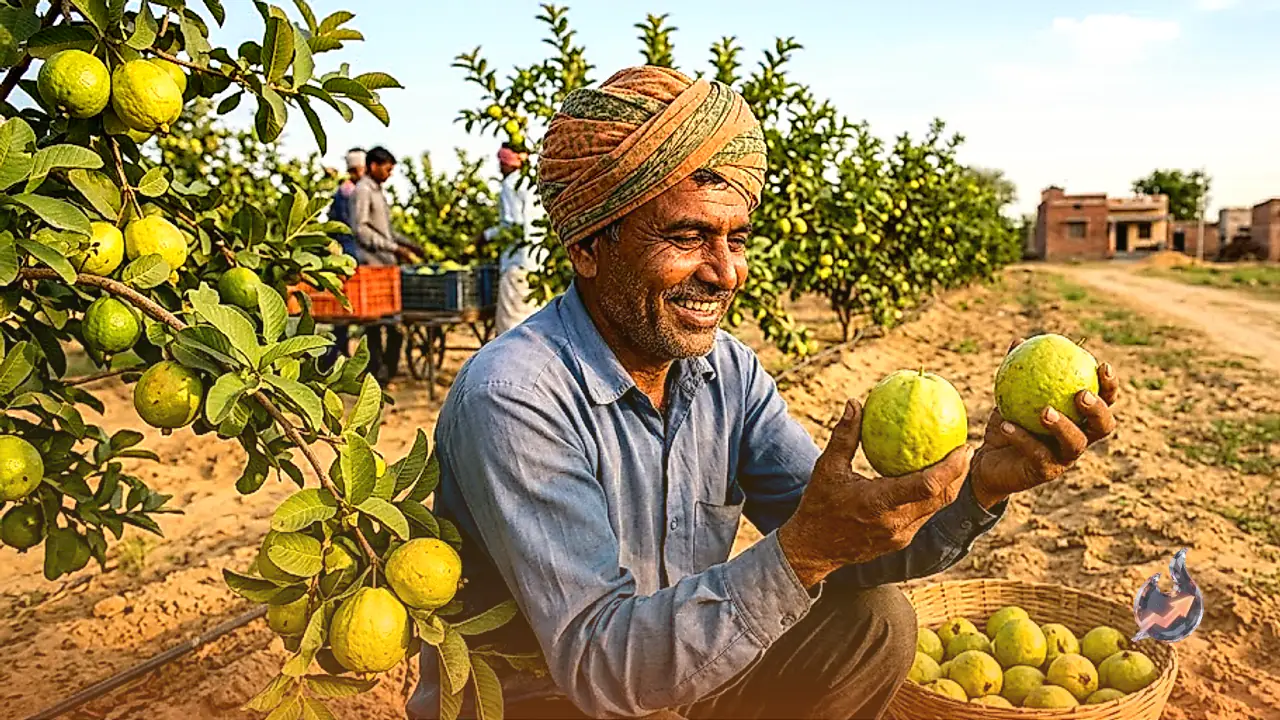

The town of Gurla in the Bhilwara district of Rajasthan is setting a notable example in the agricultural sector. Local farmers are increasingly moving away from conventional crop farming in favor of guava horticulture. Thanks to favorable climatic conditions and fertile soil, the area is witnessing a bumper guava harvest. The guavas grown in Gurla have gained immense popularity in commercial fruit markets due to their distinctive taste and superior quality. Consequently, the produce is no longer confined to local sales but is being actively distributed across nearby districts, all of Rajasthan, and into neighboring states.
Fertile Soil and the High-Yielding L-49 Variety
Dr. Shankar Singh Rathore, a horticulture specialist at the Bhilwara Agriculture Department, highlights that the geographic features of Gurla are ideally suited for guava plantation. The region predominantly possesses sandy loam soil, which provides optimal nutrients and drainage for guava trees. Currently, guava cultivation covers an estimated area of 50 to 60 hectares across Gurla town. Farmers primarily cultivate the renowned L-49 variety, also recognized as Lucknow-49 or Sardar guava. This specific variety ensures exceptional fruit sweetness, firm texture, and overall quality, making the produce highly attractive to fruit vendors and consumers alike.
Net Income Ranging from Rs 50,000 to 60,000 per Hectare
While exact profit margins fluctuate based on prevailing market supply and demand rates, guava farming generates reliable returns for local cultivators. On average, farmers successfully earn a net clean profit of Rs 50,000 to 60,000 per hectare after covering operational costs. Compared to traditional seasonal field crops, which often face market price volatility and weather risks, guava orchards provide a steady and lucrative financial stream, significantly elevating the economic standing of agricultural families in the region.
Supply Chain from Local Markets to Delhi Mandis
Fruit distribution strategies in Gurla vary depending on the operational scale of individual farmers. Small and marginal farmers prefer selling their harvest in nearby local fruit markets, which reduces transportation expenses and ensures immediate sales. In contrast, large-scale growers harvest, package, and transport their produce to major wholesale fruit hubs, including those in Jaipur, Udaipur, and Delhi. By tapping into these large metropolitan mandis, bigger producers secure higher market prices and build long-term trading connections.
Boosting Rural Economy with Low Water Requirements
A major advantage of guava horticulture is its resilience, low maintenance needs, and minimal water consumption requirements. In regions where water resources require careful management, guava trees offer an efficient alternative to water-intensive crops. By providing higher financial stability, this shift toward horticulture is bolstering the regional agricultural economy of Bhilwara. Seeing the success of pioneer growers in Gurla, numerous neighboring farmers are now inspired to convert their traditional farmland into profitable guava orchards.