






















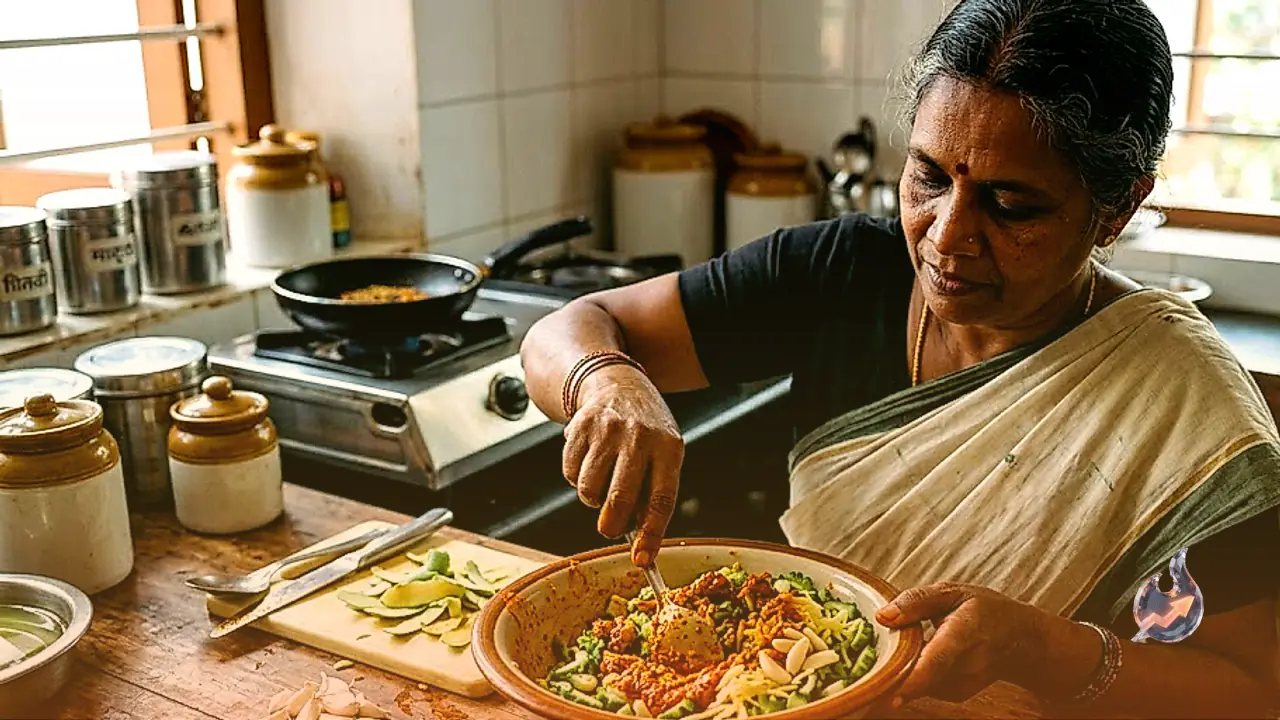

Bitter gourd is often overlooked at the dining table due to its inherent bitterness, but transforming it into a spiced pickle with raw mango and garlic turns it into a crowd-pleasing delicacy. The natural tanginess of grated raw mango, combined with the pungent aroma of finely chopped garlic and freshly ground spices, perfectly balances the bitter notes of the gourd. Whether paired with warm parathas, classic dal-rice, or simple rotis, this savory pickle brings an irresistible burst of flavor to everyday Indian meals.
Essential Ingredients for Bitter Gourd Pickle
Creating this flavorful and aromatic pickle requires straightforward pantry staples. The primary produce includes fresh bitter gourds, a generous quantity of peeled and finely chopped garlic cloves, and coarsely grated raw mango. For the spice mix, whole seeds of fennel, mustard, fenugreek, and carom (ajwain) are required. The seasoning blend relies on turmeric powder, asafoetida (hing), 1 to 2 tsp of red chili powder, salt to taste, and an optional splash of white vinegar. The recipe uses about 1/2 cup of mustard oil for cooking, tempering, and preserving the pickle.
Pre-Treating Bitter Gourd to Remove Bitterness
Proper preparation of the bitter gourd is crucial for achieving the right taste and texture. Begin by thoroughly washing the bitter gourds and wiping them completely dry using a clean towel. Slice them into thin rounds or uniform pieces, ensuring all interior seeds are completely removed. Transfer the cut slices to a bowl, sprinkle with a pinch of salt, and mix thoroughly. Allow the salted slices to rest for 2 to 3 hours. This resting period draws out the excess bitter juices. Afterward, gently squeeze the slices to release the dark liquid, rinse them in fresh water, and dry them completely. It is essential that the gourd slices are entirely free of surface moisture before cooking.
Roasting Spices and Preparing the Garlic-Mango Base
The characteristic aroma of this pickle comes from freshly dry-roasted whole spices. Place the fennel, mustard seeds, fenugreek seeds, and carom seeds in a dry pan over low heat. Toast them lightly until aromatic, making sure the spices do not burn. Once cooled, grind them into a coarse powder using a mortar or grinder. Next, peel and finely chop a generous portion of garlic, which imparts a distinct sharpness and rich fragrance to the pickle. Wash, peel, and grate the raw mango into medium-thick shreds. If the grated mango appears excessively juicy, squeeze it lightly to remove excess moisture.
Step-by-Step Cooking and Mixing Process
Heat about 1/2 cup of mustard oil in a large, heavy-bottomed pan until it reaches a high temperature. Reduce the flame to low, then add asafoetida and the finely chopped garlic. Sauté the garlic lightly until fragrant, taking care not to brown or burn it. Add the grated raw mango and cook for 2 to 3 minutes to remove its raw aroma and moisture. Next, introduce the dried bitter gourd slices into the pan and stir well. Sprinkle in the coarsely ground spice mix, turmeric powder, 1 to 2 tsp of red chili powder, and salt to taste. Optionally, add a small amount of white vinegar to enhance tanginess and preservation. Mix all ingredients thoroughly and let them simmer over low heat for a few minutes until well combined.
Crucial Tips for Long-Term Storage and Freshness
Once cooking is complete, turn off the heat and let the pickle cool down entirely inside the pan. Transfer the completely cooled pickle into a clean, sterilized glass jar that is thoroughly dry. Protecting the pickle from moisture is vital to prevent spoilage. Always ensure both the jar and serving spoons are completely dry before use. Placing the sealed jar in direct sunlight for a few days helps the flavors mature and meld together. Stir the contents once daily with a dry spoon during this sun-curing period. For long-term preservation, ensure a continuous layer of mustard oil covers the pickle inside the jar, creating a protective barrier against air and moisture.