





















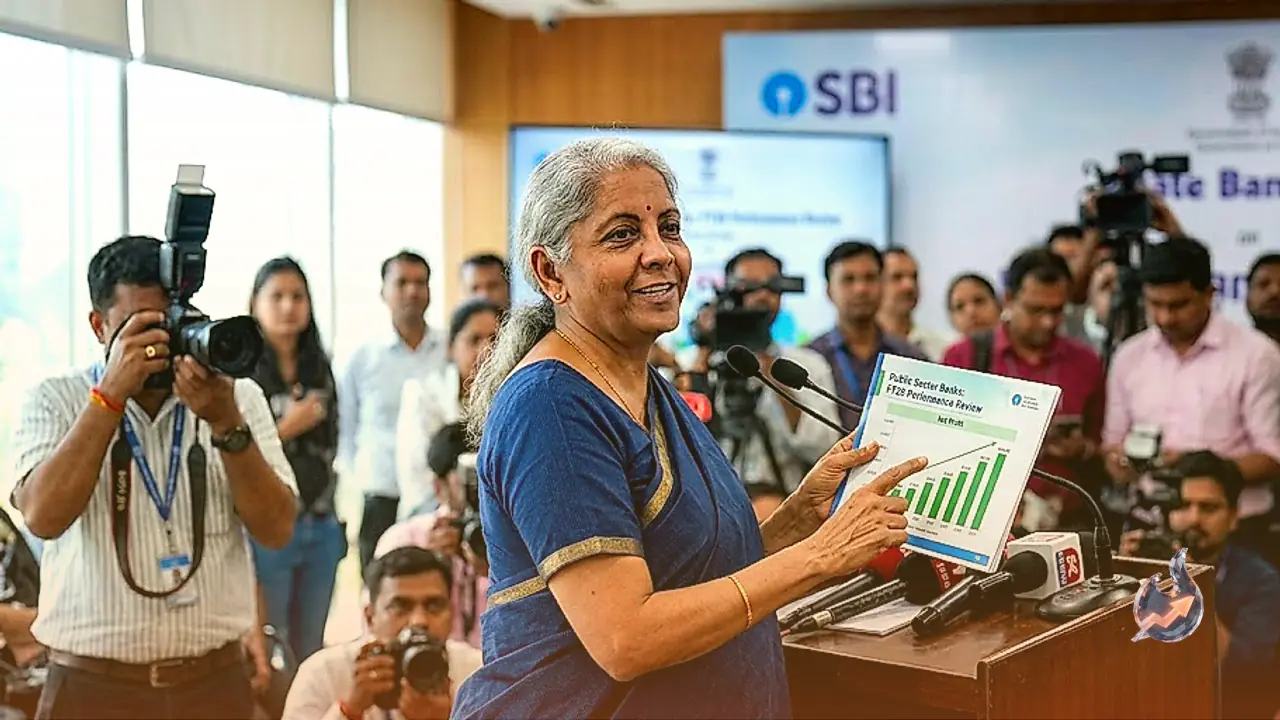

India's public sector banks (PSBs) have accomplished an extraordinary financial turnaround in fiscal year 2025-26 (FY26), emerging from years of balance sheet stress and heavy non-performing assets to record their highest-ever profitability. According to figures released by the Ministry of Finance, sustained structural reforms, aggressive bad loan resolution, and disciplined credit underwriting over the past four to five years have transformed state-run lenders into financially robust institutions capable of driving national economic growth.
Historic Financial Comeback: Net Profit Triples Over Four Years
The financial earnings trajectory of public sector banks highlights the scale of this recovery. In FY26, PSBs posted a consolidated net profit of ₹1.98 lakh crore, marking an all-time high for state-owned lenders. This represents nearly a threefold expansion compared to fiscal year 2021-22 (FY22), when total net profit stood at ₹0.67 lakh crore. Parallel to this earnings surge, asset quality witnessed a historic improvement. The gross non-performing assets (GNPA) ratio of public sector banks dropped from approximately 7.3% in FY22 down to 1.9% in FY26, reaching its lowest level in several decades and significantly lowering provisioning burdens across the banking system.
Surging Business Volumes: Deposits and Loan Advances Reach New Heights
Alongside profitability, the overall business scale of public sector banks expanded substantially. Total banking business conducted by PSBs crossed ₹283 lakh crore in FY26, driven by strong growth in both deposit mobilization and credit delivery. Total deposits held by public sector banks grew from ₹107.2 lakh crore in FY22 to ₹156.3 lakh crore in FY26. Concurrently, gross advances expanded from ₹74.3 lakh crore in FY22 to ₹127 lakh crore in FY26, reflecting heightened credit absorption across key sectors of the Indian economy.
Sectoral Credit Growth: MSME and Retail Lenders Drive Expansion
Credit expansion was particularly pronounced in small enterprise financing and retail lending segments during FY26. Micro, Small, and Medium Enterprises (MSMEs) recorded a loan growth rate of 19.6% year-on-year, while retail credit grew by 19.8%. This dual momentum significantly enhanced credit flow to small businesses for working capital needs while simultaneously catering to retail demand for housing, automotive, and personal financing requirements.
Pillar of Stability: Capital Adequacy Ratio Strengthens to 16.6%
The structural resilience of public sector banks is further reflected in their capital buffers. Over the past five years, the Capital to Risk-Weighted Assets Ratio (CRAR) of state-run banks expanded from 14.6% to 16.6%. This enhanced capital adequacy buffer provides public sector lenders with a robust cushion to absorb potential market shocks while maintaining uninterrupted lending operations.
Response to Global Friction: Government Deploys ECLGS 5.0 Scheme
To shield domestic businesses from trade disruptions caused by the West Asia crisis, the Ministry of Finance launched the Emergency Credit Line Guarantee Scheme 5.0 (ECLGS 5.0) in May 2026. Designed to mitigate economic pressure on vulnerable commercial sectors, the scheme provides a total credit support limit of ₹2.55 lakh crore. Under the framework, MSMEs receive 100% credit guarantee coverage, while non-MSME entities and scheduled passenger airlines are eligible for up to 90% guarantee coverage to maintain liquidity amid global headwinds.