























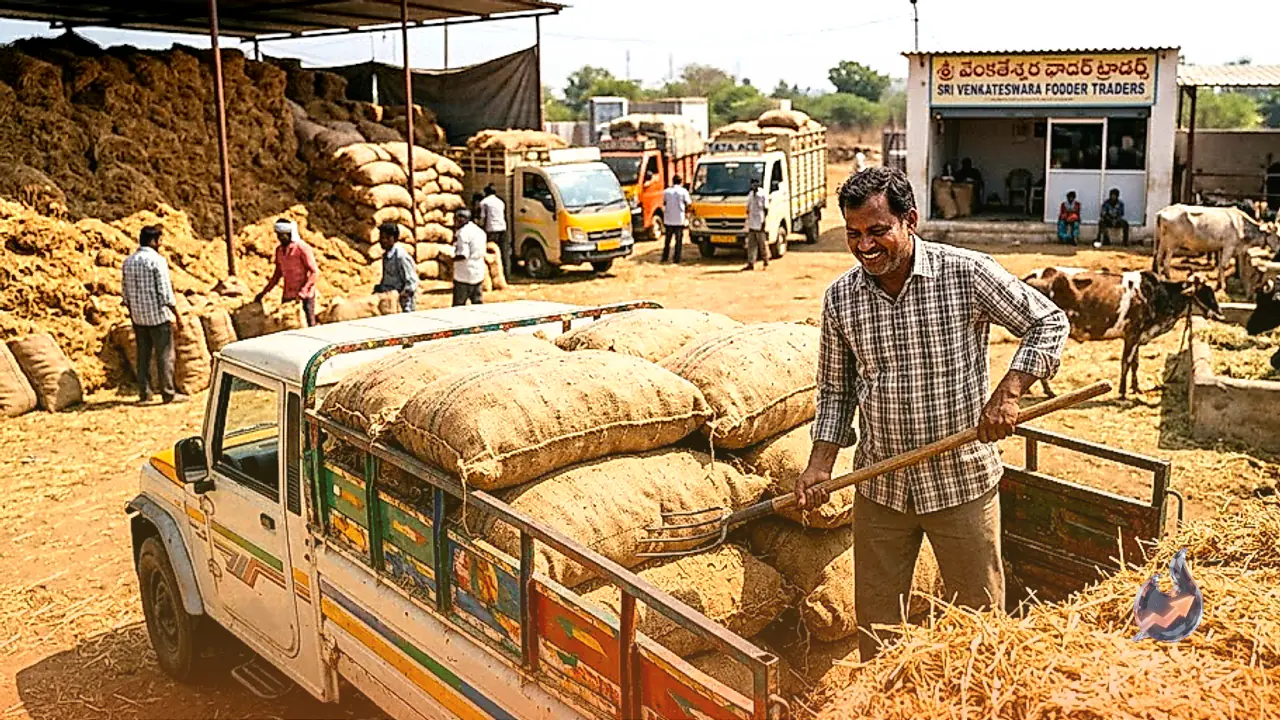

With the rapid expansion of dairy farming and animal husbandry in Telangana, the bulk and retail supply of animal fodder is proving to be a highly lucrative venture. According to Zaheer Ahmed, a major fodder supplier operating out of the Chandrayangutta area in the Old City of Hyderabad, chickpea straw or husk serves as a vital nutrient source for cattle, horses, and goats. Livestock rearers and dairy farm operators consistently purchase this fodder to maintain the digestive health and nutrition of their animals. With modest initial capital, entrepreneurs can establish a steady supply chain that delivers impressive monthly earnings.
Direct Sourcing and Tiered Packaging Strategy
The operational structure relies on procuring large quantities of gram husk directly from processing mills in bulk tonnage. The inventory is stored in compact warehouses or covered open sheds before being sorted and packaged. Traders pack the fodder into standardized bags of 30 kilograms, 50 kilograms, and 1 quintal. Offering multiple bag sizes allows suppliers to cater efficiently to both small-scale livestock owners and commercial dairy units, significantly improving overall profit margins.
Capital Requirements, Margins, and Monthly Income
Starting a chickpea husk distribution business requires an initial working capital ranging between Rs 1.5 lakh and Rs 3 lakh. Profit margins vary depending on the order volume. Bulk supplies yield a net margin of Rs 1,500 to Rs 2,500 per ton, whereas retailing 30 kg to 50 kg bags offers a margin of 15% to 25%. A dealer averaging daily sales of 1.5 to 2 tons or roughly 40 to 50 bags can secure a net monthly profit of Rs 1,00,000 to Rs 1,50,000 after accounting for all operational costs.
Flexible Sales Options and Seasonal Demand Spikes
To encourage larger transactions, merchants provide extra margins to buyers purchasing full vehicle loads or multi-ton orders. Simultaneously, retail facilities allow small buyers to purchase fodder by the kilogram. During lean periods when green fodder is scarce, as well as during festive seasons, demand surges sharply. In these peak demand phases, monthly net income can scale beyond Rs 2,00,000.
Low Risk and Cash-Based Business Dynamics
The fodder trade is characterized by consistent market demand and low commercial risk. Because cattle and livestock feeding is an everyday necessity, transactions are predominantly executed in cash. This minimal credit risk, combined with stable market fundamentals, makes chickpea husk supply an attractive self-employment option for prospective business owners looking to set up local trade operations.