





















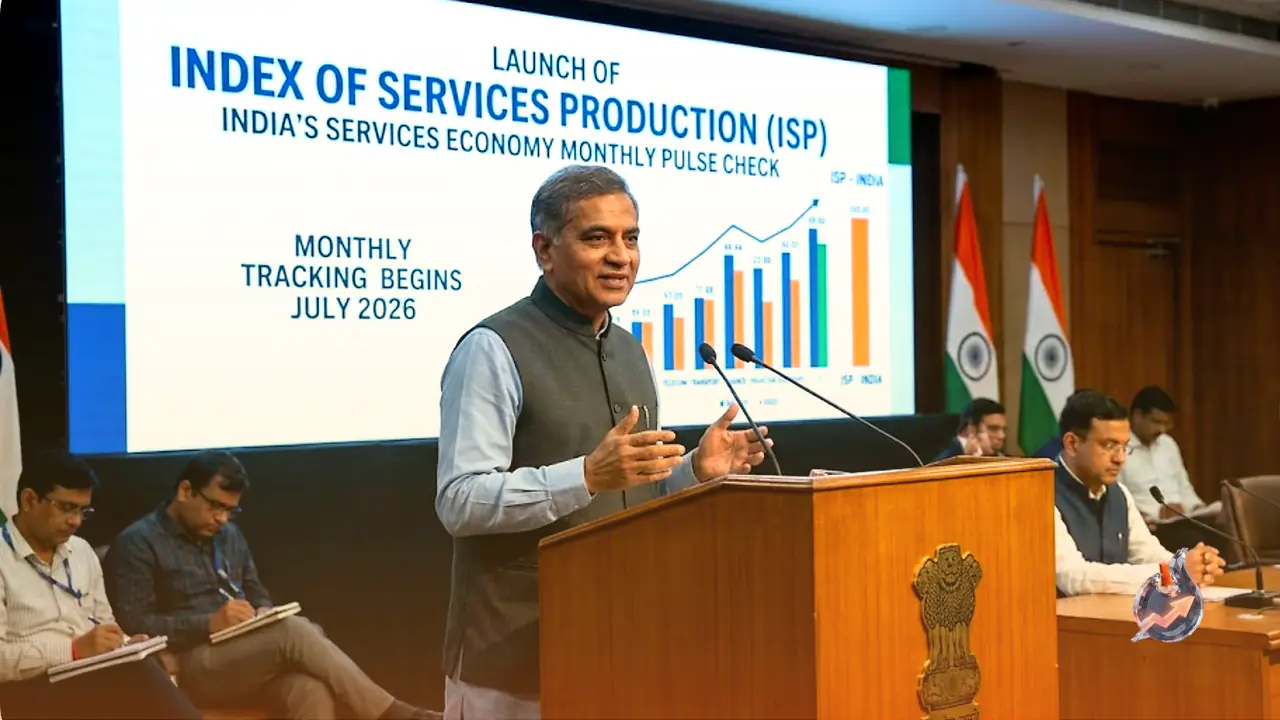

The services sector, the biggest engine of India's economy, is finally getting a dedicated monthly scorecard. The country will launch the Index of Services Production (ISP) in July 2026, a new gauge designed to measure service-sector output on a monthly basis and show how fast this part of the economy is moving.
For years, factory and industrial output has been tracked through the Index of Industrial Production (IIP). The ISP is built on the same logic, only its lens points at services instead of industry. The goal is to capture short-term activity in the services space the way the IIP picks up the smallest shifts in factory output.
When the First Reading Arrives
According to information from the Ministry of Statistics and Programme Implementation (MoSPI), the first release is expected in July 2026. Ahead of that, trial monthly indices for FY 2025-26 and April 2026 are scheduled to be released on July 14, 2026, allowing the system to be tested before the actual launch.
How the Index Will Be Built
The ISP will use 2024-25 as its base year. It will come out every month, though the data will initially carry a lag of about 60 days, which means figures will be published around the 29th of each month.
The backbone of the index will be GSTN data, supported by administrative records from various ministries and regulators. The ministry also plans to fold the Annual Survey of Incorporated Services Sector Enterprises (ASISSE) into the framework.
Which Sectors Are Covered
In its early phase, the index will track formal services. These include:
- Wholesale and retail trade
- Transport
- Banking
- Insurance
- Telecommunications
- Hotels and restaurants
- Real estate
- Professional, scientific and technical services
- Arts, entertainment and recreation
Health and education services are not part of the initial list. Both are expected to be added later, once enough data becomes available.
What Stays Out of the Index
The ministry has also clarified that some sectors have been left out, either because they are tied to core government activities or because they are dominated by non-market activity and the informal sector. The excluded sub-sectors are:
- Public administration and defence
- Financial services excluding banking and insurance (for example, activities of the central bank, money market funds)
- Social work activities without accommodation
- Services of membership organisations
- Personal services
- Activities of private households with employed persons
- Activities of extraterritorial organisations
- Health and education services provided by the government
- Gambling and betting activities