























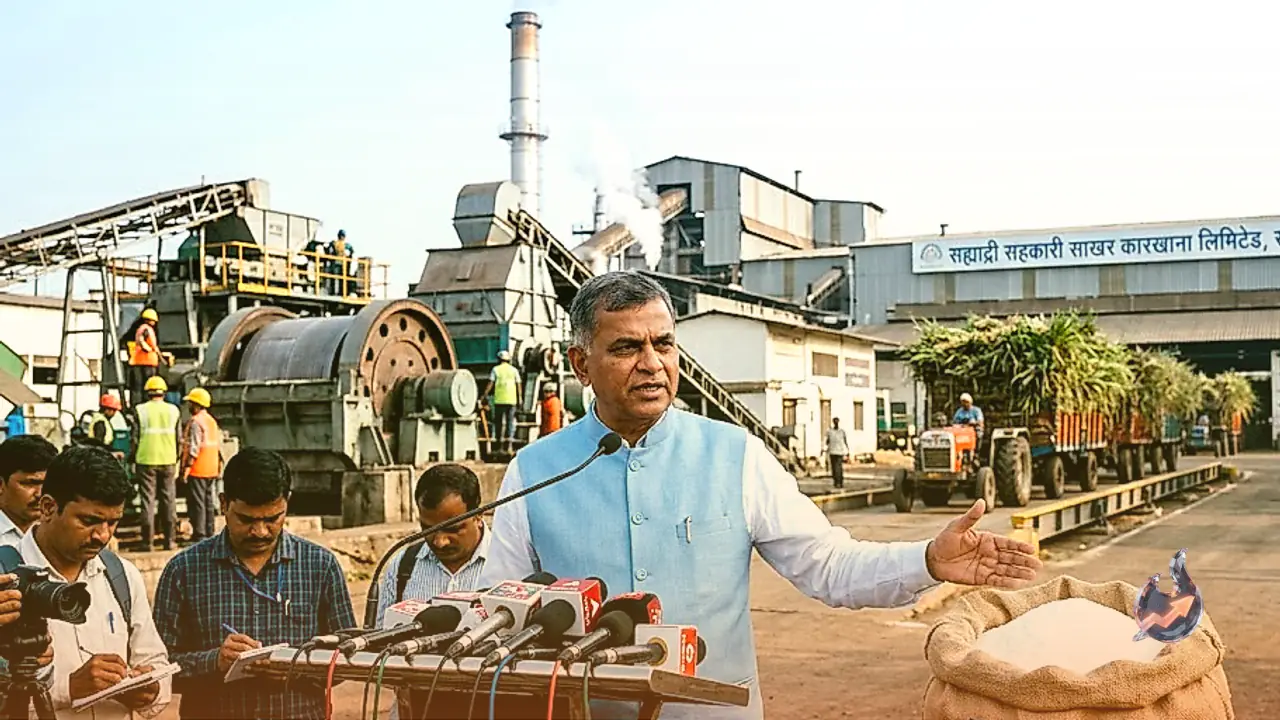

Retail sugar prices have been edging upward across major urban centers from Delhi to Mumbai, directly squeezing household grocery budgets. To keep domestic sweetness affordable and prevent any potential supply squeeze ahead of the upcoming festive season, India's sugar industry has proposed a proactive operational shift. Leading sugar manufacturing associations have approached the government with a plan to start the upcoming sugarcane crushing cycle earlier than standard schedules, aiming to release fresh stock into the market quickly and cool down retail rates.
Crushing Proposed 10 to 15 Days Ahead of Normal Schedule
The top representative organizations of the sugar sector, the Indian Sugar and Bio-Energy Manufacturers Association (ISMA) and the National Federation of Cooperative Sugar Factories (NFCSF), submitted a comprehensive joint letter to the Union Food Secretary. In the communication, both industry bodies confirmed that sugar mills nationwide are equipped and willing to initiate the next sugarcane processing season roughly 10 to 15 days before the usual timeline. According to industry analysis, early processing will ensure a steady inflow of fresh sugar right before festival demand peaks, thereby stabilizing supply chains. However, the associations emphasized that initiating operations prematurely imposes heavy financial and operational strains that mills cannot absorb without targeted government assistance.
Technical and Cost Challenges of Early Processing
Advancing the crushing calendar introduces several field level and operational hurdles for sugar producers. Industry experts point out that harvesting sugarcane before full maturity results in significantly lower sucrose recovery rates per ton of cane. Additionally, premature harvesting reduces overall agricultural yield per acre and dampens processing efficiency at the mill level. These compounding factors drive up the total cost of production per kilogram of sugar. After extensive internal deliberations, the industry agreed to advance operations only on the condition that the government provides financial compensation to offset the resulting cost escalation, as mills are already struggling with elevated operational expenditures.
Global Conflict and Packaging Norms Drive Up Input Costs
The rising operational expenses for sugar refiners stem from a combination of international geopolitical disruptions and updated domestic packaging regulations. The joint industry letter highlighted that ongoing geopolitical tensions in the Gulf region and the conflict involving Iran have triggered a sharp rise in global sulfur prices, an essential chemical element used during sugar refining. Domestically, recent revisions to packaging guidelines by the Bureau of Indian Standards (BIS) have mandated higher material specifications, sharply escalating the procurement costs of polypropylene bags. These dual cost pressures have severely squeezed mill margins, making unassisted early crushing financially unviable.
Financial Support Requested Alongside Operational Safeguards
To mitigate the projected losses from early processing, ISMA and NFCSF have outlined specific economic relief requests for consideration by the government. Beyond direct loss compensation, the associations recommended providing mills with an additional domestic sugar sales quota equivalent to their October output. They also suggested granting temporary exemptions on Central Goods and Services Tax (CGST) for domestic sugar transactions or delivering an equivalent financial relief mechanism. Furthermore, the industry urged authorities to regulate unorganized crushers by directing jaggery (gur) and khandsari units to commence operations only after commercial sugar mills begin their runs. This sequence would safeguard sugarcane supply during the critical initial weeks, maximizing plant capacity utilization and sugar extraction rates.
Market Prices Remain Below Production Costs Amid Farmer Payouts
Industry data reveals that through June, average mill-gate sugar prices across India hovered between 39.5 rupees and 40 rupees per kilogram, remaining distinctly lower than the actual cost of production. Even after mild price firming by late July, mill prices reached 40 rupees to 40.5 rupees per kilogram, which still falls short of the current average production cost of approximately 42 rupees per kilogram. Despite operating at thin or negative processing margins, the sector has maintained its financial commitments to the agrarian economy. During the ongoing 2025-26 sugar marketing year spanning October to September, sugar mills have already disbursed approximately 1.10 lakh crore rupees in payments to sugarcane farmers across the country.