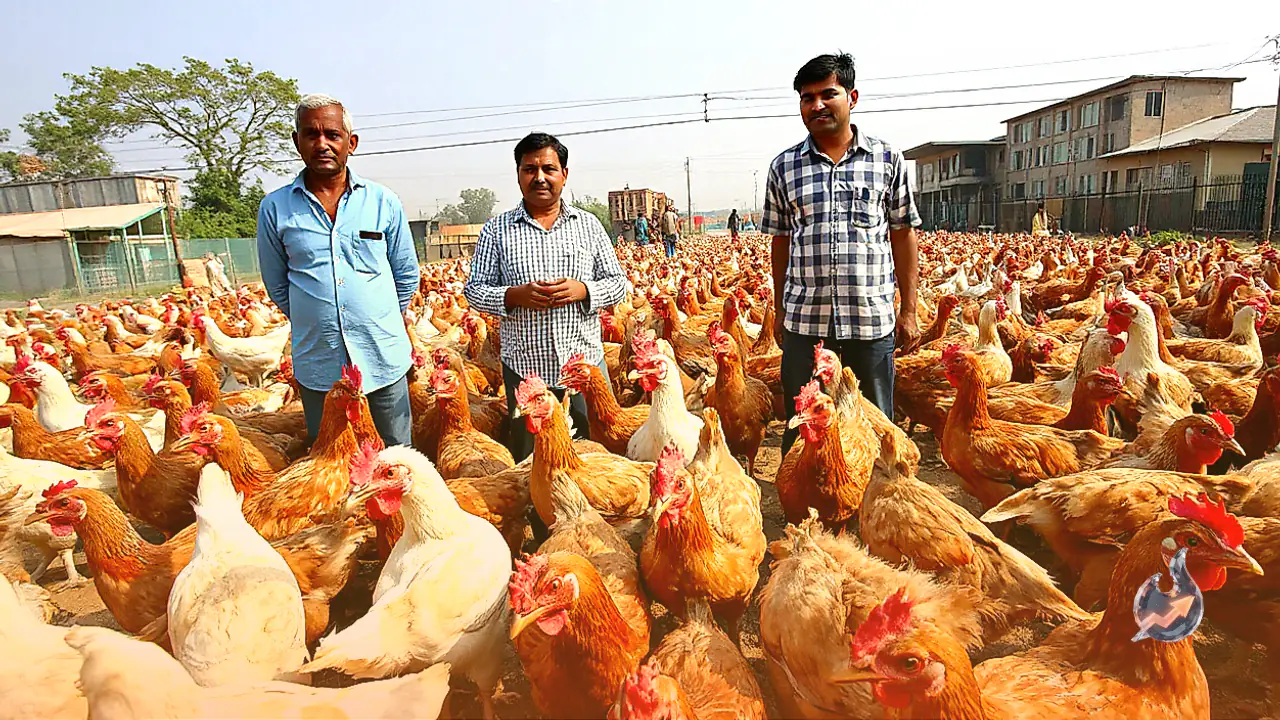

India is on the verge of introducing its first domestic defense against avian influenza with the upcoming rollout of a specialized vaccine for poultry. Union Agriculture Minister Shivraj Singh Chauhan is scheduled to launch India's maiden indigenous inactivated H5N1 avian influenza vaccine on November 20. According to an official statement released, this significant milestone aims to secure the nation's vast poultry network against devastating viral outbreaks that have historically threatened farmers and the agricultural economy.
Development by ICAR-NIHSAD Bhopal
The newly engineered pathogenic avian influenza vaccine has been meticulously developed by ICAR-NIHSAD Bhopal. This breakthrough formulation is specifically designed to provide robust protection against the circulating clade 2.3.2.1a H5N1 virus strain affecting domestic flocks across the country. Until now, there has been a notable absence of specific commercial vaccines tailored to combat this particular clade in the local market, making the creation of a homegrown formulation an urgent necessity for the nation.
Severe Threat to Poultry and Trade
Highly pathogenic avian influenza, commonly referred to as bird flu, is a devastating disease affecting poultry with a mortality rate reaching nearly 100 percent in infected birds. The rapid spread of the virus necessitates mass culling and strict trade bans, inflicting immense financial ruin on poultry farmers. The adverse impact extends far beyond individual farms, disrupting global trade dynamics, driving fluctuations in poultry product prices, and threatening the livelihoods of countless rural workers. Government data highlights that since the disease was first detected in India in 2006, the country has recorded over 500 mixed outbreaks spanning the H5N1 and H5N8 subtypes.
Economic Toll and Historical Impact
A major bird flu epidemic has the potential to depress India's GDP growth by as much as 1.5 percent, while unchecked transmission could jeopardize over 20 percent of the nation's total poultry population. The historic outbreak in 2006 alone inflicted staggering losses estimated between 2,200 and 3,000 crore rupees. Regional economies have also suffered severely, with outbreaks in Manipur resulting in financial damage equivalent to 0.5 percent of the state's GDP.
Public Health Implications and Containment
According to data from the WHO, a total of 1,003 human cases of H5N1 avian influenza have been documented across 25 countries, including India, since 2003, resulting in 479 fatalities globally. Scientific studies confirm that the clade 2.3.2.1a H5N1 strain is the primary driver behind the majority of avian flu incidents in chickens. Officials emphasized that reining in the dissemination of this virus is vital not only to curb financial distress for poultry producers but also to mitigate the dangerous zoonotic spillover of the pathogen from birds to other animals and human populations.