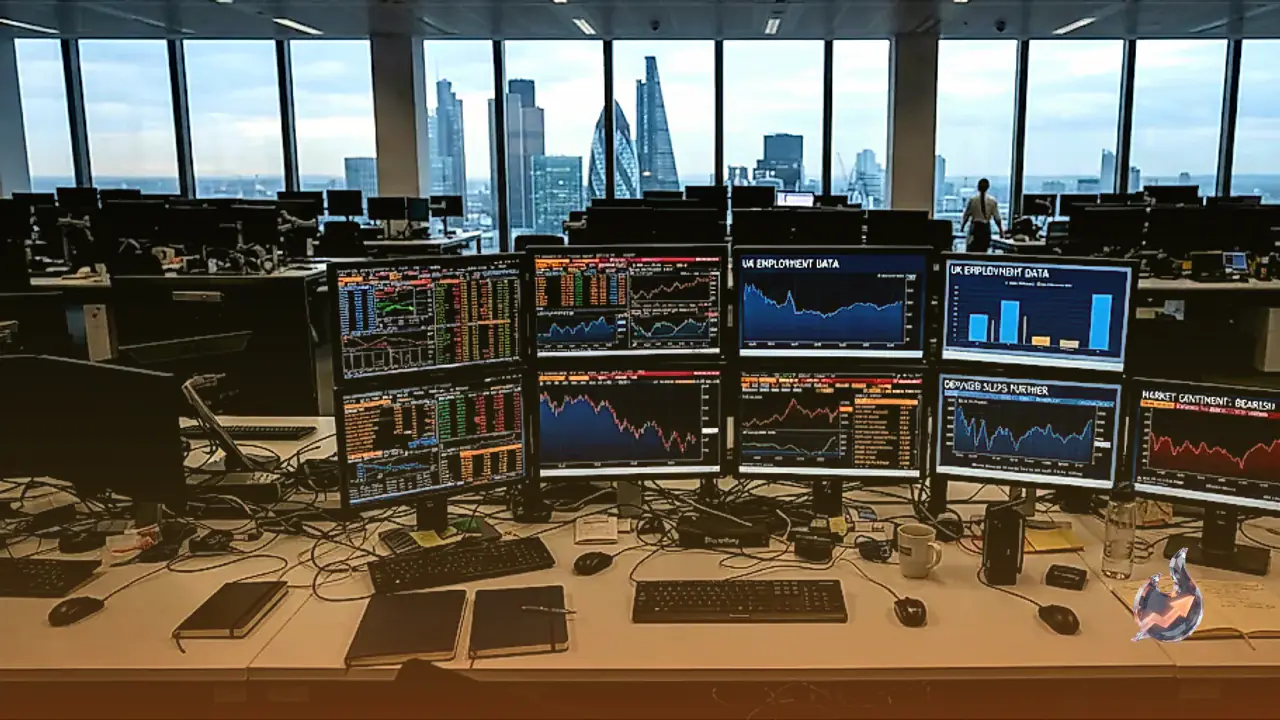

International equity benchmarks registered declines for a third consecutive trading session, although the overall pace of the downward momentum showed signs of softening. In the United States, the S&P 500 benchmark surrendered 1%, while across the Atlantic, the pan-European Stoxx 600 index faced heavier selling pressure, tumbling 1.75%. The notable regional underperformance in European equities underscored that the market contraction was not sparked by a rout in technology valuations. Instead, broad financial markets experienced a widespread risk-off tone across the board, leaving virtually all industrial sectors in negative territory. However, the session unfolded with an unusual structural dynamic: rather than economically sensitive cyclical names bearing the brunt of the downturn, defensive holdings witnessed the most pronounced sell-off.
Defensive Sectors Drag Down Benchmarks as Cyclicals Hold Ground
A closer inspection of individual equity groups reveals that defensive clusters, primarily financials, utilities, and real estate, served as the primary downward anchors for the broader market. Conversely, cyclical segments that typically suffer during economic downturns, such as energy, industrials, and consumer discretionary, managed to hold up significantly better. Market analysts highlighted that while market participants actively sought to reduce risk exposure, they opted to liquidate positions in stocks that had generated the strongest outperformance over the preceding month rather than shedding companies burdened by growth-related risks. Consequently, the broad retreat was characterized not by deteriorating macroeconomic conditions or sudden recessionary fears, but rather by tactical portfolio de-risking and deliberate profit-taking among recent leaders.
Nvidia Beats Wall Street Expectations as Tech Finds Footing
Following the cash session slump, early morning sentiment in the United States staged a rebound, with equity index futures pushing higher and pointing toward an opening advance just below 0.5%. This positive shift was anchored by semiconductor giant Nvidia, which delivered exceptional quarterly earnings after the closing bell. The company comfortably surpassed consensus Wall Street estimates across every primary financial metric. Nvidia reported adjusted earnings per share of $2.68 for the third quarter, outperforming expectations by $0.21, or 8.5%. Its quarterly revenue reached $115.85 billion, beating consensus forecasts by an expansive $7.1 billion, or 6.6%. Coupled with forward guidance that outstripped market projections, Nvidia shares advanced 3% in extended trading. This technological resurgence provided overnight momentum for Asian bourses, allowing South Korea's tech-heavy Kospi index to gain 1% following a severe 7% drawdown accumulated over the previous four trading sessions.
Currency Markets React to Geopolitics and Federal Reserve Speculation
In global foreign exchange trading, the US Dollar maintained safe-haven dominance against several major currency counterparts. The Australian Dollar fell to fresh ten-month lows against the greenback, sliding below 0.6750 and edging toward the 0.6700 threshold during Wednesday's Asian session. Mounting expectations of additional interest rate increases by the Federal Reserve, combined with reports of military exchanges between the United States and Iran, drove steady inflows into the reserve currency. Compounding this downward trend was the Reserve Bank of Australia's dovish stance, which placed extra downside pressure on the AUD/USD pair. Concurrently, the USD/JPY pair hovered near the 159.50 handle in Asian trading, pausing a three-day losing sequence. Hawkish commentary from Bank of Japan Governor Kazuo Ueda provided underlying support to the Japanese Yen amid ongoing speculation of direct currency intervention, though escalating Middle East geopolitical risks and elevated Fed rate expectations continued to cap the pair's downward retracement.
Precious Metals and Cryptocurrencies Struggle Against Dollar Strength
Commodity markets mirrored the broader macro environment as gold sustained intraday losses below the $3,800 per ounce threshold during the early European session, hovering near its lowest valuation since September 2025. Following last week's hotter-than-anticipated inflation readings in the United States, several Federal Reserve policymakers struck a more hawkish chord, signaling that borrowing costs may need to climb higher. This sentiment was further reinforced by upbeat economic data released on Tuesday, strengthening interest rate hike expectations and elevating yields. The resulting dollar momentum continued to draw investment capital away from non-yielding physical bullion. Meanwhile, the digital asset sphere faced persistent headwinds, with Dogecoin fluctuating around $0.059 on Wednesday. The cryptocurrency has struggled to establish traction after a sharp decline dragged it down to a fresh annual trough of $0.055 last week. Depressed trading volume across derivatives markets and deteriorating on-chain metrics continue to dampen trader sentiment across speculative assets.