























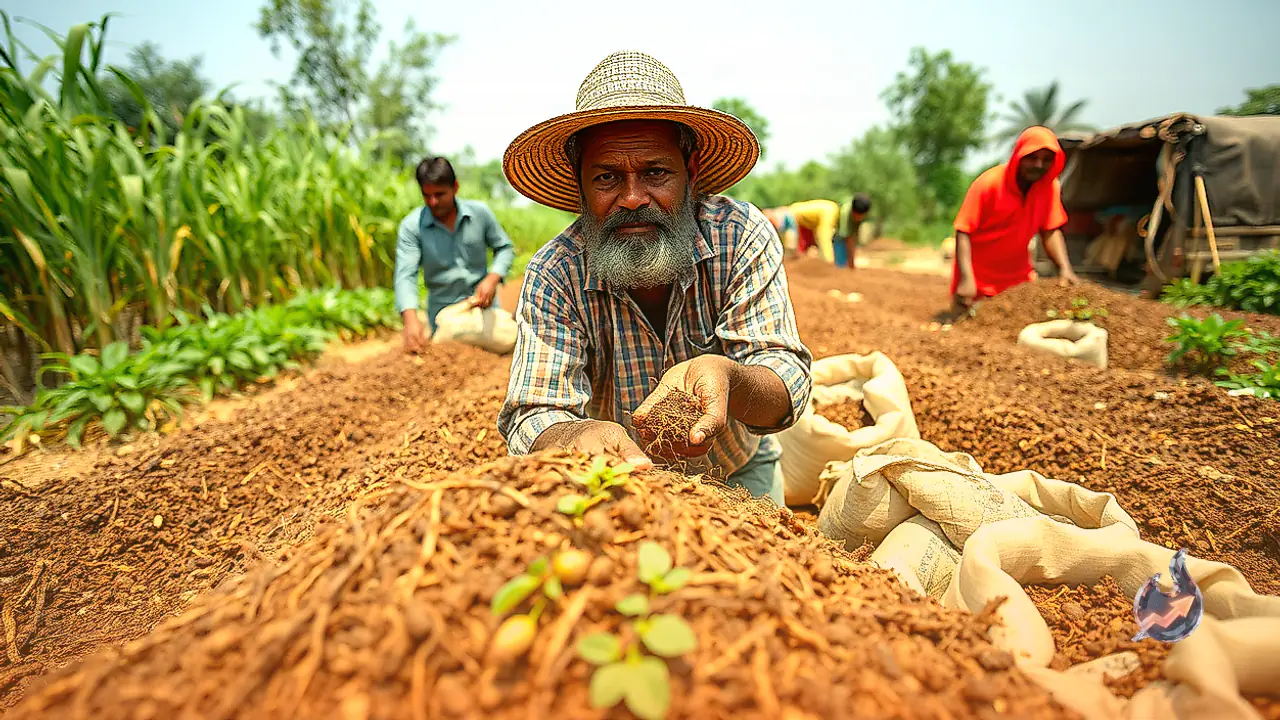

Farmers in rural Bihar are increasingly turning towards organic cultivation as excessive chemical fertilisers degrade soil fertility and pose growing health hazards. In Jehanabad district, several cultivators have drastically curtailed chemical inputs on their agricultural plots, finding that organic alternatives not only restore soil vitality and yield healthier food but also present viable commercial opportunities right at the farm gate.
Phasing Out Chemical Fertilisers for Sustainable Yields
Laxmikant, a farmer residing in Jai Kishun Bigha village within the Modanganj block of Jehanabad district, represents this transition toward sustainable farming practices. He has reduced conventional chemical fertilisers to near zero and now applies vermicompost across 70 to 80 percent of his crops. Contrary to common misconceptions, he observes that shifting away from synthetic fertilizers causes no decline in total harvest volume; vermicompost delivers agricultural output fully comparable to chemical inputs while maintaining land fertility and personal health. All the vegetable varieties cultivated on his land are raised solely using homemade organic manure, opening a reliable supplementary revenue stream.
Three Compost Pits Yielding Annual Revenue Up to Rs 25,000
Instead of purchasing costly organic fertilisers from commercial outlets, Laxmikant manufactures the entire supply at his domestic setup. He operates 3 vermicompost pits on his property, generating an annual volume of around 100 bags of finished compost. After meeting his own farming requirements, selling the surplus manure yields him an additional annual income ranging between Rs 20,000 and Rs 25,000.
Steady Demand From Vegetable Growers and Plant Nurseries
The vermicompost produced by Laxmikant sees sustained demand throughout the farming calendar. His primary buyers include commercial vegetable growers seeking nutrient-rich inputs, as well as farmers preparing paddy seedling nurseries. In addition, urban and semi-urban gardening enthusiasts cultivating potted ornamental plants frequently purchase bags of his organic compost. By supplying these diverse customer segments, he reliably supplements his primary agricultural returns year after year.
Step-by-Step Production Process for Vermicompost
Setting up vermicompost production requires minimal capital and simple farm materials. According to Laxmikant, dung sourced from just 2 to 3 cows is sufficient to generate enough biological fertilizer to cover 5 to 7 acres of farmland. The formulation requires cow dung, tree foliage, paddy or wheat husk, straw, and earthworms.
Cultivators can initiate production either by purchasing prefabricated portable green pits from the open market or by constructing permanent concrete masonry pits. Installing a protective overhead shade is essential to safeguard earthworms against harsh summer heat, heavy monsoon rain, and severe winter cold. Inside the pit, the agricultural biomass, dung, and earthworms are arranged in layers and covered completely with gunny bags. Light water spraying is carried out every 7 to 8 days to maintain optimal moisture levels. Following this systematic protocol yields fully decomposed, nutrient-rich organic manure in just one month.