






















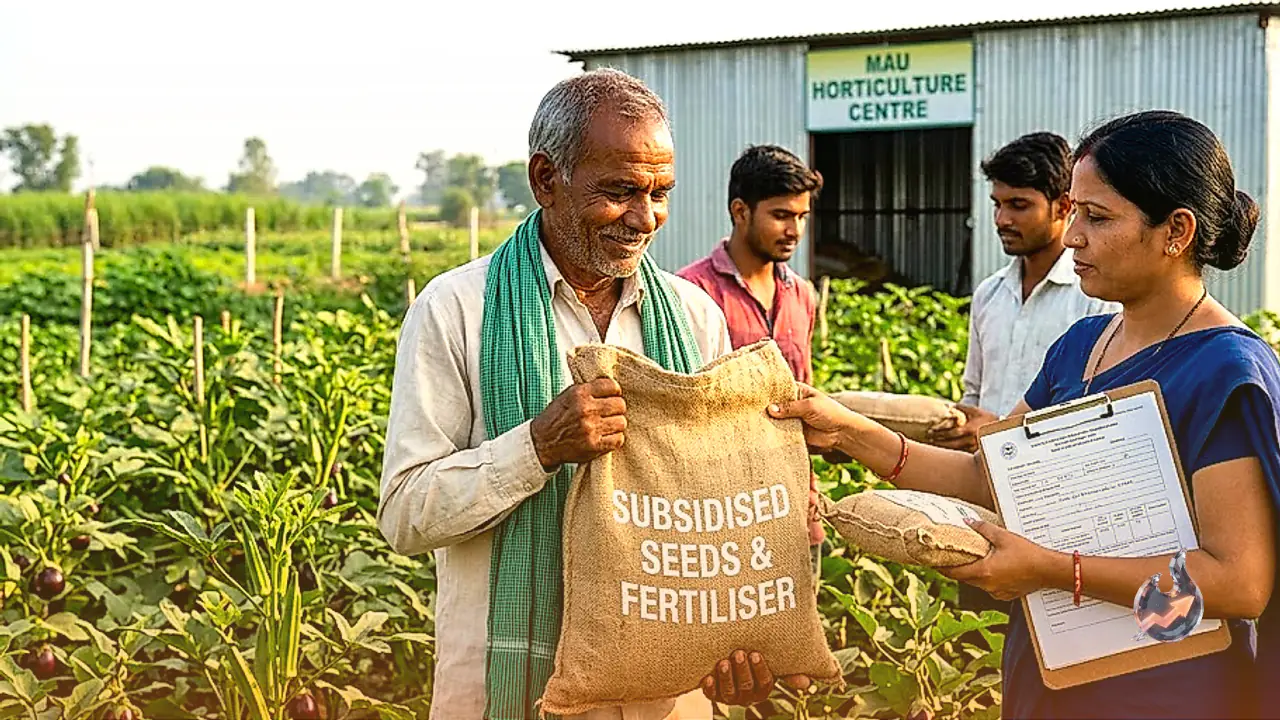

Farmers growing vegetables in Uttar Pradesh's Mau district have a new reason to cheer, with the horticulture department rolling out subsidised seeds and low-cost saplings for those willing to take up vegetable cultivation. According to Ram Singh, the District Horticulture Officer of Mau, the state horticulture mission has set a target of bringing 60 hectares in the district under vegetable farming.
Which vegetables the scheme covers
The scheme covers pumpkin-family vegetables along with Rabi and Zaid season vegetables. Seeds under the programme will be supplied through the state directorate via Direct Benefit Transfer, or DBT. Registration for the subsidy and the saplings is currently open at the horticulture department, and interested farmers must apply online through the department's website, www.harticulture.com.
Documents needed to register
To register, farmers need an Aadhaar card, khatauni (land record), bank passbook and a photograph. Registration can be completed at the nearest Jan Seva Kendra, after which all the documents need to be signed and submitted at the horticulture department office. The scheme follows a first-come-first-served rule, meaning farmers who apply earlier get priority.
How much subsidy farmers will get
Under the subsidy, farmers will be given seeds of high-yielding hybrid varieties. Cultivating vegetables on one hectare costs around Rs 24,000, of which the horticulture department will bear 40 percent as subsidy. The support isn't limited to seeds alone, it also includes organic manure, bio-fertiliser and bio-pesticide, which should bring down farmers' overall input costs significantly. No last date has been fixed for availing this scheme so far, so farmers can apply whenever they are ready.
Cheap saplings also on offer during Kharif season
With the Kharif cropping season currently underway, farmers keen on growing vegetables are being urged to register at the earliest. The horticulture department is also making saplings available for as little as Rs 1 to Rs 2 per plant. These saplings are prepared entirely from improved, modified seed varieties, which is expected to translate into better yields. Farmers can buy these saplings directly from the horticulture department's nursery.