




















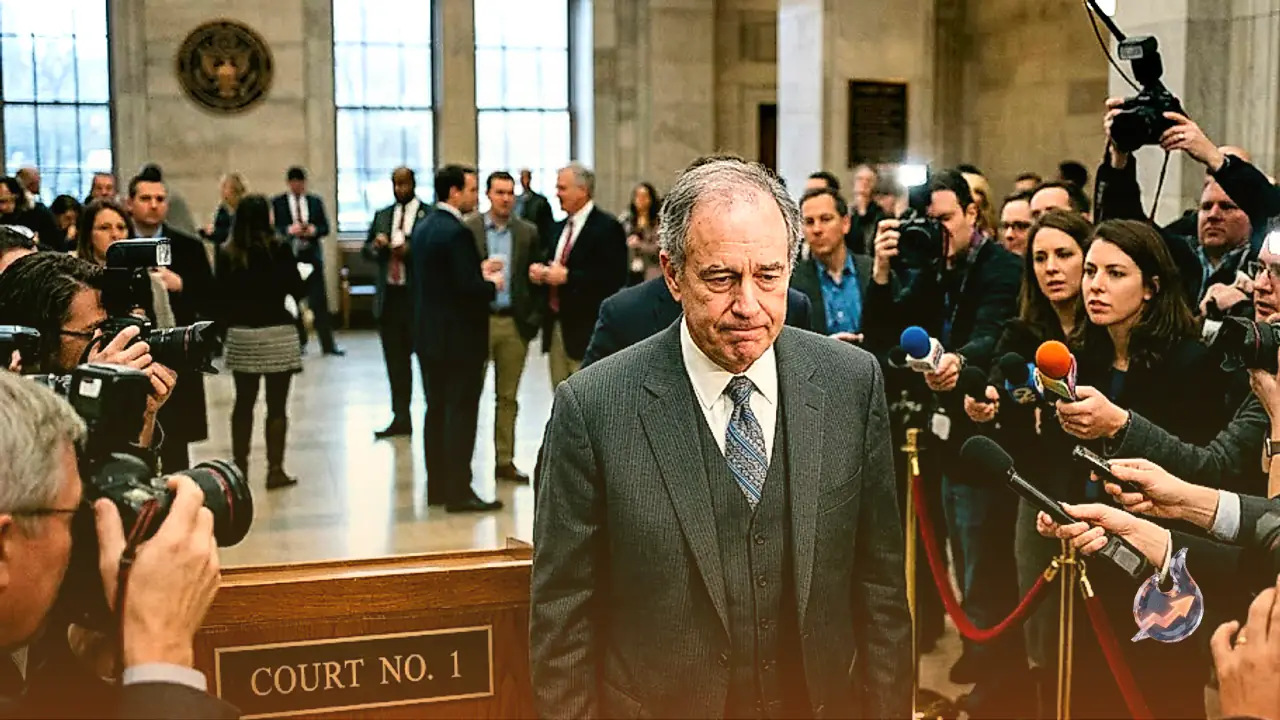

The National Company Law Tribunal has cleared a resolution proposal in the personal insolvency case of media businessman Subhash Chandra, allowing the settlement of debt exceeding 22,006.57 crore rupees for a payment of just 6.5 crore rupees. This approval means lending institutions will have to absorb a staggering haircut of nearly 99.97 percent on their admitted claims. The tribunal's decision arrives shortly after the Supreme Court cautioned against banks taking massive haircuts that jeopardize public money, emphasizing that financial institutions must exhaust every avenue to recover outstanding dues from corporate borrowers.
NCLT Third Member Ruling and Bench Proceedings
Judicial member Nilesh Sharma, acting as the third member of the tribunal, passed the order on Tuesday under Section 114 of the Insolvency and Bankruptcy Code. The ruling dismissed the objections raised by dissenting creditors who argued that the recovery amount was unreasonably small. The matter had been referred to Nilesh Sharma by the NCLT President after the initial two-member bench delivered a split verdict due to differing opinions. Following this third-member decision, the case will now return to the original two-member bench to issue a formal order based on the majority view under Section 419(5) of the Companies Act, 2013.
Objections Raised by LIC Housing Finance and Dissenting Lenders
A consortium of creditors led by LIC Housing Finance strongly opposed the repayment plan, labeling it illegal and impractical. Highlighting the stark gap between the debt and recovery offer, dissenting lenders pointed out that against total admitted claims of 22,006.57 crore rupees, the plan offered lenders only 6.25 crore rupees towards debt settlement alongside 25 lakh rupees to cover insolvency resolution process costs. In the case of LIC Housing Finance, its approved claim stood at 1,322.39 crore rupees, yet the proposed payout was merely 38,09,294 rupees, which translates to a meager 0.028 percent of its total claim. Furthermore, objecting financial institutions noted that the 6.5 crore rupee offer was described as indicative rather than definitive, rendering the proposed resolution tentative and uncertain.
Voting Breakdown and Majority Creditor Support
Overriding the objections of the dissenting lenders, the tribunal emphasized the voting distribution among creditors. According to NCLT records, the objecting creditors collectively held less than 20 percent of the voting rights. In contrast, the settlement proposal submitted by Subhash Chandra secured the approval of 80.81 percent of the voting creditors. Because the statutory voting threshold under the Insolvency and Bankruptcy Code was met by a significant majority, the tribunal permitted the settlement process to move forward despite minority opposition.
Detailed 144-Page Order and Valuation Findings
In his comprehensive 144-page order, judicial member Nilesh Sharma detailed the rationale behind approving the settlement. The order referenced the assessment of the resolution professional, which found that the total value of Subhash Chandra's personal assets was significantly lower than even the proposed 6.5 crore rupee payout. Consequently, rejecting the settlement scheme was unlikely to yield any higher recovery for the dissenting creditors. The tribunal also noted that approving the plan could stabilize Chandra's financial position, potentially improving the chances for dissenting lenders to achieve direct recovery from his primary obligors in the future.