





















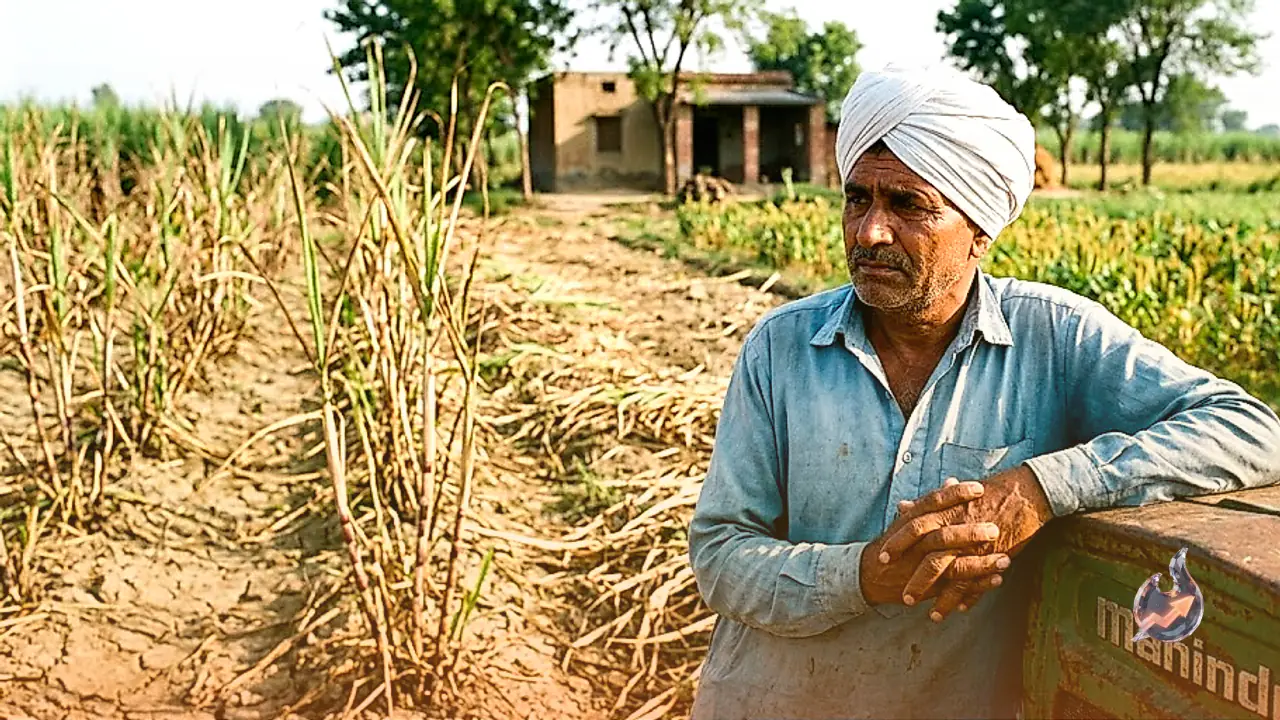

The village of Dayalpur in Faridabad was once widely recognized for its vast and thriving sugarcane fields. Local farmers relied entirely on this crop, managing to cover their household expenses while earning a respectable profit. However, over time, circumstances shifted dramatically. A region that previously dedicated nearly 100 percent of its agricultural land to sugarcane now sees barely 30 percent of farmers continuing the practice. Growers point out that while production costs have risen continuously, sugarcane prices have failed to keep pace. Consequently, farmers have gradually distanced themselves from sugarcane cultivation, finding the venture increasingly unviable.
Generational Farming Loses Its Lure
A local farmer, Jitendra, shares that he cultivates sugarcane across three acres of land, carrying forward a family tradition practiced by his grandfather and great-grandfather. Yet, he notes that the farming business no longer yields the profits it once did. Expenses related to fertilizers, seeds, and other agricultural necessities have escalated steadily, while the price of sugarcane remains stagnant. Although government rhetoric often emphasizes doubling farmers' incomes, the ground reality reflects a starkly different picture, with cultivators sinking deeper into debt.
The Heavy Economics of Sugarcane Production
Breaking down the finances, Jitendra explains that farming a single acre of sugarcane incurs expenses of up to 30,000 rupees. This total encompasses land preparation, sowing, harvesting, ploughing, irrigation, fertilizers, and labor wages. Once the crop is ready, farmers must additionally bear the transportation costs to deliver the produce to the sugar mill. After incurring such high expenditures, very little remains in the hands of the grower. The financial strain has grown so severe that many individuals are compelled to sell their land. Pointing to the surging market prices of sugar, farmers argue that sugarcane rates should be at least 1,000 rupees per क्विंटल. While the currently quoted rate hovers around 400 to 450 rupees per क्विंटल, transport and other deductions leave farmers with only 350 to 380 rupees in hand. Years ago, earnings from this harvest were sufficient for families to purchase gold, whereas buying even a single tola of gold today is out of reach.
Year-Round Toil And The Permit Delay Dilemma
Producing sugarcane is a demanding, labor-intensive process. It requires multiple rounds of ploughing, followed by weeding, tying, fertilizing, and frequent watering. Crops require irrigation roughly every 15 days, demanding constant year-round supervision, including repeated tying to support the stalks. Despite twelve months of rigorous labor, growers fail to receive fair compensation at harvest time. Furthermore, the official permit slip system creates persistent headaches. Local sugarcane collection centers require the arrival of a designated slip before a farmer can deposit their produce. Delays often stretch from 10 to 15 days, during which hired laborers must still be paid while sitting idle. Employing just five workers means shelling out 500 to 600 rupees per laborer daily, with delayed permits only compounding the financial burden.
Struggling To Clear Basic Utility Bills
Jitendra adds that whether cultivators opt for wheat, paddy, or sugarcane, expenses are climbing everywhere without a corresponding rise in income. Farmers are currently struggling to pay even their electricity bills on time. Faced with such overwhelming pressures, agricultural communities are left wondering how they are expected to survive.