

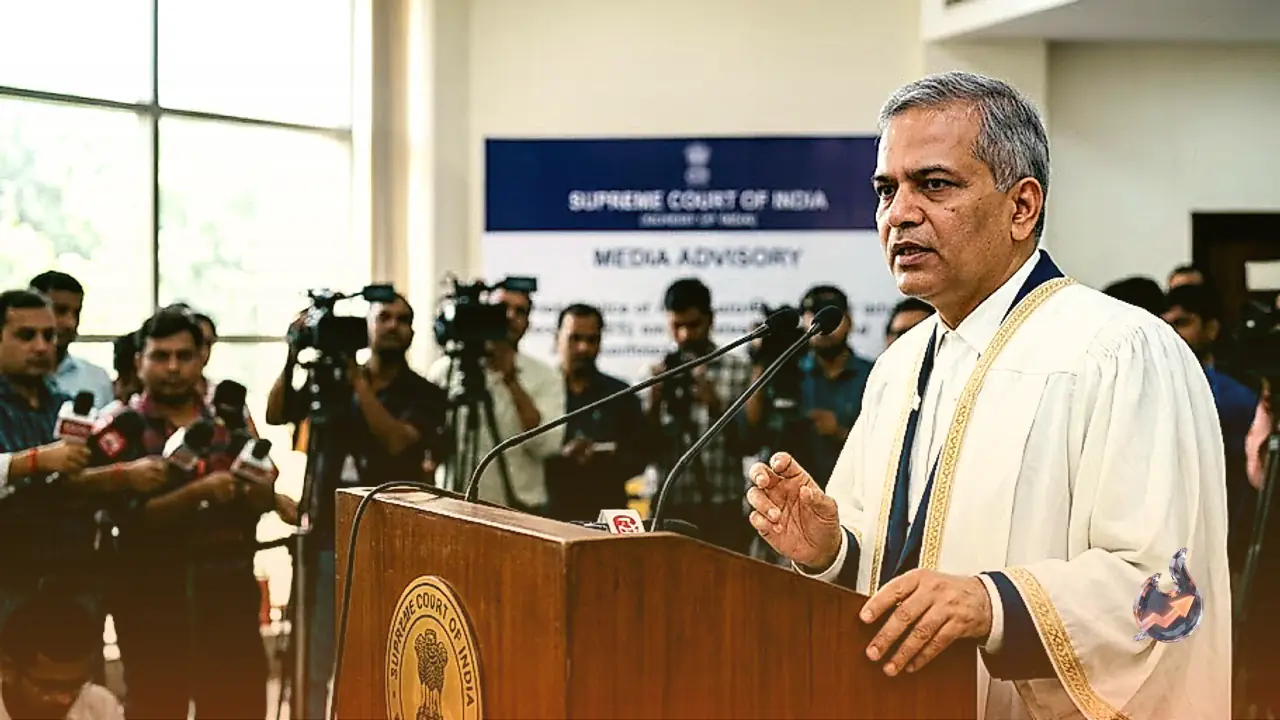





















Chief Justice of India (CJI) Surya Kant has issued a definitive statement regarding the internal functioning and dignity of the higher judiciary, setting out clear constitutional boundaries on institutional accountability. Addressing the recent controversy stemming from the Rajasthan High Court and official communications written by Justice Sandeep Mehta, the Chief Justice articulated the judiciary's official stance with absolute clarity. He emphasized that grievances, allegations, or administrative disputes concerning judges cannot be tried, debated, or resolved through media commentary, public claims, or external narratives. As a constitutionally mandated institution, the judiciary resolves all internal matters strictly in accordance with established institutional procedures and statutory frameworks.
Principles of Natural Justice and Fair Hearing
Taking a firm stance on the matter, CJI Surya Kant asserted that the contents of the letters submitted by Justice Sandeep Mehta are not subjects for public adjudication or external deliberation. The Chief Justice highlighted that the mere levelling of allegations against a judge does not equate to a finding of guilt or misconduct. He stressed that granting the concerned judge (Justice Sharma) a comprehensive, transparent, and unbiased opportunity to present their defence is a fundamental pillar of judicial fairness. Arriving at definitive conclusions without a proper hearing and thoroughly scrutinized evidence directly violates the core tenets of natural justice.
Detailed Investigation and Administrative Due Process
Outlining the framework of the ongoing inquiry, the Chief Justice informed that the complete documentation is currently being examined at an appropriate and competent level. Within this established process, both the material provided by Justice Sandeep Mehta and the official response submitted by Justice Sharma are undergoing detailed and impartial scrutiny. Decisions regarding administrative arrangements, including continuity in the position of Acting Chief Justice, potential judicial transfers, or any related administrative actions, will be rendered exclusively by the designated Transfer Authority. Any formal step will follow only after a complete and objective evaluation of all records and responses.
High Court Chief Justice Appointments and the Collegium's Role
Alongside addressing the specific dispute, CJI Surya Kant provided an update on judicial administration across the country, particularly regarding vacant posts of Chief Justices in various High Courts. He affirmed that the Supreme Court Collegium is actively expediting the selection and appointment process for Chief Justices in High Courts nationwide. Furthermore, the Collegium has taken proper cognizance of the administrative issues and observations highlighted in the correspondence from Justice Sandeep Mehta. The Chief Justice's remarks reinforce that institutional governance and judicial appointments will remain completely insulated from external pressures, speculative reports, or public campaigns.
Safeguarding Institutional Autonomy and Public Trust
The clear messaging from CJI Surya Kant underscores the judiciary's commitment to upholding procedural integrity while insulating its functions from external clamour. Maintaining public confidence in the judicial system requires that disputes be addressed through rigorous institutional checks rather than public trials. By reaffirming that due process will govern the resolution of the Rajasthan High Court developments, the Supreme Court has reaffirmed the supremacy of constitutional procedure over unverified public claims.