















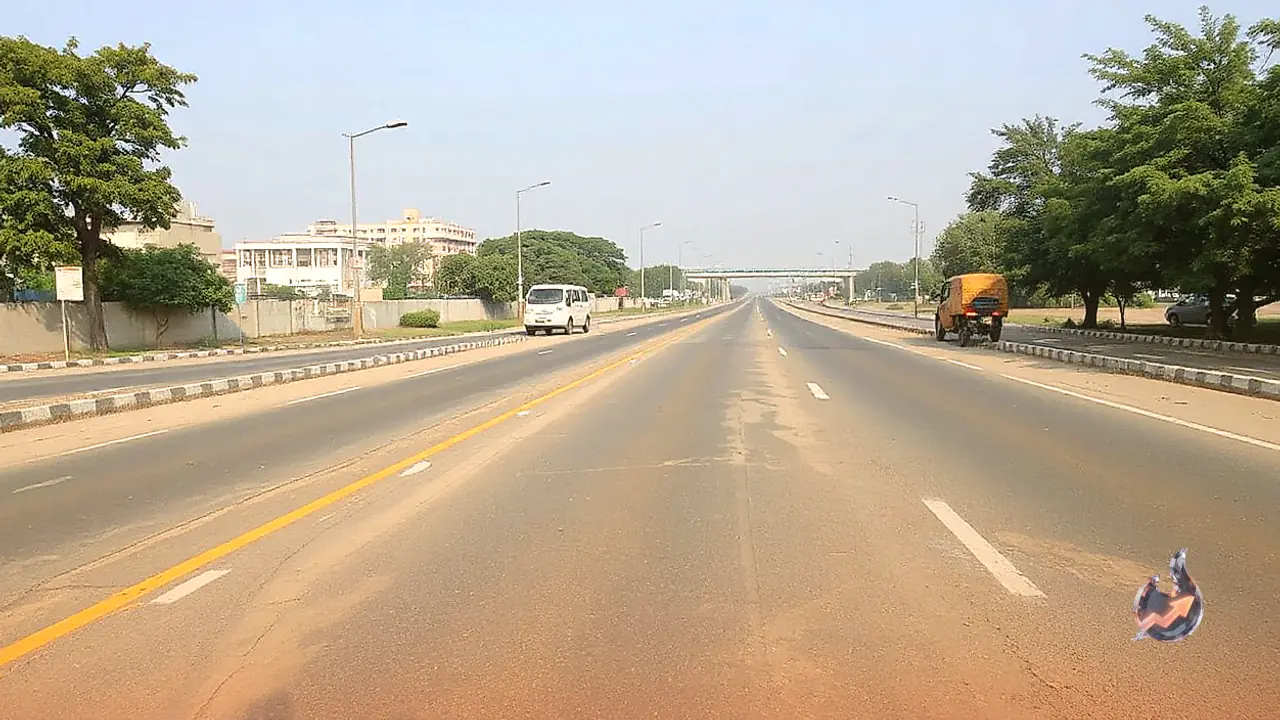

Commuters navigating the heavily congested transit routes between the national capital and its neighbouring corporate hub are set to receive significant infrastructure relief. Following the rollout of the Dwarka Expressway, another major expressway corridor is being charted out to streamline mobility between Delhi and Gurugram. The National Highways Authority of India has commenced work on the detailed project report for this proposed 50-kilometre road, setting the stage for construction to begin once preliminary planning wraps up.
Urban Extension Road-1 Project Overview
Designated as Urban Extension Road-1 (UER-I), the newly conceptualised transit corridor will form a vital bridge between the Upper Dwarka Expressway and the 75-metre wide master road in Gurugram. Once operational, the expressway will drastically simplify travel between southwest Delhi and various hubs across Gurugram. Covering an expansive span of 50 kilometres, the project requires comprehensive blueprints covering alignment design, cost estimates, and technical documentation as part of the detailed project report. Highway authorities have scheduled a timeline of six months from the issuance of the DPR to assemble all essential project parameters and clearances.
Inter-State Connectivity Across the NCR Grid
Transportation planners note that UER-I will function as a pivotal feeder highway, linking multiple transit arteries circling the capital. The route is planned to intersect with the Chandigarh Highway, Rohtak Road, UER-2, and crucial corridors heading toward Bahadurgarh and Sonipat. Motorists will also be able to access National Highway-8 near Kapashera via this network. By interconnecting these regional passages, the expressway will present travellers moving between Delhi, Haryana, and wider NCR districts with a dependable, congestion-free alternative.
Integration with Gurugram Infrastructure
The layout of the project directly addresses vehicular distribution inside Gurugram. To establish an unhindered interchange with Gurugram's 75-metre road, NHAI will construct a dedicated 5-kilometre link road, which will further feed into the Upper Dwarka Expressway stretch. This connects smoothly with prior infrastructure, including the 10-kilometre Upper Dwarka Expressway completed by the Gurugram Metropolitan Development Authority in 2023, which traverses Sectors 99 and 115 to reach the capital's edge.
Planned Gap Roads and Feeder Stretches
Beyond the core 50-kilometre alignment, authority engineers have outlined several missing link stretches to prevent localized bottlenecks. A 4-kilometre gap road will be constructed to tie Sector 109 directly to Najafgarh Road within Delhi. An additional 2.5-kilometre missing link is planned to bridge traffic cleanly onto the 75-metre road. Because the right of way narrows upon entering Delhi territory, a dedicated 300-metre gap road will lead directly to the Bajghera MCD toll booth. Furthermore, a stretch measuring approximately 1.3 kilometres will extend seamless connectivity to the village of Raghupur.
Projected Real Estate Impact Along the Corridor
Upgrades of this scale frequently reshape regional property markets, and western Gurugram stands positioned for considerable economic activity. Streamlined access along the Dwarka Expressway belt is anticipated to lift land values and property prices across Gurugram Sectors 99, 102, 109, 113, and 115. Apartment demand in Sector 109 is projected to rise steadily, accompanied by growing inquiries for residential homes in Bajghera and Palam Vihar. The improved transit access will likely draw fresh prospective buyers and institutional investors, turning the corridor into an active hub for real estate development alongside its primary role in decongestion.