























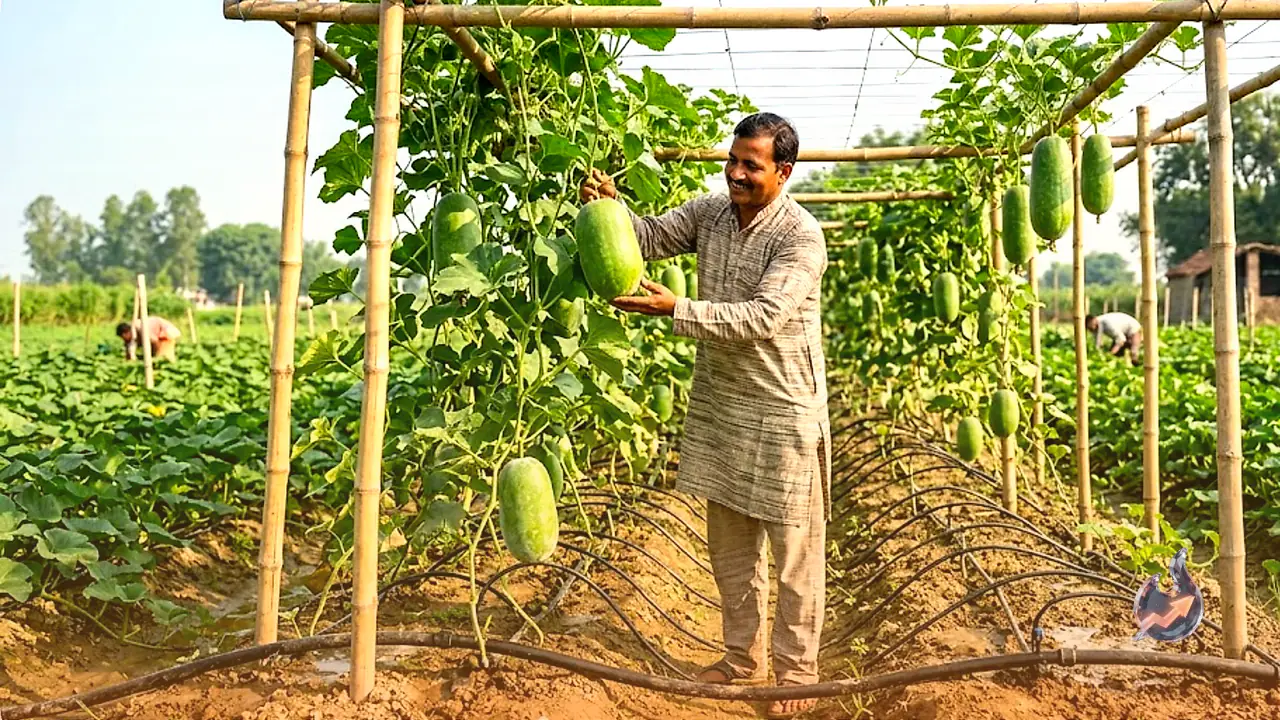

If you are a farmer in the Moradabad region looking to diversify beyond traditional crops, cultivating Petha (also known as white pumpkin or ash gourd) offers a lucrative financial opportunity. By leveraging modern scientific practices and advanced cultivation methods, growers can achieve yields ranging from 80 to 120 quintals per acre. Based on current market rates, this agricultural venture can generate a net profit of 2 to 3 lakh rupees per acre.
Modern Cultivation Methods
According to agricultural scientist Dr. Deepak Mehndiratta, the trellis method combined with drip irrigation is considered the gold standard for Petha farming. These methods not only enhance the overall quality of the fruit but also significantly reduce the incidence of disease and pest attacks. This crop can be grown successfully during the Zaid season, as well as during the June and July window. Loamy soil is considered the most suitable medium, and preparing the field requires three to four rounds of thorough plowing.
Soil Selection and Planting Strategies
Selecting land with excellent drainage is crucial, as waterlogging can cause severe damage to the crop. Farmers should opt for high-yield varieties like Kashi, Surbhi, and Pusa to ensure better productivity. Approximately 1.5 to 2 kilograms of seeds are required per acre. It is essential to maintain a distance of 2 to 2.5 meters between individual plants to ensure proper growth space.
Care and Productivity
Planting on raised beds is highly recommended; this prevents the fruit from coming into contact with the ground, ensuring they remain clean while maintaining better color and taste. Well-rotted farmyard manure is considered the ideal fertilizer for this crop. Because the crop thrives in warmer weather, irrigation is necessary every 4 to 6 days. By strictly adhering to these recommended agricultural practices, farmers can maximize their yields and significantly increase their household income through high-quality produce.