























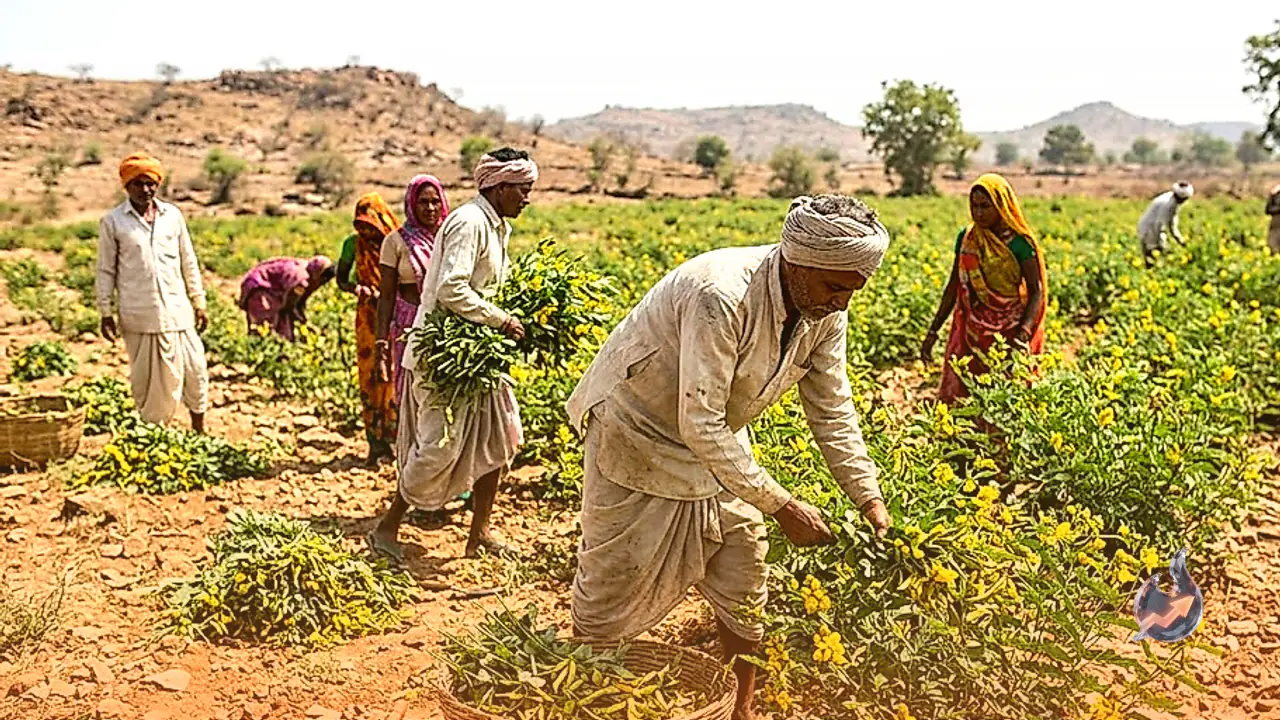

Agricultural communities in the Chitrakoot district of Bundelkhand frequently encounter numerous obstacles due to low rainfall, water scarcity, and rocky terrain. Farming in the Patha region, in particular, is considered quite challenging. Amid these difficulties, cultivators are increasingly shifting away from traditional farming methods toward medicinal crops, with senna emerging as a highly profitable alternative. For those planning to undertake this agricultural venture in the area, following straightforward guidelines makes growing this crop quite accessible.
Plant Characteristics and Market Demand
Senna is fundamentally a medicinal plant whose leaves find extensive application in traditional medicine systems and various pharmaceutical products. Because of these applications, market demand for the crop remains consistently high. A key advantage of senna is that the crop matures in approximately three months. The soil in the Patha area of Chitrakoot is considered very fertile for medicinal farming, enabling cultivators in the district to generate substantial profits.
Expert Insights and Production Details
Agricultural expert Vijay shared details indicating that once senna plants are established, production continues for three consecutive years. A major benefit of this crop is that stray animals refuse to consume it, protecting the fields from damage. If the leaves are not harvested in time, they naturally shed after three to four months.
Uses, Costs, and Market Value
The medicinal foliage is utilized primarily in laxative powders and several other pharmaceutical formulations. The plant thrives effortlessly even in shallow soil just one foot deep. Seeds are readily available in the market for up to 150 rupees per kilogram, with approximately two and a half kilograms required per bigha. Regarding market pricing, the produce easily sells for around 1,000 rupees per kilogram, allowing cultivators to earn significant returns.