






















A simple plate of lentils and flatbread, steamed rice, or stuffed parathas instantly transforms into an exciting meal whenever a spoonful of tangy homemade pickle accompanies it. The vibrant combination of zesty lemon sourness and the sharp heat of fresh green chillies creates an irresistible pairing that elevates every bite. Many home cooks hesitate to make traditional pickles under the impression that it demands tedious sun-drying routines spread over multiple weeks or excessive preparation. However, this classic lemon and green chilli pickle can be put together in a surprisingly straightforward manner using everyday pantry spices.
Essential Ingredients For The Pickle
Selecting fresh and firm produce forms the foundation of a flavorful and long-lasting pickle. The core ingredients include eight to ten fresh lemons alongside approximately one hundred grams of crisp green chillies. The spice profile relies on whole and coarsely ground aromatics, featuring two tablespoons of fennel seeds, two tablespoons of coarsely crushed black mustard seeds or yellow mustard dal, one teaspoon of fenugreek seeds, and half a teaspoon of nigella seeds.
To provide seasoning and visual appeal, keep ready one teaspoon of turmeric powder, one teaspoon of Kashmiri red chilli powder, one-fourth teaspoon of asafoetida, and regular salt adjusted to taste. For cooking and curing, reserve four to five tablespoons of pure mustard oil alongside three to four tablespoons of freshly extracted lemon juice.
Prepping The Lemons And Green Chillies
The preparation stage requires careful handling to prevent spoilage and ensure great texture. Rinse the whole lemons thoroughly under clean water and wipe them down with a clean kitchen towel until they are entirely dry. Once dry, cut the lemons into small, uniform bite-sized pieces according to your serving preference.
Wash the green chillies equally well and let them air dry completely until no surface moisture remains. Remove the green stalks from each chilli and make a neat lengthwise slit down the center without cutting them completely in two. Slitting the chillies allows the aromatic oil and ground spices to penetrate right to the core.
Roasting And Grinding The Spices
Lightly toasting whole spices awakens their essential oils and deepens the overall flavor profile. Place the fenugreek seeds, fennel seeds, and mustard seeds into a dry skillet or pan over low heat. Roast them gently for roughly one minute while stirring constantly so that none of the delicate seeds scorch. As soon as a mild toasted fragrance rises from the pan, turn off the stove and transfer the spices to a separate plate to cool down.
Once the roasted seeds have cooled to room temperature, transfer them into a blender jar and pulse until coarsely ground. Avoid reducing the mixture into a fine powder, as a coarse texture gives the pickle its authentic crunch and mouthfeel.
Heating The Mustard Oil And Infusing Aromatics
Pour four to five tablespoons of mustard oil into a pan and heat it gently until it turns hot. Once heated, switch off the heat and allow the oil to cool down until it remains just lukewarm. Adding whole spices directly to piping hot oil could burn them, whereas lukewarm oil extracts flavors safely.
When the oil has cooled to a warm state, introduce the asafoetida and nigella seeds into the pan. Follow immediately by stirring in the coarsely ground spice blend, the turmeric powder, and the Kashmiri red chilli powder. Stir thoroughly so the warm oil absorbs the color and warmth of the ground spices.
Combining The Produce And Fresh Juice
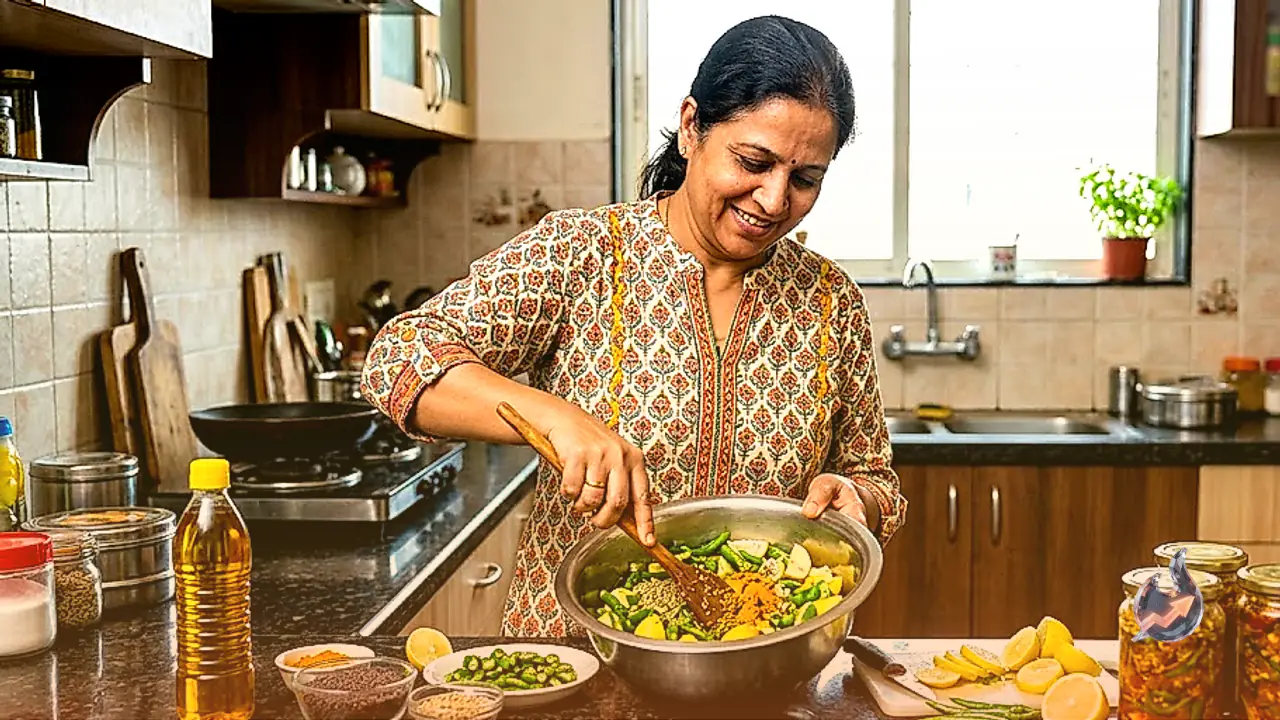
Add the chopped lemon wedges and slit green chillies directly into the pan containing the spiced lukewarm oil. Sprinkle in salt according to taste and use a dry spatula to toss everything together until every piece of lemon and chilli is thoroughly coated in the fragrant spice paste.
Next, pour in the three to four tablespoons of freshly squeezed lemon juice over the mixture. This extra citrus juice enriches the tartness, helps thin out the sauce into a juicy base, and aids in breaking down the firm lemon rinds over the resting period.
Storage Guidelines And Maturation
Moisture is the primary enemy of any homemade preserve, making dry handling essential throughout the process. Ensure that all cutting boards, knives, mixing spoons, and hands remain bone dry during preparation. The glass container intended for storing the pickle must be thoroughly washed, sterilized, and completely dried before use.
Transfer the seasoned pickle into the dry glass jar and secure the lid tightly. Keep the jar at regular room temperature for two to three days. During this short curing period, gently stir the contents once daily using a dry, clean spoon to redistribute the settled spices and juices. Within just a few days, the lemon rinds will soften noticeably, and the vibrant flavors will meld together into a delicious condiment ready for everyday meals.