























Poultry farming is increasingly emerging as a reliable and accessible avenue for agricultural households seeking to generate supplementary income alongside traditional crop farming. Owing to minimal land requirements and relatively modest initial investment costs, poultry rearing presents a highly viable enterprise for smallholder and marginal farmers in rural communities. However, the overall profitability of a poultry unit depends significantly on the chosen production model, bird breed, feed efficiency, health management practices, and prevailing market prices. By adopting structured planning, farming families can initiate operations on a modest scale and progressively expand their poultry enterprise in step with local commercial demand.
Government Subsidy Framework and Allotment of 400 LIT Chicks
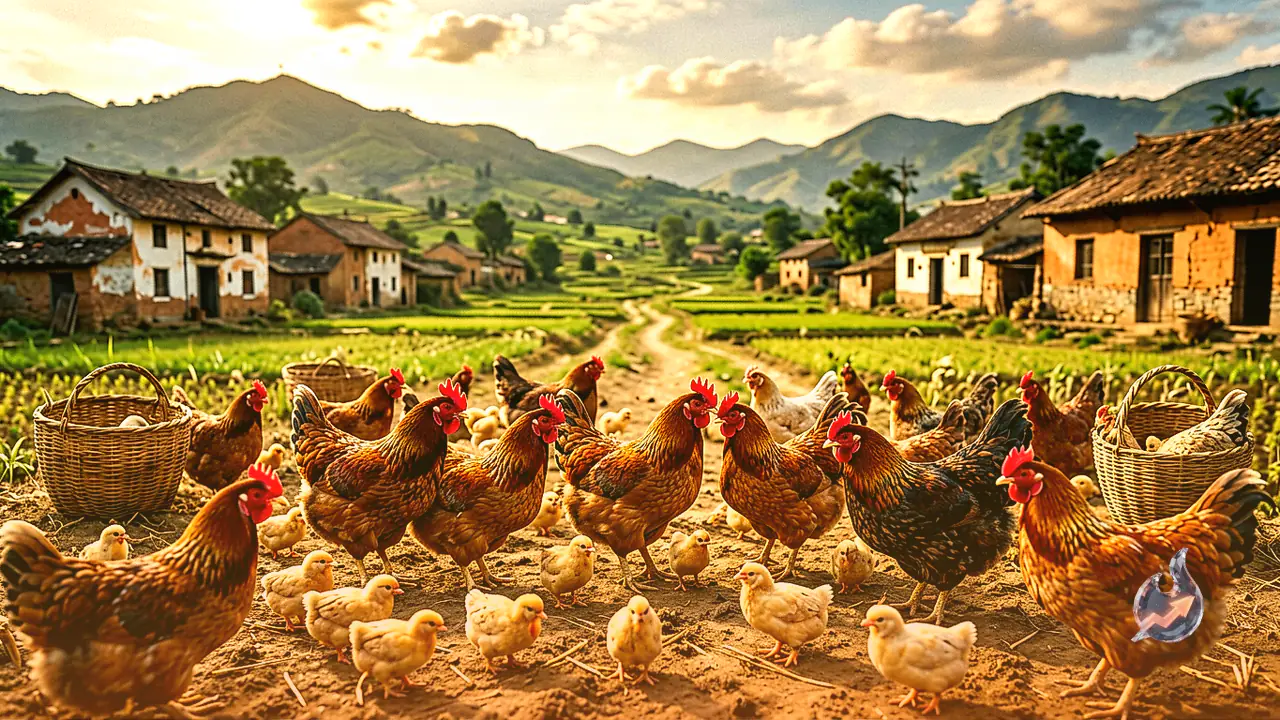
To incentivize backyard and small-scale poultry rearing, the Rajasthan state government conducts dedicated poultry development initiatives across targeted districts. Under this state-supported scheme, each identified beneficiary household is entitled to receive a total of 400 Low Input Technology (LIT) chicks delivered across two structured phases. The initial installment supplies the farmer with 200 chicks maintaining a balanced 50:50 male-to-female ratio. The secondary batch of 200 LIT chicks is distributed after a gap of 18 months. This staggered distribution framework provides essential foundational support, allowing rural rearers to establish their poultry management routines without encountering severe early financial burdens.
Choosing Production Models and Maintaining Flock Health
Prior to setting up a poultry unit, prospective farmers must carefully evaluate surrounding market demand to select the appropriate operational model, choosing between egg production through layer farming or meat production through broiler farming. Maintaining healthy livestock requires establishing clean, well-ventilated housing sheds equipped with constant clean drinking water and balanced feed ratios. To effectively prevent infectious poultry diseases and keep flock mortality rates low, farmers are strongly advised to seek ongoing guidance from local animal husbandry department veterinarians regarding timely vaccination schedules and routine health checks.
Skill Training Opportunities and Working Capital Credit
State assistance for poultry rearers goes beyond the physical distribution of chicks. Through the official Raj Kisan Portal, the Department of Animal Husbandry facilitates specialized support programs, including the Poultry Skill Development, Technology Transfer, and Extension Scheme. These programs impart essential technical and modern managerial knowledge to rural farmers. Furthermore, to address recurring operational expenditures such as purchasing feed and maintaining farm infrastructure, livestock and poultry farmers can utilize short-term working capital credit facilities made available through the Kisan Credit Card system.
Cluster-Based Development and Online Application Workflow
The overarching objective of the Rajasthan government's poultry development program is to promote rural poultry rearing, cultivate entrepreneurial capabilities among small and marginal farmers, and enhance overall household earnings. Program implementation relies on forming organized clusters of rural families across selected districts, leveraging dedicated Mother Units to supply healthy LIT birds to beneficiaries. Farmers residing in Bhilwara and other rural regions across Rajasthan can leverage these measures to boost their livelihoods. Interested farmers can verify current eligibility criteria, district-specific benefits, and application guidelines on the Raj Kisan Sathi Portal or visit their local animal husbandry office to apply online.