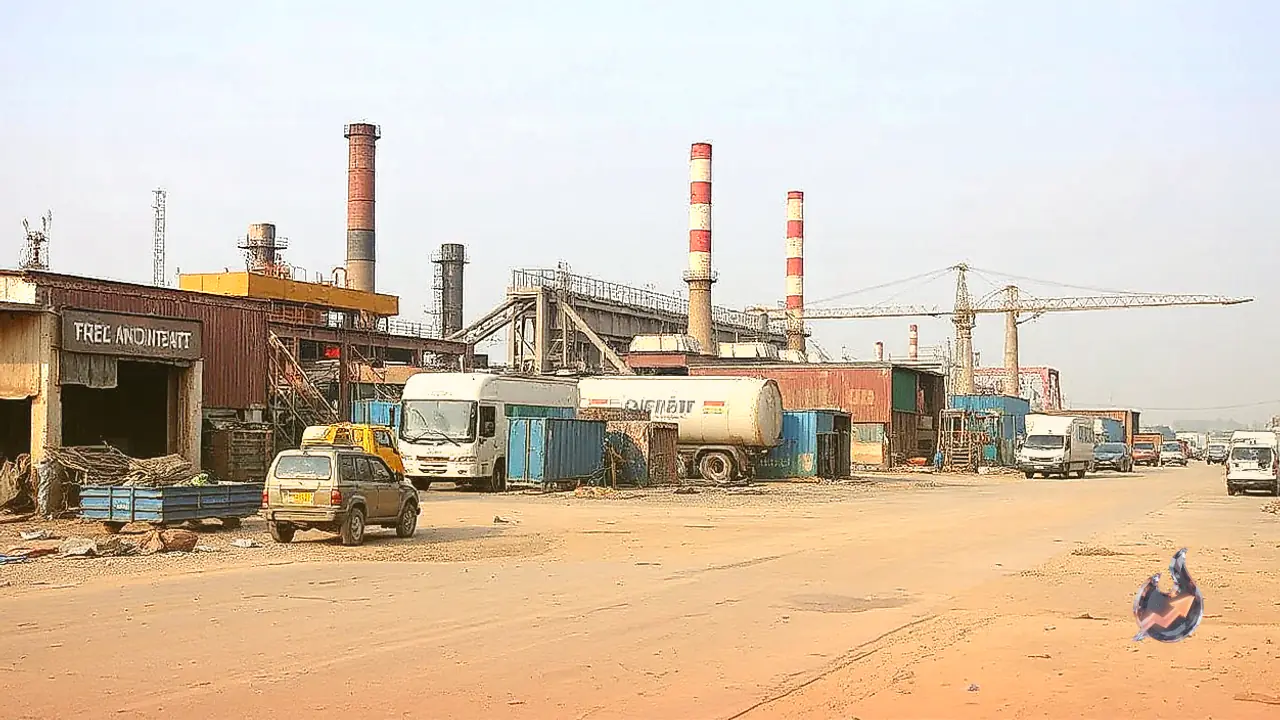

























Trading momentum surged across domestic bourses on Monday, November 2, 2026, as shares of Reliance Industries witnessed heavy buying interest, jumping nearly 8.1% during intraday trade to touch Rs 1,259. The sharp rally marks the stock's most substantial single-day upward move in more than three years, catapulting the conglomerate's overall market capitalization past the Rs 17 lakh crore milestone. Strong operational performance across both refining and chemicals during the September quarter, coupled with the high-profile rollout of Jio Platforms, has triggered a wave of optimism among institutional market participants.
The Refining Margin Dynamics and Processing Economics
Crude oil extracted from oilfields cannot be fed directly into engines or machinery without specialized processing. It must first pass through complex refineries that crack and separate the hydrocarbons into usable finished fuels, including petrol, diesel, jet fuel, and petrochemical feedstocks. A refining enterprise generates its earnings based on the fundamental gap between the acquisition price of raw crude oil and the market value realized from selling finished distillates. Whenever the spread between end-product prices and underlying crude costs widens, refinery operational profitability expands substantially. This critical pricing differential is known across energy trading desks as refining margin or crack spread.
During the three months ending September, international energy markets experienced severe tightness in the supply of refined petroleum distillates across major consumer hubs. Simultaneously, heightened geopolitical friction and elevated crude oil benchmarks disrupted regular shipping corridors and inventory flows. These dynamic global factors played directly to the operational advantages of the Reliance refining infrastructure, enabling the enterprise to capture premium pricing for its processed volumes.
Oil-to-Chemical Division Delivers Landmark Earnings
The Oil to Chemicals (O2C) segment of Reliance registered its strongest financial metrics on record during the September quarter. This integrated business segment encompasses refining processes that transform raw hydrocarbons into commercial transport fuels, polymers, and synthetic compounds. Segment revenue expanded by 44.2% year-on-year to touch Rs 2.32 lakh crore. Concurrently, the division's operating earnings, measured as earnings before interest, tax, depreciation, and amortisation (EBITDA), surged 67.9% to reach a record Rs 25,203 crore.
Demonstrating enhanced operational efficiency, the company's EBITDA margin widened by 1.6 percentage points to reach 10.9%, proving that the conglomerate successfully captured higher net returns per processed barrel despite fluctuating cost lines. A central growth engine was transport fuels, where refining crack spreads multiplied between 3 and 3.7 times compared to the prior-year period, establishing historic peaks during the course of the quarter.
Outlook for the October-December Quarter
Following this exceptional quarterly showing, market attention has shifted to whether such elevated operational momentum can endure through the October-December period. Dharmesh Kant of Chola Securities noted that the international macroeconomic variables that bolstered second-quarter operational margins could likely extend their influence into the third quarter. Describing the earnings scorecard as fundamentally robust, Kant advised accumulating shares during temporary market pullbacks. This constructive posture is underpinned by continuing structural constraints in worldwide refining output paired with steady commercial fuel demand.
Investment banking firm Nomura also endorsed the strength of the September earnings report. The brokerage highlighted that consolidated corporate EBITDA climbed 19% sequentially, outpacing its proprietary projections by 9%, with the O2C division serving as the primary outperformance driver.
Surging Tanker Freight Pressures Countered by Discounted Crude
Despite robust operational tailwinds, certain logistical hurdles loom on the horizon. Moving heavy volumes of crude oil from overseas producers to domestic refining complexes requires Very Large Crude Carriers (VLCCs). Rising vessel chartering rates and marine freight costs across major sea lanes are increasing raw material transit expenses.
Goldman Sachs projects that escalating VLCC maritime freight rates could exert downward pressure on net refining cracks through the third quarter. Nevertheless, Reliance maintains a distinct operational hedge against elevated logistics costs. The enterprise possesses sophisticated secondary processing units engineered to handle heavy, discounted crude oil blends. Sourcing cheaper feedstock grades allows the refiner to offset higher maritime freight rates and preserve aggregate profitability.
Petrochemical Turnaround Supports Downstream Margins
Operational gains were not confined solely to automotive fuels, as downstream petrochemical manufacturing also posted tangible recovery. The company's polyester business margin reached its highest level in three years, bolstered by substantial margin expansions across key intermediate chemicals. The spread for Paraxylene (PX) advanced by 15%, while Purified Terephthalic Acid (PTA) spreads expanded by 52%. These essential chemicals serve as core raw materials for polyester yarns and textiles, and the expanding gap between input costs and end-product prices yielded significant margin improvements for downstream operations.
Analyst Recommendations and Revised Price Targets
In response to the solid quarterly balance sheet, leading international brokerage institutions have reiterated their constructive stances on the stock. Goldman Sachs retained its buy recommendation, assigning a target price of Rs 1,840 per share. Similarly, Nomura reiterated its buy rating with a target price of Rs 1,560. While Monday's 8.1% single-day stock jump reflected broad investor enthusiasm, market participants note that brokerage targets represent projections rather than guaranteed price realizations.