























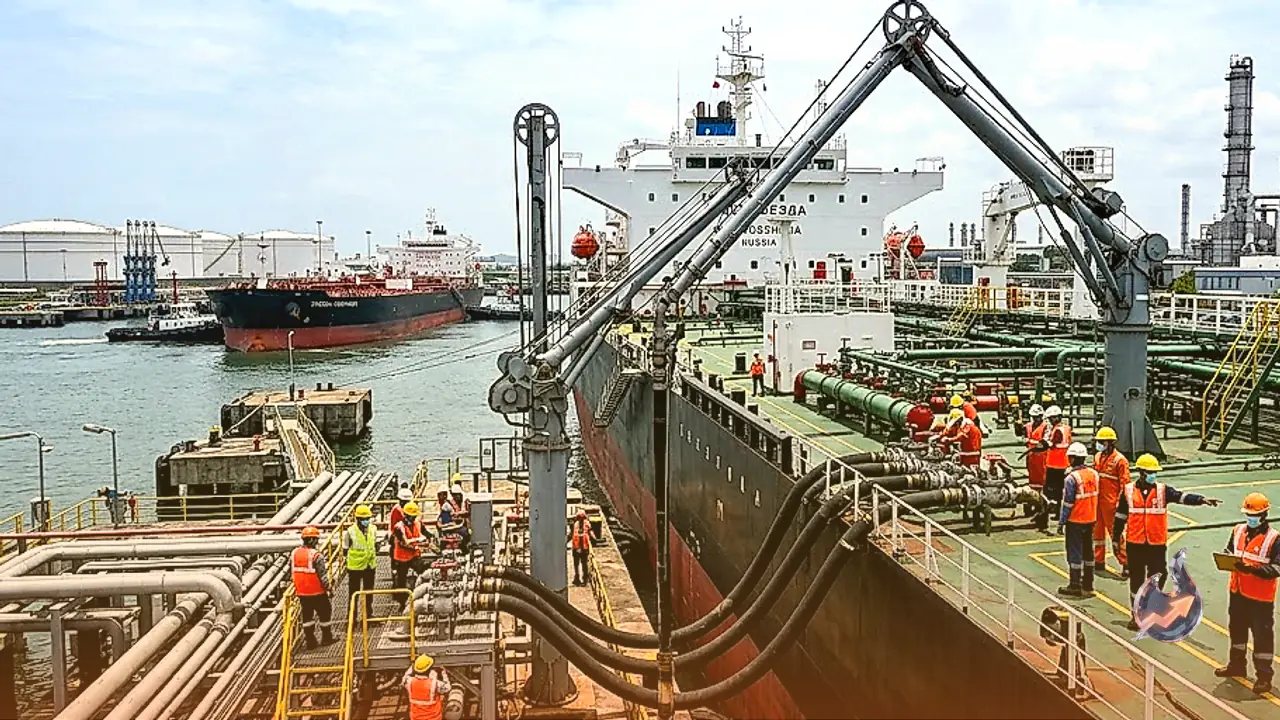

India witnessed a historic surge in its crude oil acquisitions from Russia during the month of June, marking a substantial 34 percent increase compared to the preceding month. Even as import volumes scaled new heights, a softening of global market prices meant that Russia's overall financial yield from these energy exports experienced a downward trend. These findings were detailed in a comprehensive report compiled by the Center for Research on Energy and Clean Air (CREA), highlighting India's expanding role as a major consumer of Russian energy assets.
A Closer Look at India's Strategic Hydrocarbon Imports
In June, India's total energy expenditure on Russian fossil fuels reached a valuation of 5.5 billion euros. Out of this massive sum, raw crude oil purchases accounted for a staggering 83 percent, translating to a record-breaking 4.5 billion euros. This massive scale of acquisition solidifies India's position on the global stage as the second-largest buyer of Russian hydrocarbons, trailing only behind China. The data reveals that India's overall crude oil imports from all global sources expanded by 5.4 percent on a month-on-month basis in June, showcasing an aggressive domestic appetite for refining and processing raw energy.
Massive Surge in Crude Deliveries Across Major Indian Refineries
The uptick in imports was felt directly across the operations of several key Indian oil refining facilities, which experienced monumental increases in the delivery of Russian crude. Leading the pack was the Jamnagar refinery operated by Reliance Industries, where incoming supplies of Russian oil skyrocketed by an astronomical 150 percent compared to the levels recorded in May. Not far behind, the Indian Oil Corporation (IOC) registered a massive 126 percent increase in deliveries at its Paradip refining unit. Additionally, Bharat Petroleum Corporation Limited (BPCL) saw shipments to its Kochi refinery surge by 83 percent, while Nayara Energy witnessed a 45 percent increase in Russian crude oil arrivals at its Vadinar facility during the same period.
The Paradox of Rising Volumes and Declining Russian Daily Revenue
The report by CREA outlines an interesting economic paradox concerning Russia's export dynamics in June. While India's amplified purchasing power helped drive a 14 percent expansion in the overall volume of Russia's raw crude oil exports, the country's daily financial returns from these transactions actually took a hit. Due to lower prices in the international energy markets, Russia's daily income from crude oil exports plummeted by 8 percent, settling at 348 million euros per day. Similarly, the total daily revenue generated from all Russian fossil fuel exports dipped by 1 percent to 734 million euros, despite a 7 percent increase in the total quantity of energy goods shipped out of the country.
Mapping the Flow of Fossil Fuels and Refined Global Products
Breaking down the 5.5 billion euros spent by India on Russian fossil fuels in June, the data shows that the imports comprised 4.5 billion euros of raw crude oil, 488 million euros worth of processed petroleum products, and 444 million euros of coal. Beyond merely consuming these resources domestically, Indian refining entities, alongside those in Turkey, Brunei, and Georgia, have emerged as pivotal intermediaries in the global energy supply chain. These nations processed Russian crude and collectively exported refined petroleum products worth 814 million euros to countries that have actively imposed sanctions on Russia, including the European Union (EU), the United States (US), and Australia. Out of these secondary exports, approximately 369 million euros worth of finished petroleum products were directly traced back to raw crude originally sourced from Russia.