























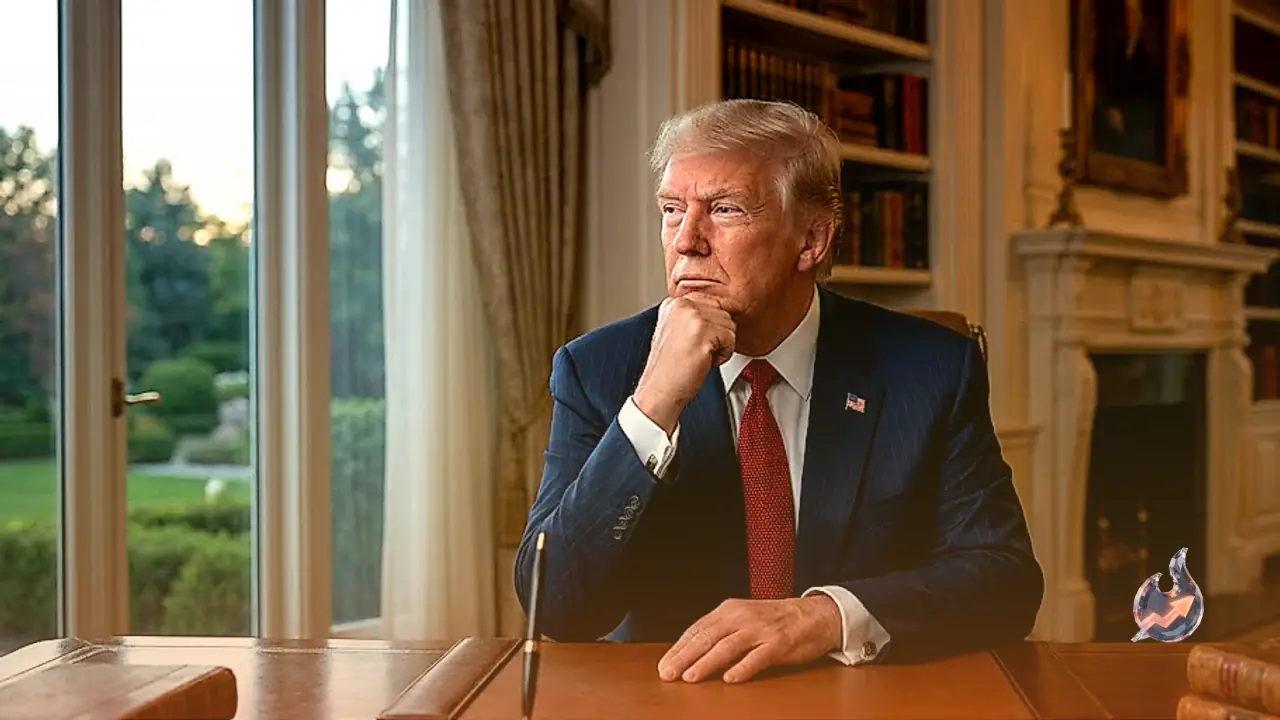

The United States Senate is currently reviewing what might be the final iteration of the highly anticipated Clarity Act, a comprehensive legislative package aimed at regulating the cryptocurrency industry. This newly circulated draft integrates a controversial ethics clause heavily advocated by Democratic lawmakers, specifically targeting the business operations of the sitting president. However, the restrictive measures contain a distinct expiration date and notably exclude the children of the president, raising questions about its overall impact on Donald Trump's existing digital asset ventures.
Examining the Scope of the Ethics Clause
The detailed legislative text, which spans 616 pages, outlines specific prohibitions for individuals holding public office. Under these proposed rules, government officials, federal employees, and their spouses would be strictly prohibited from launching, issuing, or actively sponsoring any digital assets for the duration of their time in office. Despite these boundaries on active asset creation, the legislation preserves the right of these individuals to passively invest in cryptocurrencies. Furthermore, a crucial detail within the framework is that these ethical boundaries do not apply to the children of public officials.
Responsibility for monitoring and penalizing violations of these rules would rest entirely with the Justice Department. A particularly notable element of the ethics section is its built-in sunset clause. The legislative language explicitly states that the restrictions will carry no force and effect on and after noon on January 20, 2029. This specific timestamp perfectly aligns with the conclusion of the current presidential term, meaning the constraints are entirely temporary.
The Broader Impact on Cryptocurrency Legalization
For months, the debate over ethical constraints has been regarded as the primary obstacle preventing the advancement of this extensive market-structure legislation. If this bill successfully navigates the legislative process and is signed into law, it will establish a formal, legal foundation for the majority of cryptocurrency operations across the United States. Digital Chamber CEO Cody Carbone responded positively to the development. He stated, "Today's draft is a meaningful step toward the Senate vote on the Clarity Act we've been calling for." He further noted that the organization plans to thoroughly review the text and provide feedback on potential improvements before it advances further.
Conflicts of Interest and the World Liberty Financial Debate
The push for stringent conflict-of-interest regulations stems directly from recent financial disclosures regarding President Donald Trump. His involvement in meme coin projects and his family's association with the digital asset platform World Liberty Financial have become focal points of legislative scrutiny. Recent financial filings revealed that the president generated over 1.2 billion dollars in revenue from cryptocurrency enterprises over the past year. Democratic lawmakers have consistently pointed to these earnings as clear evidence of potential conflicts of interest at the highest levels of government.
In response to these financial ties, Senator Elizabeth Warren has been vocal in her demands for absolute barriers. She has pushed for the legislation to outright prevent the president, the vice president, high-ranking government officials, members of Congress, and their immediate families from deriving profit from the cryptocurrency sector. However, the current draft's limitations, specifically its temporary enforcement timeline and its reliance on the Justice Department, are expected to face significant pushback from the Democratic caucus.
A major point of friction is the exemption of the president's family members. Because the restrictions do not apply to Don Jr. and Eric Trump, both of whom play active roles in World Liberty Financial, the provision falls short of the comprehensive firewall that Democrats initially sought. Overcoming this dissatisfaction will be mathematically challenging. The legislation requires a 60-vote supermajority to advance through the Senate, meaning it must secure the backing of a minimum of 10 Democratic senators, several of whom have already expressed strong reservations.
Safe Harbor for Software Developers
Beyond the heated ethics debate, the latest version of the bill retains the critical Blockchain Regulatory Certainty Act. This specific section is designed to establish a legal safe harbor for individuals who develop non-custodial software. By legally clarifying that these developers do not qualify as money transmitters, the bill frees them from the burdensome and expensive compliance obligations typically associated with financial institutions. The cryptocurrency industry has drawn a firm line in the sand regarding this measure, arguing that such legal clarity is essential for keeping technological innovation and development within the United States.
The push for developer protections comes in the wake of aggressive enforcement actions during the previous Trump administration, where the Justice Department successfully prosecuted and imprisoned cryptocurrency developers for creating privacy-enhancing tools. However, creating a safe harbor has provoked strong opposition from outside the tech sector. Various law enforcement agencies, joined by a unified coalition of 82 Catholic leaders, have publicly cautioned that shielding developers could inadvertently dismantle crucial safeguards designed to prevent money laundering, human trafficking, and the exploitation of children.
The Standoff Over Stablecoin Yields and Legislative Timelines
Another persistent area of conflict revolves around the treatment of stablecoin yields, a topic that has drawn intense criticism from traditional banking institutions. The updated draft maintains the restrictive language from earlier versions of the bill, firmly limiting the generation of idle yield. Consequently, under this framework, neither stablecoin issuers nor digital asset platforms like Coinbase would be permitted to distribute financial rewards based exclusively on the stablecoin balances held by their users.
The window for legislative action is rapidly closing. Majority Leader John Thune has indicated his intention to bring the bill to the Senate floor for active consideration in the very near future. With the scheduled August recess looming over the congressional calendar, lawmakers broadly acknowledge that the first week of August represents the final realistic opportunity to move the legislation forward. Once that deadline passes, the political focus in Washington will inevitably shift entirely toward the upcoming November midterms, likely stalling the Clarity Act indefinitely.