



















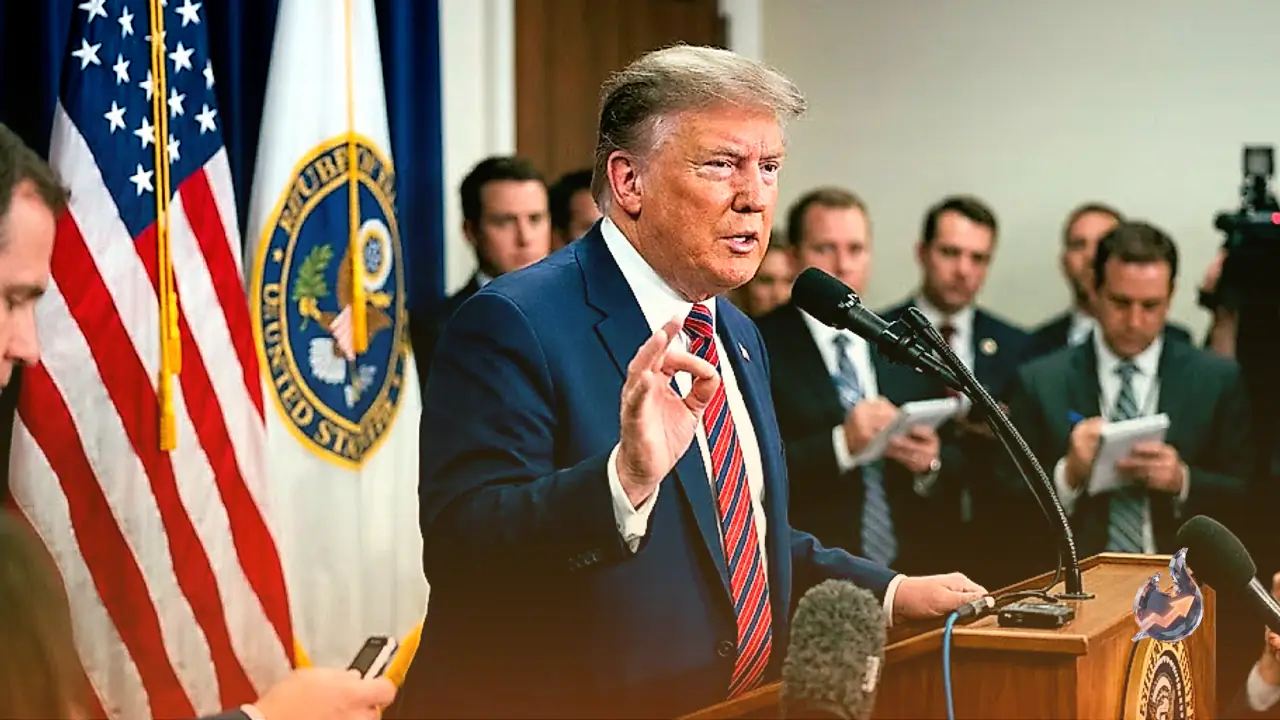

The administration led by Donald Trump in the United States is moving forward with a major policy shift that could shatter the employment dreams of many Indian nationals hoping to build careers abroad. The government has put forward a proposal to permanently establish a fee exceeding 100,000 dollars for brand-new H-1B visas. This drastic financial hurdle is expected to weigh heavily on the budgets of companies operating in the United States that regularly hire Indian talent. Specifically, the Department of Homeland Security has suggested a proposed fee of 103,265 dollars for new H-1B visas, which translates to roughly 98,86,389 rupees in Indian currency.
If this regulation eventually goes into effect, the hiring costs for employers bringing in foreign personnel will spike dramatically, with Indian professionals bearing the brunt of the impact. The H-1B visa is a vital administrative framework in the United States through which American corporations employ skilled foreign workers across critical domains such as technology, engineering, education, research, and other specialty occupations. Every year, a baseline of 65,000 regular H-1B visas are issued, alongside an additional 20,000 visas made available specifically for individuals who earn higher academic degrees within the United States.
Why Indian Professionals Face Greater Hurdles
Indian professionals hold the largest share by far within this entire visa program. Official statistics indicate that during the 2025 fiscal year, approximately 70 percent of all H-1B visa holders were Indian nationals. Citizens of China followed in second place with roughly 12 percent of the share. Given this distribution, the newly introduced fee structure is bound to cast a long shadow over Indian applicants and their prospects.
Nevertheless, a point of relief is that the proposed fee will not apply uniformly to every single H-1B case. Foreign nationals who are already residing in the United States on student visas and subsequently transition to an H-1B status will be exempt from this steep charge. Similarly, renewals for existing H-1B visas will not incur this extra fee. The primary concern is strictly directed toward those Indian and international professionals whom American companies wish to recruit and bring over directly from overseas locations.
Legal Precedents and Future Outlook
Under those direct recruitment scenarios, hiring firms could face up to 103,265 dollars in added administrative expenses for a single employee's H-1B paperwork. Confronted with such towering costs, corporations will likely hesitate significantly before sourcing fresh talent from outside American borders. It is worth noting that a previous attempt by the government to enforce a 100,000 dollar H-1B fee was halted by a central court, keeping the matter tied up in active legal battles.
At this stage, the fresh proposal will remain open for public comments and review over a 30-day window before authorities decide on a final implementation framework. Historically, fees associated with H-1B applications generally ranged between 2,000 and 5,000 dollars, making them relatively nominal. Multiplying that financial requirement manifold will sharply escalate the expenditure required for businesses to onboard external professionals, which explains why Indian applicants face the heaviest potential fallout from this policy change.