






















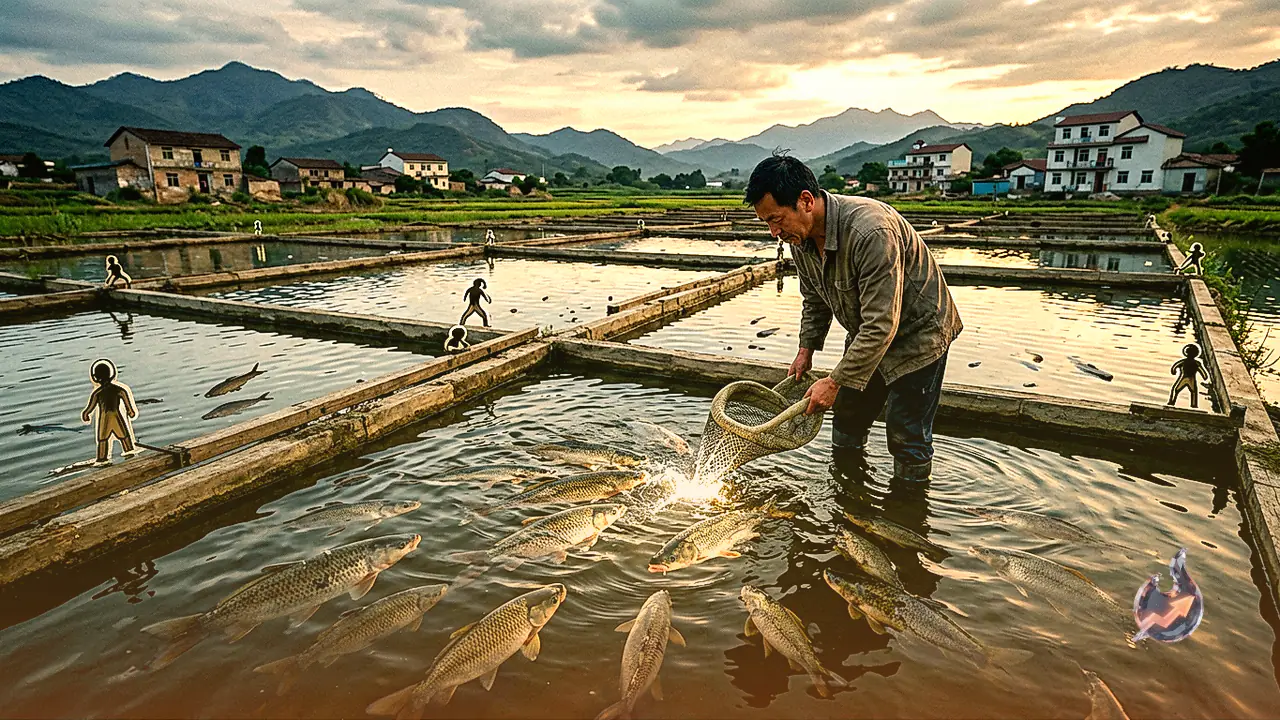

In the rural belts of Gonda, fish farming is steadily emerging as a profitable livelihood option for local farmers. However, simply releasing fish into a pond is not enough to secure a handsome income. It requires regular upkeep and precise management of the water body. When the pond water remains clean and well-balanced, the aquatic creatures grow faster, yielding a much better harvest for producers.
Pond Hygiene and Weed Control
Experts emphasize the need to periodically clear out unwanted grass, debris, and aquatic weeds from the pond. Excessive sludge and weed accumulation can degrade the quality of the water, which in turn adversely affects the health and growth rate of the fish population.
Monitoring Water Quality and Oxygen Levels
It is vital to continuously observe the color and odor of the pond water along with the behavioral patterns of the fish. If fish repeatedly come to the surface and open their mouths, it serves as a red flag indicating a drop in dissolved oxygen. Under such circumstances, immediate expert consultation is required to take corrective measures.
Feeding According to Exact Requirements
Fish should be fed strictly in accordance with their population count and body size. Dumping excess feed into the pond leads to leftover food rotting underwater, which severely damages water quality. Therefore, providing only the required amount of feed is the best practice.
Avoiding Overstocking in Ponds
Putting more fish than a pond's carrying capacity triggers heavy competition for food and oxygen, stunting their overall growth. Stocking density must always match the size and capacity of the water body. If fish appear lethargic, stay huddled near the edges, or show unusual marks on their bodies, farmers must not ignore these signs. They should immediately consult fisheries department officials or subject experts for remedial action.
Minimizing Risks Through Proper Management
Effective management is the backbone of successful aquaculture. Keeping a regular check on water parameters, stocking density, feeding schedules, and sanitation helps maintain robust fish health. By consistently monitoring pond conditions and seeking timely expert guidance upon noticing any trouble, farmers can minimize financial risks.