





Satellite internet venture Starlink, operated by aerospace company SpaceX, has announced that it has concluded preparations to roll out commercial high-speed connectivity across India. The company confirmed that it has spent more than five years coordinating closely with Indian regulatory bodies, telecom operators, and domestic industry participants. Throughout this multi-year engagement, the enterprise constructed in-country gateways, specialized network hubs, and dedicated infrastructure designed strictly to handle Indian data traffic within national borders while securing mandatory government authorisations. This operational update arrives amidst a broader debate concerning market competition, legal obligations, and the final stages of satcom spectrum allotment in the country.
Reliance Highlights Rule of Law and Competitive Dynamics
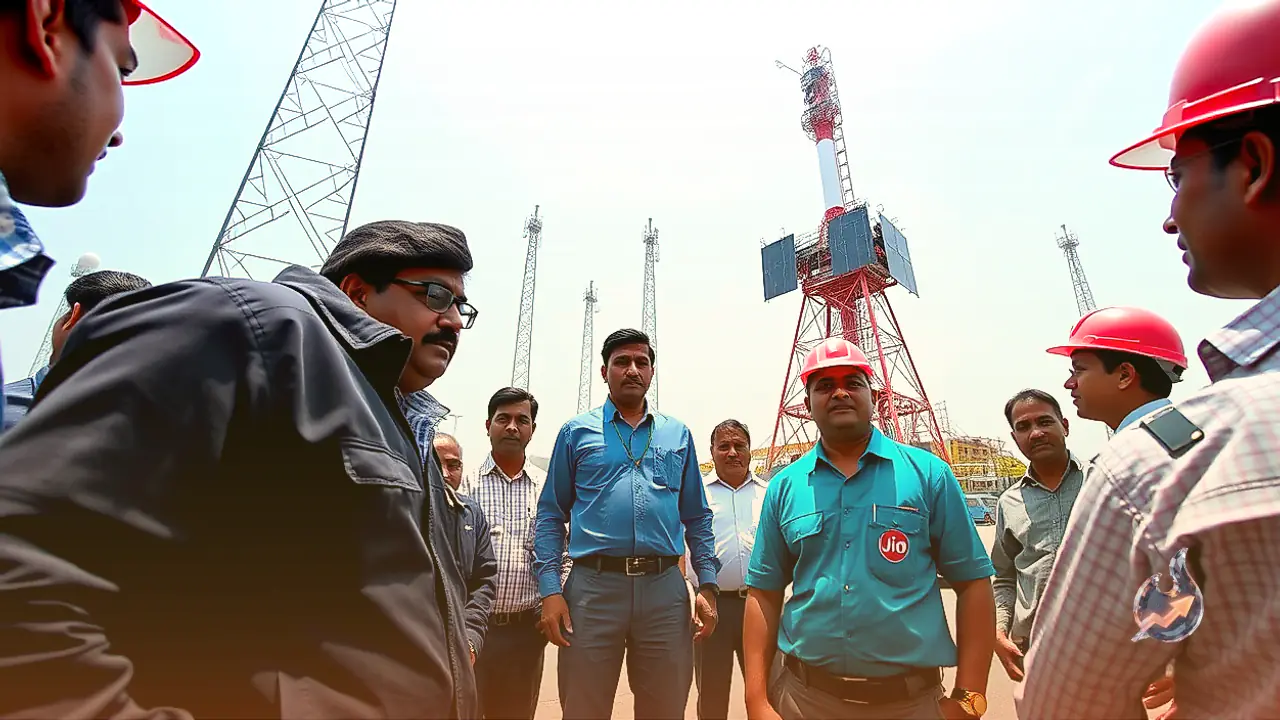
Shortly before Starlink published its readiness update, conglomerate Reliance Industries issued a formal communication setting down its position on the burgeoning satellite communications sector. Reliance underscored that it has never shied away from market competition, describing fair rivalry as the ultimate mechanism to evaluate which company genuinely offers the highest standard of service to consumers. The conglomerate emphasized that all participants aiming to deliver services in India, including its own telecom unit Jio, must abide rigorously by the policies, security mandates, and legal frameworks established by the Union government.
To contextualize its stance on market entry, Reliance drew parallels to the launch of Jio in 2016, recalling that the entity stepped into a fiercely contested telecommunications ecosystem without an existing subscriber base. Over the subsequent decade, the operator scaled rapidly to win the patronage of over 530 million users by building world-class digital systems and delivering ultra-affordable data. Reliance stressed that India has consistently fostered a commercial climate that welcomes both domestic ingenuity and foreign capital to improve public welfare. However, the conglomerate noted that such an open environment relies fundamentally upon adherence to the rule of law and an uncompromised level playing field across the board.
Public Exchanges and Debate Over Regulatory Timelines
The regulatory conversation gained significant public attention following pointed statements made by Elon Musk on social media platform X. Musk expressed frustration over procedural delays surrounding Starlink’s Indian commercial debut, alleging that established commercial interests were exerting influence to maintain a restrictive hold over consumers. In his commentary, Musk took aim at Reliance Industries chairman Mukesh Ambani, employing sarcastic phrasing regarding corporate sway relative to the administrative authority of Prime Minister Narendra Modi.
Responding to the broader implications of those remarks, Reliance pointed out that administrative regulations are being implemented uniformly across all market aspirants, noting that Jio’s dedicated satellite services are equally waiting in queue for operational clearances. The Ministry of Communications dismissed allegations of bias or unfair administrative hurdles, categorizing such interpretations as unfounded and incorrect. Government officials maintained that every applicant must satisfy uniform national security protocols, physical infrastructure checks, and formal spectrum allocation mechanisms before commercial operations can be authorized.
The Critical Gap Between Licensing and Operational Launch
Union Minister of Communications Jyotiraditya Scindia clarified the structural status of the satcom rollout, confirming that three commercial entities have secured satcom operational licenses in India. The approved list comprises Starlink, Jio Satcom, and the Bharti-backed satellite operator Eutelsat OneWeb. Additionally, Amazon’s Project Kuiper has recorded official interest in the market, though it must advance through standard regulatory compliance before obtaining similar standing. Scindia emphasized that holding a communications license is not synonymous with an operational rollout, as commercial deployment requires spectrum assignment alongside rigorous technical verifications.
Both the Telecom Regulatory Authority of India (TRAI) and the Department of Telecommunications (DoT) are working to finalize the financial architecture governing satellite spectrum, focusing particularly on revenue-linked pricing mechanisms. Scindia reiterated that spectrum frequencies will only be assigned once pricing policies receive formal clearance and the participating firms conclusively demonstrate compliance with state security requirements. The government maintains that sovereign data handling, lawful interception safeguards, and network integrity must be conclusively resolved before private entities initiate transmission services.
Sunil Mittal Outlines Airtel and OneWeb Infrastructure Readiness
Providing industry perspective on the clearance timeline, Bharti Airtel Chairman Sunil Mittal addressed the matter during the Bloomberg New Economy Forum 2026. Comparing the progress of various applicants, Mittal observed that his venture entered the regulatory process considerably earlier than Starlink, having submitted formal applications five years ago. Mittal observed that since his venture has yet to obtain commercial clearance, he would expect the enterprise to receive official permission at least a few days ahead of Starlink whenever the government decides to grant operational sanctions.
Mittal revealed that Eutelsat OneWeb has kept its terrestrial ground station network in India fully functional and ready for operational deployment for three consecutive years. Furthermore, the company’s satellite constellation has maintained coverage over Indian airspace for five years, yet commercial transmission remains on hold pending central approvals. Mittal’s reflections illustrated that procedural diligence affects every operator uniformly, challenging claims that regulatory scrutiny has been devised specifically to delay international entrants while shielding domestic operators.
Jio Platforms Capital Raising and Space Network Blueprint
The intensity of the satellite communications debate coincides with critical capital market moves by Reliance Industries, notably the planned initial public offering of Jio Platforms. The share sale has been structured within a price band of Rs 1,065 to 1,119 per share, encompassing an issue of up to 27 crore fresh equity shares, representing approximately 3 per cent of the firm’s equity capital. Notably, the share offering contains no secondary offer-for-sale component from existing shareholders, directing all raised capital straight into corporate operations.
At the upper bound of the price range, the offering will raise roughly Rs 30,213 crore, eclipsing the Rs 27,870 crore raised by Hyundai Motor India in October 2024 to become the largest corporate public issue in Indian market history. This pricing gives Jio Platforms an implied enterprise equity valuation of about Rs 10.3 lakh crore, slightly below the previously circulated valuation milestone of approximately Rs 11 lakh crore. Key dates for the capital issue indicate anchor investor allocations on October 19, public subscription running from October 21 to 23, and official equity trading commencing on October 28.
Strategically, Reliance has been preparing its own comprehensive satcom architecture, centered on a planned fleet of roughly 1,600 low-earth-orbit (LEO) satellites. This space network is engineered to deliver broadband access directly to 600,000 rural villages across India where laying physical terrestrial cables or installing mobile towers remains economically prohibitive. Interestingly, Reliance and SpaceX had established an exploratory partnership last year to study the distribution of Starlink connectivity via Jio’s widespread retail presence. As the DoT and TRAI approach definitive guidelines on spectrum charges and national security criteria, the Indian satellite broadband sector stands on the brink of significant commercial transformation.