





















The Mexican Peso faced renewed selling pressure against the greenback as critical bilateral negotiations over tariff exemptions between the United States and Mexico reached an impasse. Despite widespread softness across the broader US Dollar index during Friday's trading, the absence of fresh economic figures from Mexico left currency participants taking cues strictly from American economic releases. The USD/MXN exchange rate advanced 0.47 percent to reach 18.49, positioning the cross for its sixth consecutive week in positive territory as trade concerns overshadowed other regional dynamics.
Tariff Stalemate Casts Shadow on Cross-Border Trade
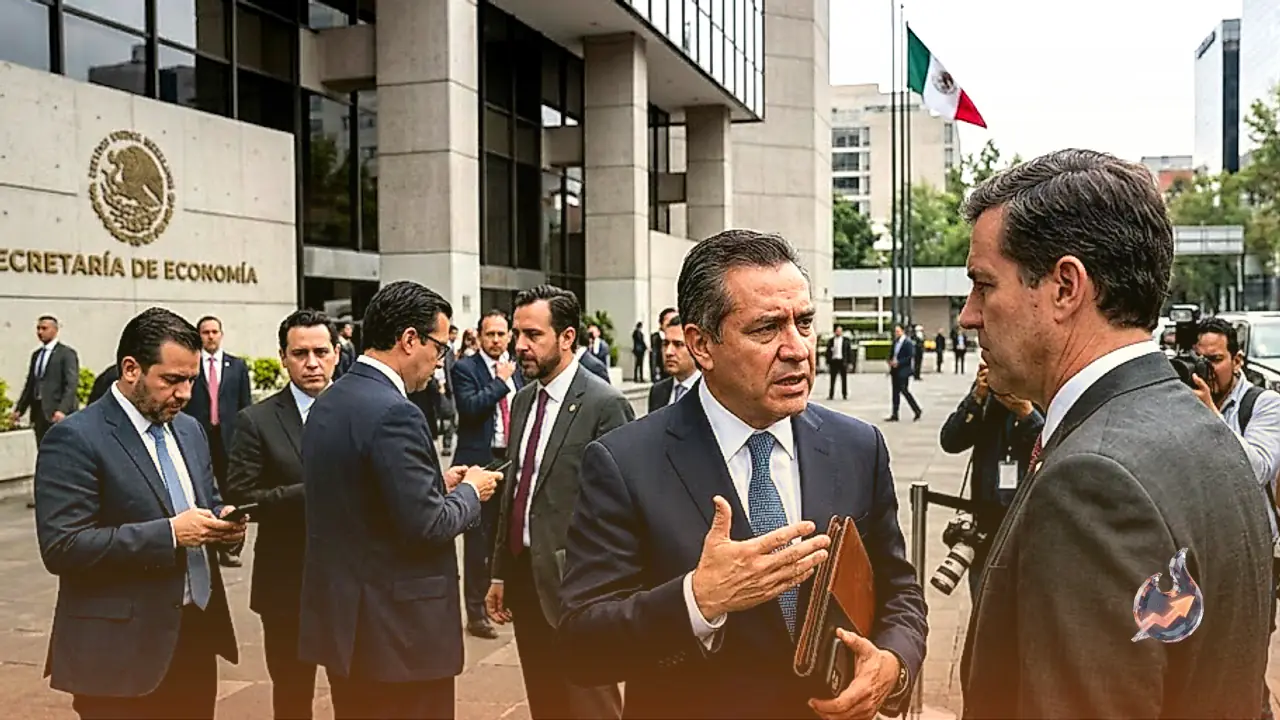
Bilateral discussions surrounding trade terms and customs duty reductions ran into major resistance following a firm stance adopted by trade officials in Washington. United States Commerce Secretary Howard Lutnick voiced strong opposition to lowering existing import levies, which include a 25 percent tariff on Mexican motor vehicles and steep 50 percent duties on imported steel and aluminum products. Given that automotive assembly and industrial metals represent the foundational pillars of Mexico's export economy, any prolonged application of these tariffs poses a substantial headwind to manufacturing revenues and cross-border commercial flows.
Despite the rigid position taken on metals and automotive goods, official communication from the Mexican delegation indicated that the dialogue remains active. Mexican Deputy Trade Minister Luis Rosendo Gutierrez stated that discussions were recording progress, signaling that working groups continue to negotiate on contentious clauses. Market participants widely agree that securing an expeditious compromise would act as a powerful tailwind for the Mexican Peso, restoring commercial clarity with Mexico's paramount trading partner and insulating domestic production lines from punitive border taxes.
Resilient American Output and Hawkish Federal Reserve Expectations
While domestic data points were absent from the Mexican market calendar on Friday, an unexpectedly vigorous industrial output release from the United States bolstered underlying sentiment for the dollar. United States industrial production expanded by 0.7 percent month on month throughout September. This print comfortably surpassed consensus projections that had penciled in a 0.4 percent increase, while also marking a noticeable acceleration from the revised 0.1 percent expansion observed in August. The industrial figures demonstrated persistent vigor within the American manufacturing and utility sectors despite sustained borrowing costs.
Market participants also continued to calibrate their rate outlook in the wake of elevated consumer price readings released earlier in the week. Swaps and interest rate futures indicated that the implied probability of an interest rate increase by the Federal Reserve at its upcoming December meeting climbed to 89 percent. Federal Reserve Chair Warsh emphasized that monetary authorities remain steadfast in restoring price stability across the economy, while purposely avoiding any explicit forward guidance regarding the eventual path of the benchmark rate. These hawkish expectations have supported dollar interest yields, keeping foreign capital hesitant to rotate aggressively back into emerging market currencies.
USD/MXN Technical Analysis and Critical Price Levels
From a chartist perspective, USD/MXN is consolidating its gains at 18.4915, preserving a firmly bullish short-term configuration. Spot rates are hovering comfortably above the confluence of simple moving averages located around 17.4234, as well as a prior descending trendline resistance that has now converted into reliable dynamic support near 18.1200. Furthermore, the currency pair remains positioned far above its horizontal cyclical base at 16.8866, illustrating that buyers have sustained control over successive pullbacks throughout recent months.
Live market indicators confirm the strength of this directional advance while sounding a note of caution regarding momentum saturation. The 14-period Relative Strength Index stands at 73, entering overbought conditions and warning that bullish momentum, while robust, is becoming stretched. The Moving Average Convergence Divergence indicator reflects a positive configuration, printing at 0.31 above its signal line of 0.28, generating a bullish histogram reading of 0.02. Exponential moving averages present an aligned posture: the 20-day EMA sits at 18.05, the 50-day EMA rests at 17.67, and the 200-day EMA is situated at 17.59. The bullish crossover of the 50-day EMA above the 200-day EMA reflects an ongoing golden cross pattern across higher timeframes.
Trend intensity remains elevated, as evidenced by an Average Directional Index reading of 56 on the 14-day calculation, confirming a trending market environment. The stochastic oscillator shows a fast reading of 85 against a signal line of 82. Bollinger Bands span an interval from 17.31 to 18.77 with a midline at 18.04, holding current prices within their upper envelope. The Average True Range over 14 sessions sits at 0.22, offering a representative measure for day-to-day volatility. Intraday price mapping establishes a central pivot level at 18.45, with immediate resistances located at 18.56 and 18.63. On the downside, primary supports emerge at 18.38 and 18.27, while deeper corrections would find substantial structural defense at 18.1200 and the clustered daily SMAs around 17.42.
Macroeconomic Drivers Dictating Mexican Peso Valuations
The Mexican Peso functions as the primary benchmark for foreign exchange liquidity across Latin America, trading actively around the clock. The currency's underlying valuation is fundamentally determined by the operational health of Mexico's macroeconomy, the monetary stance adopted by the central bank, aggregate foreign direct investment, and personal remittances dispatched by nationals working abroad, particularly those residing in the United States. Remittance flows represent an indispensable source of foreign currency income, supporting household consumption throughout major Mexican states.
In parallel, the structural trend known as nearshoring has emerged as an enduring catalyst for the Peso. Global manufacturers seeking to insulate supply chains against geographic shocks have expanded capital expenditure across northern and central Mexico, taking advantage of proximity to the US consumer market. In addition to commercial relocation, crude oil dynamics play a significant role in dictating foreign exchange terms. Because petroleum exports contribute meaningfully to public revenues and national export receipts, fluctuations in global crude benchmarks frequently introduce volatility into the currency's valuation profile.
Banxico Monetary Mandate and Rate Dynamics
The primary mandate of Mexico's central bank, known informally as Banxico, is safeguarding price stability by containing domestic inflation near its official 3 percent target, framed by an operating tolerance band between 2 percent and 4 percent. Banxico exercises its authority principally through benchmark interest rate adjustments. When consumer prices surge beyond the acceptable ceiling, the monetary authority initiates rate increases. This tightening process elevates borrowing costs across commercial and consumer lending channels, slowing credit expansion and dampening aggregate domestic demand to curtail price acceleration.
For the foreign exchange market, higher policy rates traditionally provide robust support to the Mexican Peso by generating an advantageous yield premium over developed-market assets. Global portfolio managers frequently allocate capital toward Mexican debt instruments to capture this yield spread through carry trade operations. Conversely, when the central bank lowers rates or communicates an excessively dovish policy stance, the currency often undergoes depreciation as the carry advantage compresses. Sustained economic resilience characterized by robust gross domestic product expansion, stable labor markets, and resilient business confidence permits Banxico to sustain restrictive policies, reinforcing the currency against external headwinds.
Global Market Sentiment and Cross-Asset Developments
Given its classification within the emerging market spectrum, the Mexican Peso responds swiftly to shifts in international risk sentiment. During risk-on phases, when market participants view broader macroeconomic hazards as subdued, capital migrates toward higher-yielding assets, lifting the Peso. In contrast, episodes of geopolitical instability, trade confrontation, or monetary tightening typically induce risk-off behavior, prompting international investors to liquidate emerging exposures in favor of traditional safe-haven instruments such as US Treasuries or the Swiss Franc.
Cross-asset movements on Friday reflected these divergent undercurrents across international trading desks. In Asia, the Australian Dollar recovered ground, rising toward 0.6950 as softer greenback pricing gave cyclical units brief breathing room following Federal Reserve Chair Warsh's remarks on price stability. The Japanese Yen also strengthened, pushing USD/JPY down through the 158.00 threshold as market participants trimmed long dollar holdings. In commodities, spot gold fluctuated on either side of the critical 4,200 dollar level per troy ounce, balancing modest pullbacks in the greenback against marginal increases in sovereign yields. Cryptocurrency markets remained under selling pressure throughout October; Bitcoin rebounded toward 82,000 dollars on Friday after dropping beneath 80,000 dollars earlier in the week, constrained by cautious global liquidity conditions and softening institutional inflows.