






















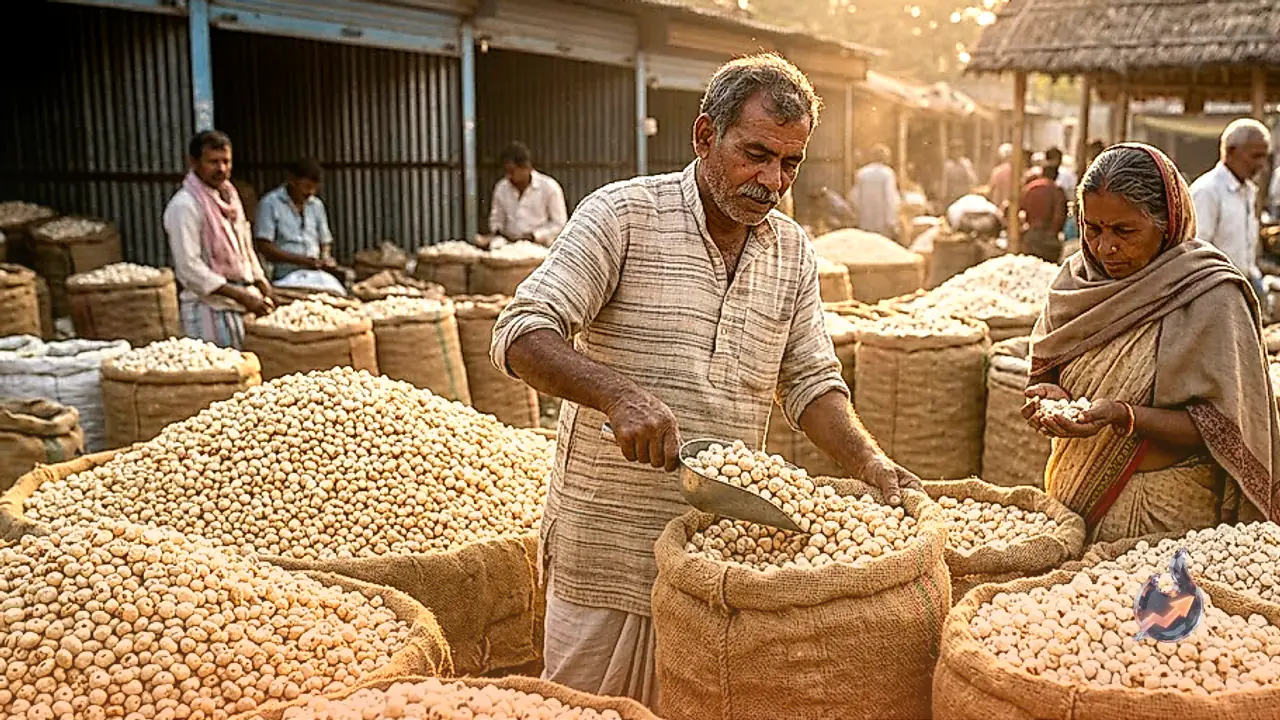

Makhana buyers across India might want to stock up right now, because prices are at their lowest point of the year. In Bihar's Madhubani region, good quality makhana in the 6, 7 and 8 suta size range is currently selling for between Rs 600 and Rs 800-900 per kilogram, but the same makhana will cost Rs 1200 to Rs 1500 per kilogram by October-November, with premium quality touching Rs 2000 per kilogram.
Why Mithilanchal Sets the Price for the World
The Mithilanchal region of Bihar is the biggest hub for makhana production anywhere, supplying roughly 80 percent of all the makhana consumed globally. Because of that concentration, price swings in this one region ripple through the entire national and international makhana trade. Going by the market's yearly cycle, makhana is cheapest during July and August, and it climbs to its highest point during October and November.
What Good Makhana Costs Right Now
The 6, 7 and 8 suta grades are considered the best for eating, and local traders are currently selling this quality for anywhere between Rs 600 and Rs 800-900 per kilogram. Just two months from now, once the festival season kicks in, the same makhana will jump to Rs 1200 to Rs 1500 per kilogram, and the top quality will sell for as much as Rs 2000 per kilogram, more than double the current price.
Why Prices Stay Low at This Time of Year
The main reason makhana is cheap in July and August comes down to the changeover between growing seasons. The old season's stock has completely run out by this point, while the new crop from the fields will only start arriving from next month onward. In the meantime, traders keep prices low to clear out whatever old stock remains before the fresh harvest arrives and their storage space is needed again. Once the new makhana does reach the market, big traders and food processing companies buy it up in bulk to ship domestically and abroad, and to manufacture various makhana products. That large scale stockpiling is exactly what sets up the price rise that follows.
Why Prices Spike During Festival Season
Once August ends, makhana prices climb sharply over the following two to three months. Demand shoots up around Navratri, Deepawali, Mithilanchal's popular folk festival Kojagra, and the major festival of Chhath, since makhana is widely used in rituals, prayers and fasting during these occasions. As demand rises, traders raise prices to match, and the same makhana ends up selling for two to three times what it costs right now.
Expert Advice: Buy and Store It Now
According to expert Anil Kumar Prasad, makhana prices are currently at their lowest level of the year, and they will start climbing fast once August is over and the next two to three months roll by. His advice is straightforward: households that use makhana regularly should buy and store it now rather than paying double or triple the price once the festival season arrives.
The Best Window for Household Stocking
For anyone who uses makhana regularly at home, whether for everyday cooking, religious rituals, or the many fasts and festivals through the year, July and August is the ideal window to buy a year's worth of supply. Not only are prices at their lowest during these two months, but the better grades like 6, 7 and 8 suta are also easy to find in good quantity. Waiting until October or November means paying more than double for the same product, so for regular consumers, buying now is clearly the smarter, more economical choice.