






















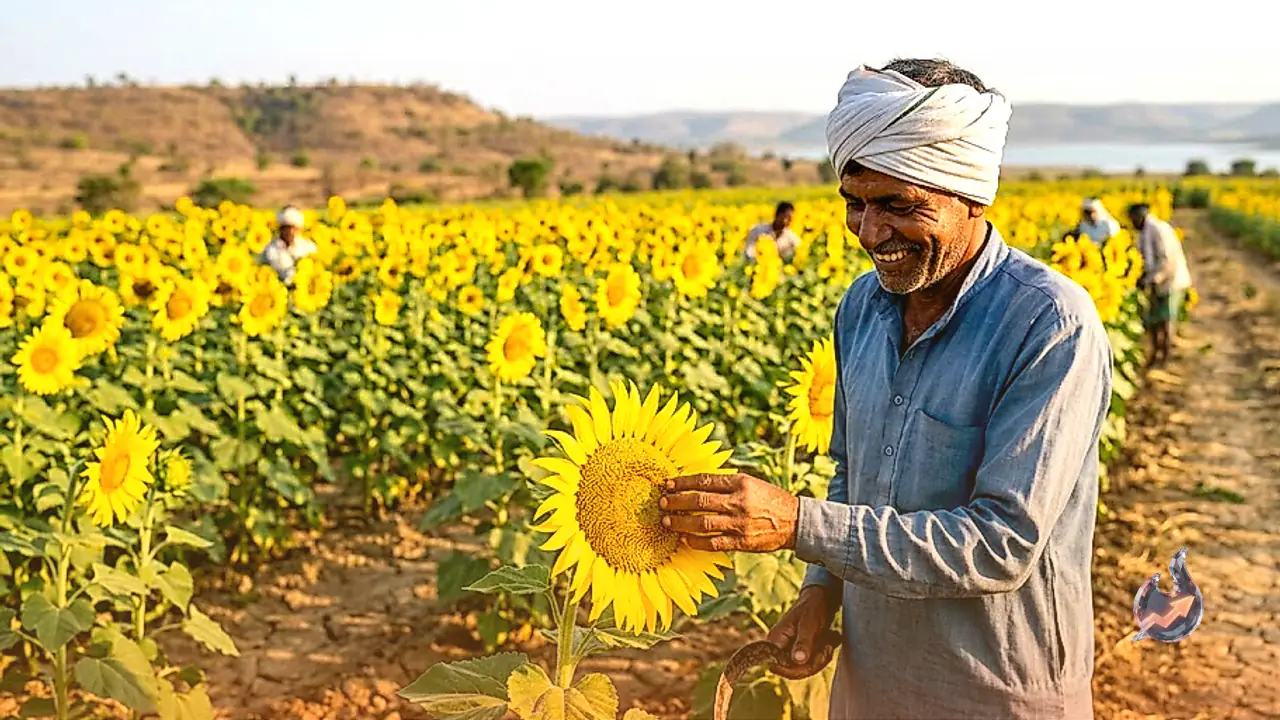

Stepping away from traditional farming routines is proving to be a profitable shift for growers across rural regions. In areas like Khandwa, cultivators are adopting new agricultural choices that significantly boost their earnings. Among these options, sunflower cultivation has gained rapid popularity among local farmers. The primary advantage of this crop is that it does not demand exceptionally fertile soil or heavy water resources, making it capable of delivering strong yields even on poor or barren land. Driven by low input costs and steady market demand, this crop is rapidly emerging as a reliable source of income.
Year-Round Market Demand
Market analysts note that sunflowers are treated as a cash crop with robust demand throughout the year. The oil extracted from these seeds commands strong prices in the commercial marketplace, while the leftover seeds serve as an additional revenue stream. Because of these financial benefits, many growers are moving away from conventional grain crops and shifting their focus toward oilseeds. Agricultural expert Narendra Patel points out that if cultivators utilize proper techniques, they can achieve high yields while keeping their initial expenses remarkably low.
Seasonal Flexibility and Land Preparation
This versatile crop can be successfully cultivated during both the summer and rainy seasons, while certain regions also grow it successfully during the winter months. Because it matures within a short timeframe, it provides growers with a quick return on investment. The foundation of successful sunflower production lies in proper land preparation. Before sowing begins, the soil must be tilled until it becomes loose and crumbly, which allows the root systems to develop deeply and effectively. Furthermore, establishing a proper drainage system is critical because stagnant water can ruin the entire crop. Digging small drainage channels across the field helps prevent waterlogging.
Plowing and Seed Selection Guidelines
Special attention must be paid to plowing operations to improve soil health. Deep plowing the soil at least twice helps eliminate hidden pests and stubborn weeds while improving aeration within the earth. Afterward, running a wooden plank over the field levels the surface, making the sowing process much easier. Regarding seeding requirements, roughly 10 to 15 kilograms of seeds are adequate for one hectare of land. Treating the seeds prior to planting is mandatory to protect the young crop from early fungal infections and diseases. Farmers should always opt for certified and high-yielding seed varieties.
Spacing Management and Irrigation Techniques
Maintaining proper distance between individual plants is vital for achieving an abundant harvest. Row-to-row spacing should be maintained between 45 to 60 centimeters, while plant-to-plant distance should be kept at roughly 15 centimeters. This arrangement ensures that every plant receives sufficient sunlight and air circulation, resulting in larger and healthier flower heads. Additionally, growers can utilize the intermediate gaps between rows to plant companion crops for extra earnings. When it comes to irrigation, sunflowers do not require excessive amounts of water, but maintaining steady soil moisture is essential. The first watering should take place immediately after sowing. Utilizing sprinkler irrigation systems helps conserve water resources while providing uniform moisture across the entire field.
Weed Control and Final Economic Returns
Managing weeds through timely weeding and hoeing operations is equally important for the proper growth of the crop. These steps ensure that the plants receive adequate nutrition without competition, ultimately increasing total productivity. If pest issues arise, growers can apply recommended treatments after consulting with agricultural specialists. Ultimately, sunflower farming presents an ideal alternative for producers seeking high returns on minimal investment. When managed through correct agricultural protocols, even unproductive land can generate substantial wealth and significantly elevate rural incomes.