























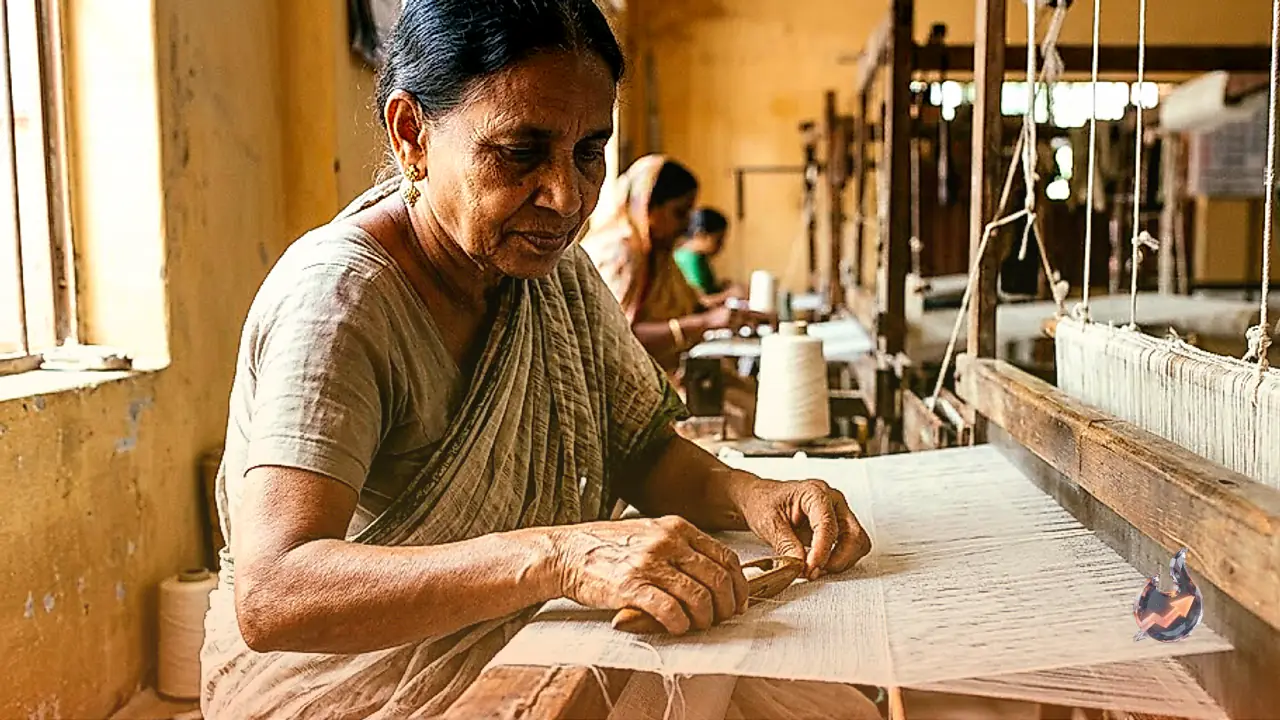

A deep dive into history reveals a remarkable textile that captivated the entire world for roughly two centuries, reigning supreme as the most expensive fabric on earth. Back in the era of ancient Greece, this exceptional material was held in such high reverence that statues of goddesses were adorned exclusively with this very muslin. Queens across numerous global nations considered wearing garments crafted from Dhaka muslin to be a definitive statement of supreme status and elegance.
Woven Air and Unmatched Delicacy
Dhaka muslin was far from an ordinary cotton textile. It possessed such an extreme degree of fineness, lightness, and softness that royal court poets were utterly astounded upon first encountering it. Impressed by its ethereal weightlessness, they christened it baft hawa, which translates to woven air. It genuinely appeared as though gentle breezes had been spun directly into thread to fashion a garment. The sheer precision of this craft can be gauged by the fact that a three-hundred-foot-long bolt of muslin could be effortlessly drawn through a small signet ring. A foreign traveler from that epoch noted in his memoirs that a sixty-foot stretch of the fabric was so whisper-thin that it could be folded and entirely tucked away inside a tiny snuffbox.
From Imperial Courts to European Royalty
Within India, muslin found its primary application in the creation of royal tunics and sarees, but upon reaching Britain and Europe, it quickly evolved into the hallmark attire of high society. Its striking transparency frequently invited playful teasing for those who wore it, yet its soaring popularity remained entirely undiminished. Around 1851, when demand reached a fever pitch, a single yard of muslin commanded prices ranging between fifty and four hundred pounds. Adjusted for modern inflation, this sum translates to lakhs of rupees. Luminaries ranging from French Queen Marie Antoinette and Empress Josephine to celebrated novelist Jane Austen were devoted patrons of Dhaka muslin.
The Phuti Karpas That Grew Only on Riverbanks
The cotton utilized for Dhaka muslin was no ordinary crop. Botanically designated as Gossypium arboretum, it was referred to locally as phuti karpas. The cultivation of this unique plant took place exclusively along the banks of the Meghna River situated in erstwhile British Bengal, now modern-day Bangladesh. The local soil and atmospheric climate possessed a distinctive magic that caused daffodils-like golden yellow blossoms to appear twice a year on these bushes. The pristine, feather-light white cotton yielded by these flowers formed the exclusive source for muslin yarn. This cotton could not be cultivated anywhere else on the planet, and today, the plant is entirely extinct.
Sixteen Rigorous Stages of Craftsmanship
Crafting Dhaka muslin was never a task for a single individual, requiring sixteen grueling processing stages to reach completion. Various phases of production were distributed across surrounding villages near Dhaka. Initial efforts focused on cleaning tiny cotton bolls harvested from the fields. This delicate cleansing was executed utilizing specialized combs fashioned from the teeth of the boal fish to ensure the fragile fibers remained undamaged. Subsequently, the laborious spinning and carding processes commenced, demanding immense dedication.
Spinning Yarn Aboard Riverboats
Spinning muslin yarn stood as arguably the most arduous task in the world, necessitating immense ambient humidity for the thread to form properly. Dry air would cause the delicate strand to snap before it could stretch. Consequently, weavers conducted this delicate work not within enclosed land-based rooms, but rather while seated upon boats floating amidst the waters of the Meghna River. The timing for spinning was strictly regulated, restricted entirely to the early dawn or the fading afternoon hours when atmospheric moisture reached its peak. This meticulous labor was entrusted solely to young men and women. Elderly individuals were excluded because advancing age impaired their eyesight, and muslin thread was so impossibly fine that failing eyes could neither perceive nor handle it.
The Intrinsic Quirks That Kept Machines Away
The fibers of phuti karpas were inherently short, resulting in thread that was somewhat fragile and interspersed with microscopic knots. These tiny embedded knots served to anchor the entire strand securely together. This characteristic imparted a subtle, gentle texture to the finished fabric surface, delivering an exquisitely soft sensation against human skin. Because the staple fibers were short, mechanical weaving proved entirely impossible.
When Foreigners Believed in Mermaids and Sirens
Witnessing this impossible fabric led many observers to doubt whether human hands could have possibly created it. Foreign merchants and travelers of the era frequently theorized that nocturnal fairies, sirens, or spirits descended in the dead of night to weave the material. While the finest commercial muslins available in modern markets feature a thread count ranging between forty and eighty, it remains astonishing that centuries ago, hand-spun Dhaka muslin boasted a phenomenal thread count stretching from eight hundred to twelve hundred.