























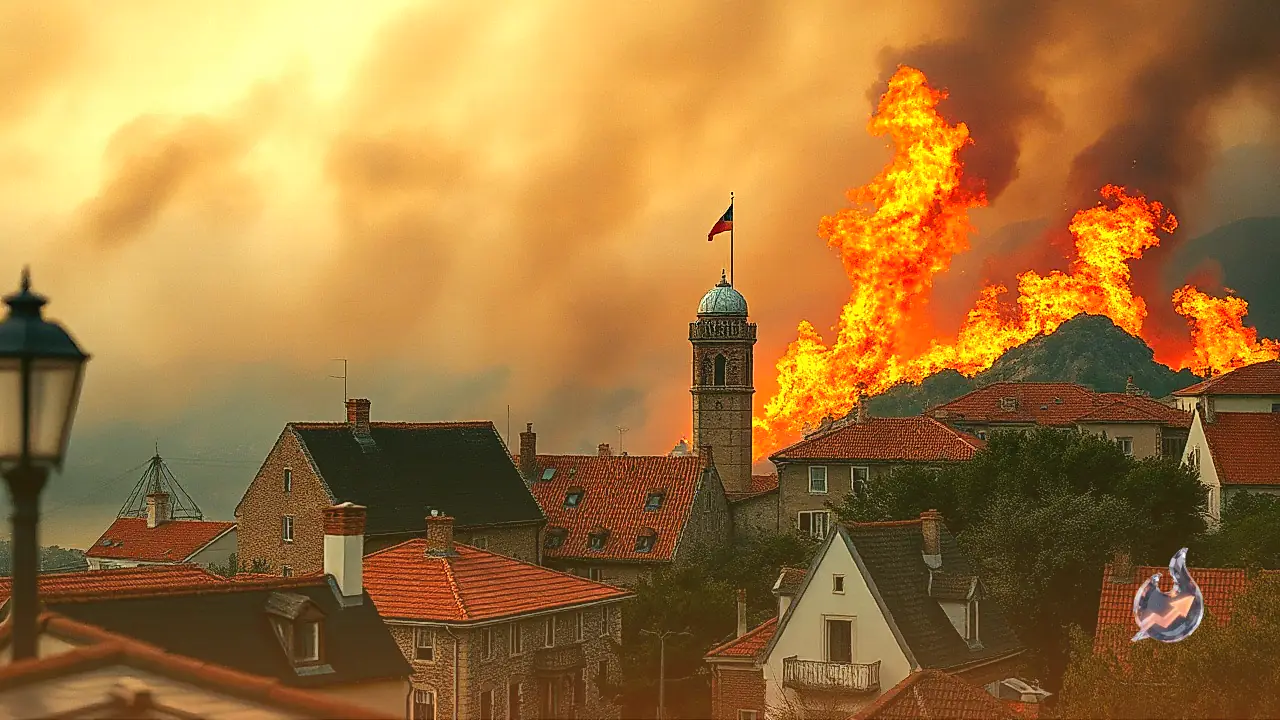

A catastrophic wildfire fueled by gale-force winds and scorching temperatures has swept through coastal towns in Croatia, leaving at least one person dead and around 40 others injured. The intense blaze, which broke out on Thursday night and raged into Friday morning, incinerated pine forests, homes, and vehicles along the picturesque Adriatic coastline. Emergency responders have managed to evacuate approximately 1,200 residents and tourists from the fast-moving flames. Among the injured, 10 individuals remain in intensive care units in critical condition as hospital staff battle to save their lives.
Rapid Spread Along the Adriatic Coast
The fire originated on Thursday evening near the quiet village of Lokva Rogoznica before consuming everything in its path as it expanded rapidly toward the popular tourist hub of Omis, located just 6 kilometers (7 miles) away. Strong wind gusts accelerated the inferno, driving flames across pine-covered hillsides and reaching settlements close to the coastal city of Split. Dense smoke billowed into the night sky, creating a apocalyptic red glow visible across neighboring islands.
Fire officials confirmed that the wildfire devoured over 1,000 hectares of forest and vegetation in a mere four hours. Over 300 firefighters worked through Thursday night, battling intense heat and unpredictably shifting winds. On several occasions, fire crews were forced to retreat as wall-of-fire conditions threatened to engulf their equipment and emergency personnel.
Desperate Escapes and Firefighting Challenges
Eyewitness footage recorded during the evacuation showed panic among stranded vacationers and locals as flames closed in on roads and residential areas. With land escape routes cut off by walls of fire, several individuals were forced to leap from boats into the sea to avoid the intense thermal heat. Temporary emergency shelters were rapidly set up in neighboring towns to accommodate thousands of displaced individuals overnight.
On Friday morning, search teams navigating burnt-out residential structures discovered a victim's body in the scorched area, confirming the disaster's first casualty. Croatian Prime Minister Andrej Plenkovic toured the devastated zones later on Friday to inspect the damage and meet emergency response crews. Speaking to reporters, the Prime Minister described the fire's speed as lightning fast and credited firefighters with achieving a true miracle by saving major population centers despite facing gale-force winds.
Viseslav Pesic, Commander of the Omis Volunteer Fire Department, explained that the fire's intensity caused fleeing drivers to abandon their vehicles directly on main roads within the fire zone. These abandoned cars severely obstructed fire engines and emergency support vehicles attempting to reach burning structures. Slavko Tucakovic, Croatia's chief fire officer, declared the event one of the most severe wildfire disasters in the nation's history.
Widespread Wildfire Crisis Across Europe
The Croatian disaster comes as emergency services across Europe reach breaking point amid sustained heatwaves and prolonged drought conditions. In Greece, emergency teams executed a maritime rescue at Agios Vasileios, deploying boats to evacuate more than 200 people stranded at a beach resort threatened by advancing forest fires.
In southwestern France, over 500 residents were evacuated from their homes in the Landes region as fresh blazes ignited near areas previously scarred by wildfires. Meanwhile, in western Germany, a forest fire advancing near the village of Gey near the Belgian border forced the emergency evacuation of more than 2,000 residents as containment efforts struggled against dry woodland conditions.
Emergency Warnings and Risk Alerts in the UK
The cascading impacts of the European heatwave extended to the United Kingdom, where millions of residents across England and Wales received emergency wildfire alerts on Friday. The national advisory warned of a very high risk of wild blazes as fire brigades in the West Midlands fought multiple fires, including a major blaze in Stourbridge that blanketed surrounding communities in heavy smoke. Climate experts emphasize that soaring summer temperatures across the continent continue to amplify the severity and frequency of wild forest fires.