





















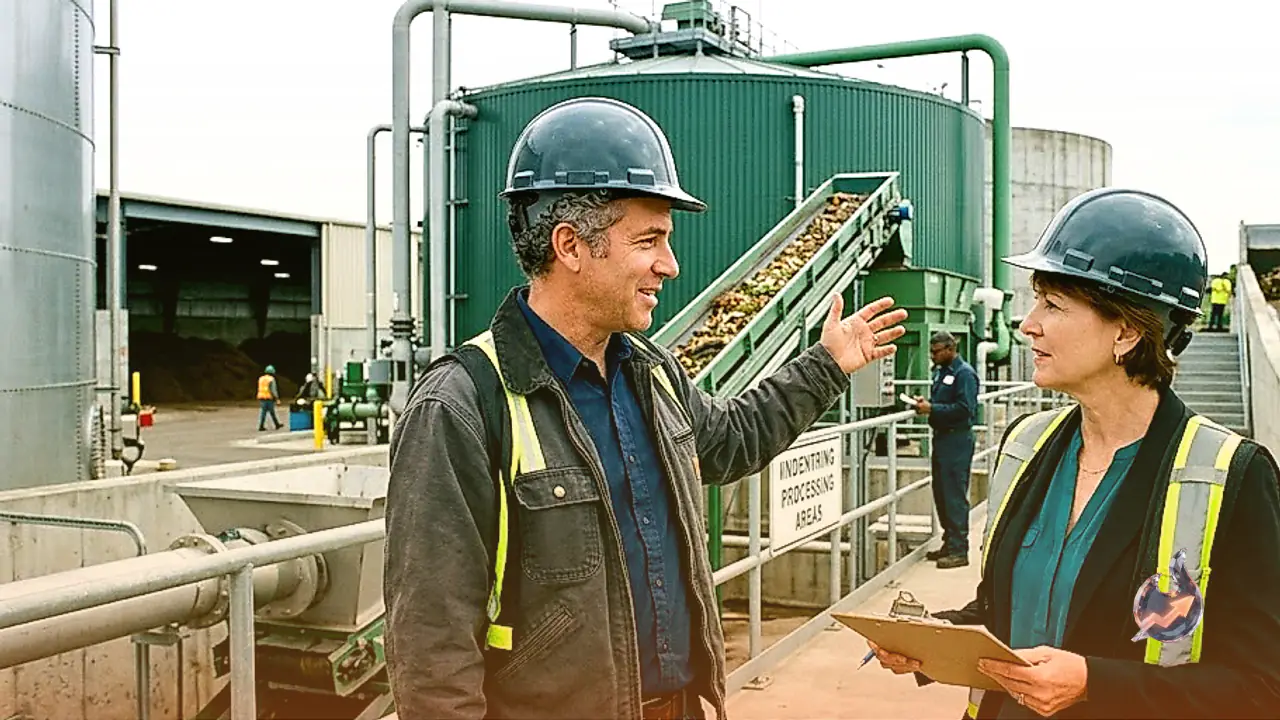

The daily volume of wet and organic waste generated in urban areas is no longer just an environmental burden. Instead, it is emerging as a viable commercial opportunity for modern entrepreneurs. Establishing an organic waste processing plant to convert wet garbage into biogas and organic compost presents a sustainable revenue model. However, setting up and efficiently running such processing facilities requires structured coordination and contractual agreements with local municipal corporations.
Contractual Models for Municipal Partnerships
Priyanka Singh, Senior Program Lead at the Council on Energy, Environment and Water (CEEW), notes that the most widely adopted operational framework for wet waste management businesses is the Public-Private Partnership (PPP) model. Under this setup, plant owners sign a concessionaire agreement with the municipality. This agreement establishes clear guidelines regarding the mandatory volume and quality standards of the raw feedstock supplied to the processing plant.
Depending on their financial backing and technical capability, entrepreneurs can opt for various contract structures. These range from simple service contracts covering waste collection and transportation, to management contracts, or large-scale processing arrangements such as Build-Operate-Transfer (BOT) and Design-Build-Own-Operate-Transfer (DBOOT). Because terms and conditions differ across municipal jurisdictions, entrepreneurs must evaluate local civic body guidelines before launching operations.
Land Allocation and Revenue Structures
Securing land for setting up a waste processing facility is a critical consideration. In certain jurisdictions, municipal authorities allocate land for plant construction, whereas in other regions, the project proponent must independently acquire the required site. Financial arrangements also vary: municipalities often collect user fees from waste generators and compensate plant operators based on the tonnage of waste processed. If the private partner manages end-to-end collection and transport, they may be authorized to collect user fees directly.
Capital Requirements, Subsidies, and Training Initiatives
Even small-scale organic waste facilities, particularly biogas units, demand upfront capital investment. Consequently, these operations are typically run by registered private enterprises. Nevertheless, technically qualified individual entrepreneurs operating proprietorship firms can also collaborate with municipal bodies and access direct or indirect government subsidies and promotional schemes.
To support capacity building in biogas technology, the Government of India has established eight specialized Biogas Development and Training Centers (BDTCs). These institutions offer entrepreneurship education and technical training programs, enabling trained individuals to establish waste management startups across multiple states.
Key Operational Challenges on the Ground
While the overall policy ecosystem supports waste processing, plant operators encounter several practical hurdles during execution. Ensuring a continuous supply of segregated, high-quality feedstock remains a major operational hurdle. Furthermore, competitive bidding processes frequently favor L1 bidders, prioritizing the lowest cost over service quality or processing efficiency. Developing reliable market channels for finished outputs like biogas and organic fertilizer presents an additional hurdle, alongside social stigma and local resistance often associated with waste processing sites.