




















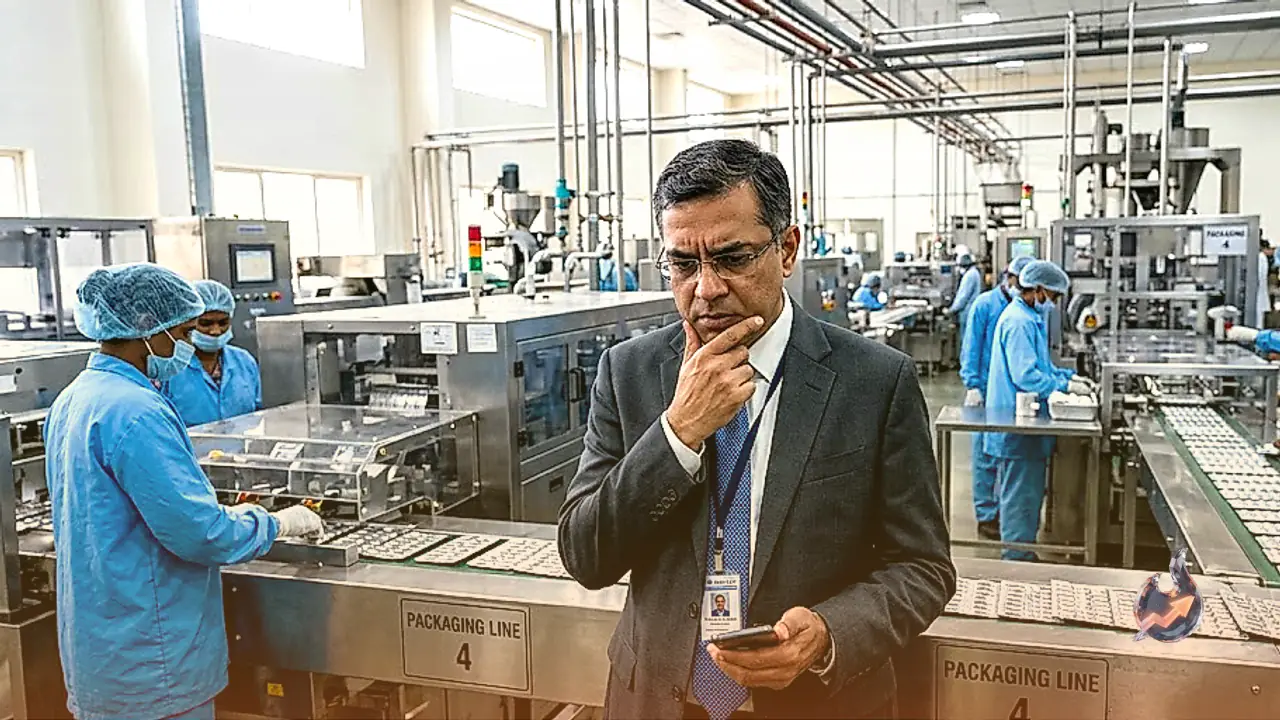

New Delhi. Following a tense tariff battle, US President Donald Trump has introduced a fresh challenge aimed at Indian pharmaceutical companies by announcing sweeping plans to lower prescription drug prices within the United States. Because India supplies roughly 60 percent of all generic drug imports to the American market, this policy shift carries immense consequences. Any reduction in American market drug prices is set to deliver an immediate blow to the profit margins of Indian drug manufacturers.
Heavy Reliance on the American Pharmaceutical Market
Global pharmaceutical firms have been sent scrambling by the new pricing strategy, but Indian companies stand to bear the brunt due to their extensive footprint in the US. During the 2026 financial year, total Indian pharmaceutical exports to the United States reached approximately 80,000 crore rupees. Indian companies supply more than half of all generic medications consumed in America. This deep dependence is precisely why pharmaceutical executives are now deeply worried about shrinking profit margins under Trump's latest directives.
A Double Blow from the White House
In a short span of time, the US President has dealt back-to-back setbacks to Indian drugmakers. First came the announcement of a potential 100 percent tariff on the pharmaceutical sector under Section 232 of international trade law, followed quickly by the new declaration to force cheaper drug prices across America. While the initial tariff proposal exempted generic medicines and spared Indian firms from immediate alarm, the subsequent push to slash retail prices has plunged these companies back into anxiety.
Manufacturing Stipulations and Exemption Agreements
The latest policy fallout will hit Indian firms hardest if their business models remain heavily skewed toward the US market, particularly those exporting branded and innovative products. When initially announcing the tariff plans, Trump included a specific condition stating that Indian companies establishing domestic manufacturing operations within the United States would be granted exemptions. Major Indian drug maker Sun Pharma accepted this condition and signed an agreement for US-based manufacturing, earning an initial one-year exemption followed by a proposed two-year extension from the administration.
Impact on High Margin Specialty Medications
By pushing to make drugs cheaper across America, the White House has upended companies that rely on high-margin operations in that territory. Firms selling lucrative specialty medications for serious conditions like cancer and Alzheimer's disease will see their profit margins contract the most. To circumvent these pressures, Indian drug companies are increasingly willing to set up dedicated production units inside the US, though such moves will significantly drive up capital expenditures. Over the long term, however, local manufacturing serves to mitigate severe tariff risks.
Individual Company Exposures Across the Sector
For Sun Pharma, the American market accounts for roughly 29 percent of total business operations, translating to about 17,000 crore rupees. Having agreed to manufacture inside the US, the company is buffered from the worst of the tariff fallout, though some margin compression remains inevitable. Aurobindo Pharma generated about 43 percent of its total revenue from the US during the previous financial year, shipping the highest volume of generic medications with total sales reaching approximately 3,543 crore rupees. If Aurobindo fails to establish local manufacturing, its margins will suffer from both tariff enforcement and lowered drug valuations.
Financial Standings of Lupin, Dr. Reddy Laboratories and Cipla
Lupin derived 42 percent of its total revenue from the US market last fiscal year, amounting to roughly 10,000 crore rupees. Having already established production facilities in America, the company faces limited direct tariff exposure, but recent price cuts will undoubtedly squeeze its profitability, highlighting its over-reliance on the US region. Dr. Reddy's Laboratories carries the heaviest risk exposure, with US operations totaling 14,520 crore rupees in the 2025 financial year, representing 45 percent of its total revenue. Conversely, Cipla maintains a more modest North American footprint valued at 780 million dollars or roughly 7,500 crore rupees, accounting for 24 percent of its revenue. Cipla is far less dependent on the American market and has agreed to local manufacturing, positioning it to weather the storm better than its peers.
Market Reactions and Share Price Movements
The cumulative weight of these policy announcements triggered visible declines across Indian pharmaceutical stocks on September 10. By 1 PM, shares of Dr. Reddy's Laboratories were trading lower by 0.36 percent. Lupin shares also witnessed a morning dip of 0.80 percent. Aurobindo Pharma experienced a sharper drop of roughly 1.91 percent during the afternoon session, while India's largest drug maker, Sun Pharma, saw its stock slide by 0.78 percent. In contrast, Cipla shares registered a 0.51 percent gain as investors anticipated that its lower exposure and strategic positioning could open up new avenues for growth in the American market.