




















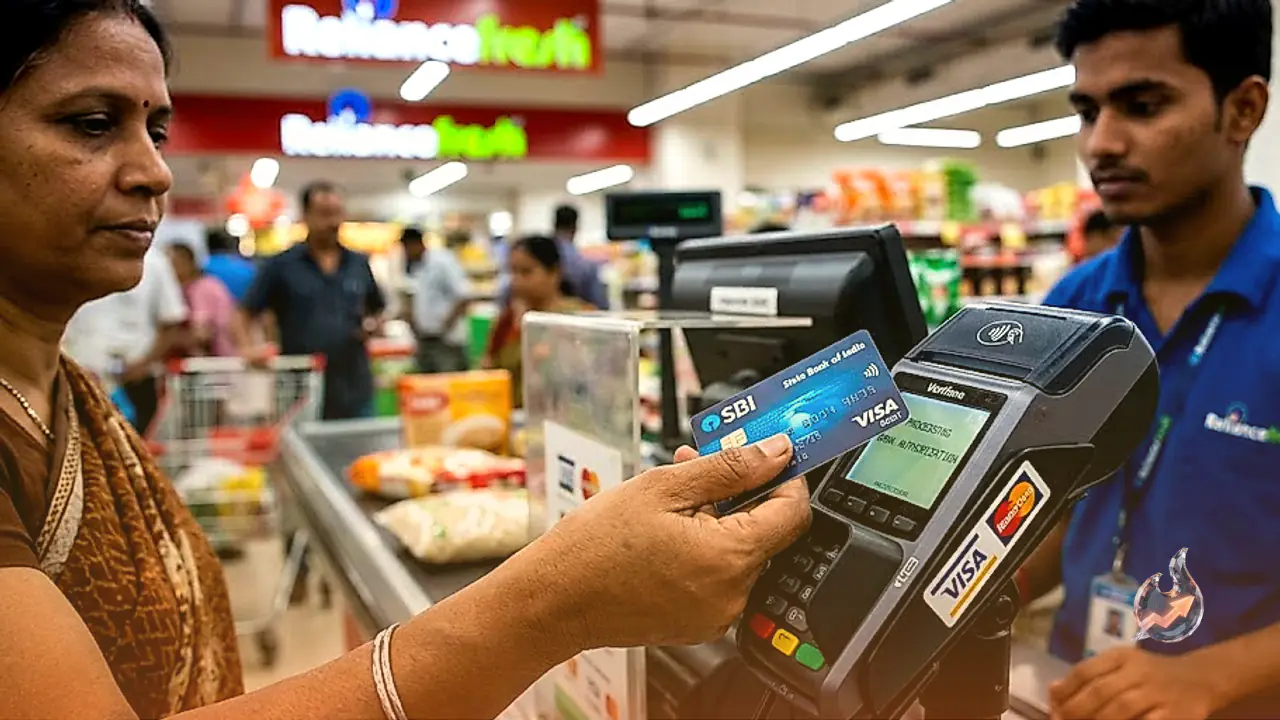

Today, finding someone who has never used a credit or debit card for a purchase is nearly impossible. You tap your card at a retail store, a notification pings on your mobile phone, and the payment clears within mere seconds. The entire process feels so effortless that most people rarely pause to think about how such lightning-fast execution actually happens behind the scenes. This raises a fascinating and fundamental question. When your card is issued by a specific bank, your money sits in that exact same bank, and the merchant has a separate bank account altogether, why do intermediaries like Visa, MasterCard, or RuPay need to step in at all? Can banks not simply transfer funds directly to one another without any third-party involvement?
To grasp the logic behind this mechanism, one must first recognize that commercial banks and payment networks perform entirely distinct functions. The financial ecosystem simply cannot operate smoothly without both working in tandem. The financial institution that hands you a credit card is known as the card issuer. Prominent examples include institutions such as SBI, HDFC Bank, ICICI Bank, and Axis Bank. These banks evaluate your monthly income, credit score, and overall financial standing before approving a card for you. The credit limit assigned to your account, the billing cycle, and the payment terms are all determined exclusively by this issuing bank. If you purchase goods worth ₹5,000, your bank initially settles the amount with the merchant on your behalf and subsequently collects the money from you.
What exactly do Visa and MasterCard do then? Suppose you utilize an SBI card, but the store where you shop maintains its account with an entirely different financial institution. Who ensures that communication and payment details travel securely between these two separate banks? This is precisely where payment networks like Visa, MasterCard, or RuPay enter the picture. Think of them as the national highways of the financial country. A highway itself does not manufacture goods or drive delivery trucks, but without that paved roadway, commercial cargo could never travel efficiently from one city to another. In the exact same fashion, Visa and MasterCard do not lend out money directly; instead, they establish a secure, lightning-fast digital corridor connecting banks seamlessly.
What happens during the two seconds after you swipe a card? Imagine walking into an electronics store, purchasing items worth ₹2,000, and swiping your card at the point-of-sale terminal. The machine immediately transmits your card data to the merchant acquiring bank. From there, the information travels to the network routing of Visa or MasterCard. The network then queries your issuing bank to verify whether the card is authentic, whether its expiration date has passed, and whether sufficient credit limit remains available. If the bank finds everything in order, it instantly transmits an approval signal. Visa or MasterCard relays this confirmation back to the merchant terminal. The entire sequence concludes in typically 2 to 3 seconds, printing out your transaction receipt.
Another logical query is why banks do not interconnect directly if the final authorization rests with them anyway. Suppose there are 10,000 banks operating globally. If every single bank had to build individual technical integrations with every other bank, millions of separate point-to-point networks would need to be built. Maintaining such an infrastructure would prove immensely costly and operationally complex. Visa and MasterCard resolved this exact logistical hurdle by creating a shared, universal network. Once connected to this common grid, any bank can instantly execute transactions with thousands of other financial institutions worldwide. This precise architecture allows an Indian-issued card to function effortlessly across retail stores in America, Japan, Europe, or anywhere else on the globe.
A common misconception among consumers is that Visa and MasterCard generate revenue by charging cardholders directly, but that is not how their business model operates. Whenever a transaction occurs via card at a retail location, the merchant pays a nominal processing fee to their acquiring bank. This charge is commonly known as the Merchant Discount Rate, or MDR. A portion of this collected fee is allocated to the card-issuing bank, while another share goes to Visa or MasterCard in exchange for providing the secure technological routing infrastructure. Essentially, these networks earn their revenue by facilitating fast, reliable, and secure digital handshakes for every single card swipe executed across the globe.