




















Could the global economic landscape be on the brink of a massive shift? A grouping of the world's leading emerging economies, known as BRICS, is actively exploring alternative payment frameworks that could eventually reduce reliance on SWIFT, the Society for Worldwide Interbank Financial Telecommunication. With India holding the rotating presidency of BRICS in 2026 and hosting the upcoming summit in New Delhi, this question carries immense global significance. However, it is important to clarify right at the outset that no concrete announcement has been made regarding the immediate launch of a fully formed, parallel alternative to SWIFT in 2026.
As India leads the 2026 summit, discussions surrounding cross-border payments, trade in local currencies, and alternative transaction systems will take center stage. This makes the 2026 gathering a critical milestone in evaluating potential transformations within the global financial architecture.
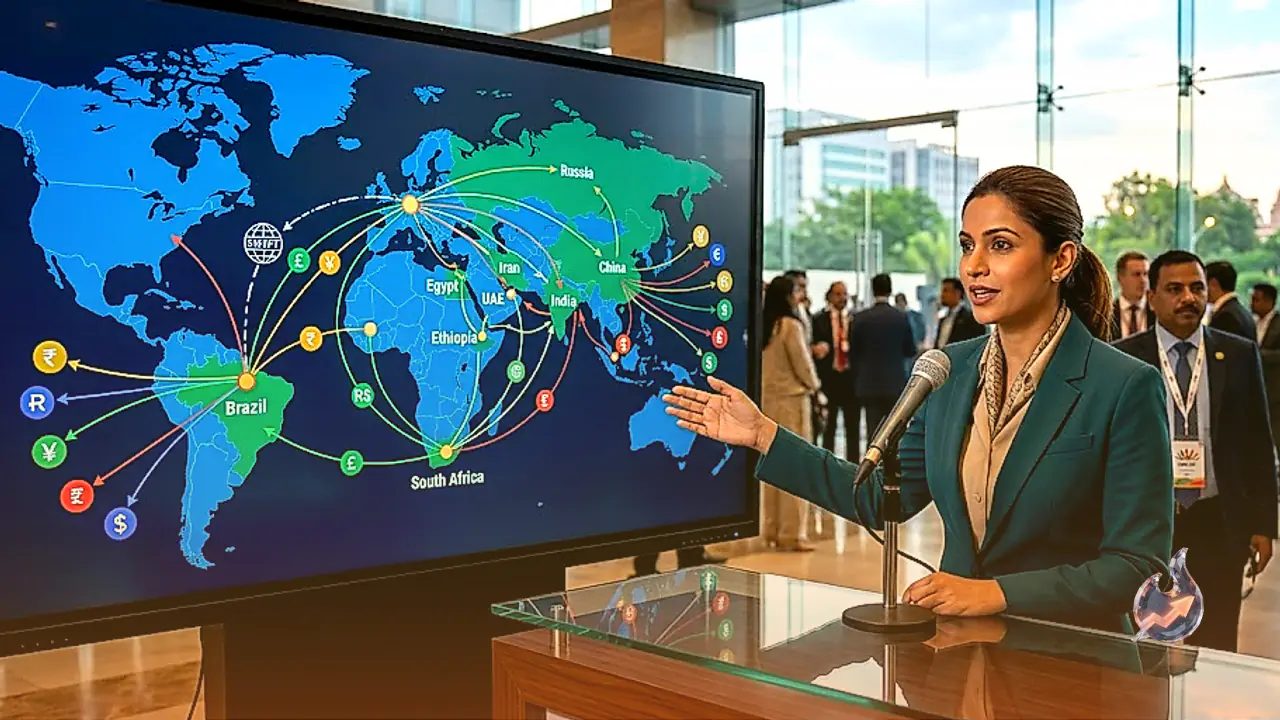
At its core, the unfolding narrative is less about announcing a brand-new payment network and more about interconnecting existing national payment systems, boosting local currency settlements, and expanding the use of Central Bank Digital Currencies (CBDCs). If these concerted efforts succeed on a large scale, they could pose a formidable challenge to the United States and the dollar-centric global financial order in the years to come.
The Connection Between SWIFT and US Financial Power
The SWIFT network is deeply intertwined with American financial strength because it serves as the premier secure messaging system for international financial transactions worldwide. SWIFT does not actually transfer funds itself; rather, it transmits payment-related instructions securely between banks. Given that a massive volume of global transactions is denominated in US dollars, American financial institutions play a pivotal role within this network.
The US dollar commands a dominant position in the international monetary system, accounting for roughly half of all cross-border transactions handled through SWIFT. Consequently, American banks and financial institutions remain critical hubs within the global payment chain.
What Are the Ambitions of BRICS Nations?
The push to simplify cross-border payments among BRICS countries is not a recent phenomenon. The urgency intensified significantly following Western sanctions imposed on Russia, which reinforced the belief among member nations that an over-reliance on a single country or a solitary financial network poses severe economic risks. India has also been actively driving initiatives in this direction.
On August 11, 2026, Reserve Bank of India (RBI) Governor Sanjay Malhotra noted that BRICS member states are actively discussing options such as linking fast payment systems for cross-border transactions and establishing interconnectivity between central bank digital currencies.
This indicates that the immediate focus is not on suddenly unveiling a brand-new rival to SWIFT. Instead, the objective is to weave together existing digital payment capabilities across different nations to make international settlements smoother and more efficient.
Why Is SWIFT So Crucial to Global Finance?
Understanding the fundamental nature of SWIFT is essential. SWIFT does not move money out of one bank account and into another. Instead, it operates as a secure messaging network that transmits financial instructions and payment details among banks and financial institutions globally.
For instance, when a bank in one country initiates an international payment instruction to a bank abroad, SWIFT often facilitates the communication link. Because of this vital function, SWIFT is far more than a mere technical network; its reach within the global financial system grants it significant geopolitical leverage.
When several Russian banks were disconnected from SWIFT under Western sanctions, the entire world witnessed how critical access to international payment infrastructure truly is. For this reason, deliberations surrounding alternative payment mechanisms within BRICS are viewed as much more than a technical exercise.
- Transmitting Messages: When funds are transferred internationally from India, the originating bank compiles a secure SWIFT message.
- SWIFT Codes: Every specific bank branch is assigned a unique 8 to 11 digit code known as a SWIFT code or BIC, which identifies the destination country, bank, and branch.
- Correspondent Banks: If the sending and receiving institutions do not maintain a direct reciprocal account, transactions are completed using correspondent banks mediated by SWIFT messaging.
Will BRICS Pay Emerge as a Direct Substitute for SWIFT?
This is where the utmost caution is warranted. While the concept of a shared payment arrangement under the banner of BRICS Pay has frequently surfaced, it is premature to label it as an established or complete alternative to SWIFT. The SWIFT network has been built over decades, connecting thousands of financial institutions worldwide.
On the other hand, the banking and payment infrastructures of BRICS nations vary widely. India's Unified Payments Interface (UPI), China's distinct digital payment ecosystem, and Russia's financial architectures operate on entirely different technological frameworks and regulatory rules, making immediate unification a complex challenge.