






















The execution of crucial transit projects in India, including the Mumbai-Ahmedabad high-speed bullet train corridor and underground metro rail networks, faced severe logistical challenges due to supply disruptions involving Tunnel Boring Machines (TBMs). Designed by the German engineering firm Herrenknecht, these specialized heavy tunneling machines were physically manufactured in production facilities located in China. When the equipment was scheduled for dispatch to Indian infrastructure sites, Chinese authorities introduced administrative hurdles and diplomatic delays in granting export clearances. Recognizing the systemic risk of relying on foreign manufacturing hubs for critical national projects, the Indian government has initiated a comprehensive policy framework modeled after the Production Linked Incentive (PLI) scheme to localize the manufacturing of heavy construction, tunneling, and mining equipment.
How Export Bottlenecks On German Tunnel Boring Machines Triggered The Shift
Tunnel Boring Machines represent the most technologically sophisticated equipment utilized in modern underground transport and civil engineering projects. While Herrenknecht maintains global leadership in TBM technology and design, the company operated major assembly plants in China to optimize manufacturing costs. During the procurement phase for the Mumbai-Ahmedabad rail project and metro tunneling segments across major Indian metros, export permits were withheld by Chinese regulatory agencies. Despite the technology being German, the physical presence of the factories in China allowed local authorities to leverage global supply chain bottlenecks for geopolitical advantage. This delay halted tunneling operations, prompting Indian infrastructure planners to systematically evaluate and eliminate critical machinery import dependencies.
PLI Style Incentive Package Planned For Infrastructure Equipment Manufacturing
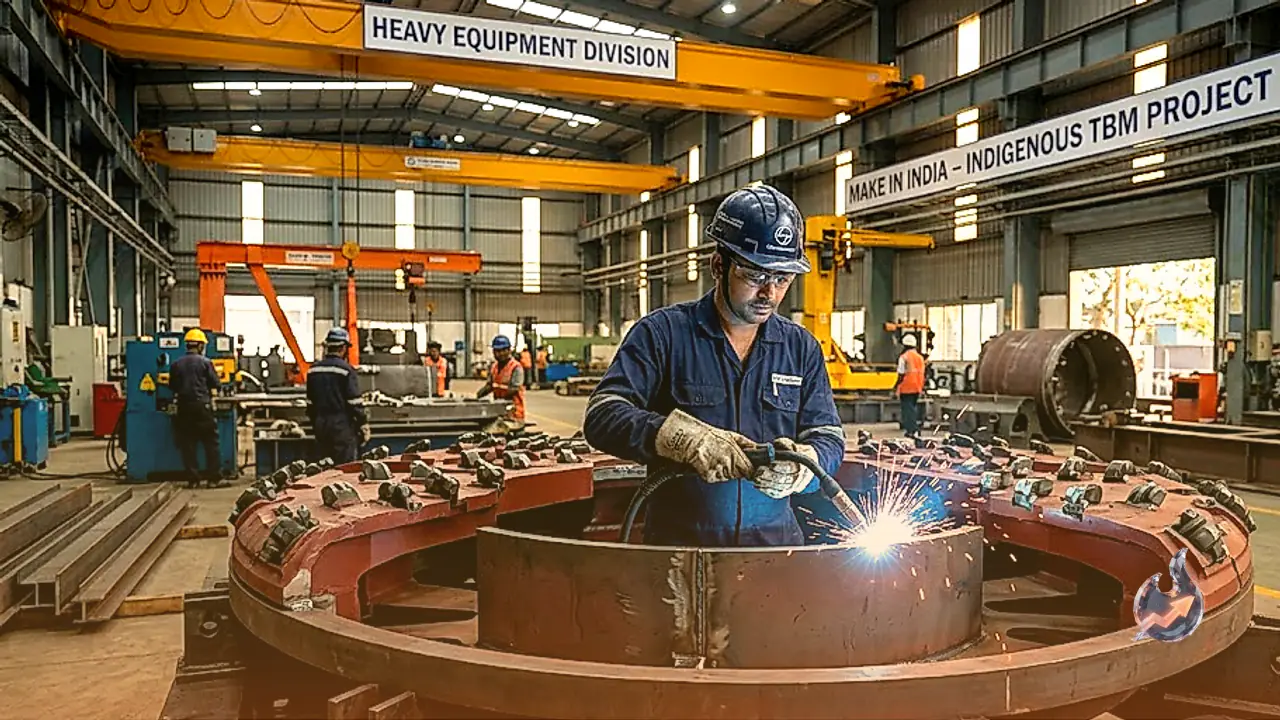
In response to the supply chain vulnerabilities exposed by the TBM delays, the Ministry of Heavy Industries and government planning bodies are designing a dedicated incentive scheme for Heavy Construction and Infrastructure Equipment Manufacturing. Modeled after successful PLI initiatives in electronics and automotive sectors, the proposed policy aims to incentivize domestic production of high-value machinery. The focus encompasses localized assembly of Tunnel Boring Machines, high-capacity excavators, heavy-duty crushers, and advanced rotary drilling systems. Beyond safeguarding national transit and energy infrastructure projects, the strategy seeks to position India as an export base for heavy machinery, providing global contractors with supply chains resilient against single-country manufacturing risks.
Economic Engine: Analyzing India's Construction Equipment Sector Growth
While completed expressways, bridges, and rail lines serve as visible indicators of economic development, the underlying machinery, including heavy cranes, earthmovers, mining extractors, and tunneling shields, constitutes the core engine of industrial expansion. A comprehensive industry report by BCG and CII highlights the rapid trajectory of India's construction equipment ecosystem.
- Accelerating Market Demand: Domestic demand for construction equipment crossed $17 billion in 2025, expanding at a compound annual growth rate of 10% to 12%.
- Expanding Global Footprint: India's share in the global machinery manufacturing market grew from 2.5% to 4%, with projections indicating an increase to 6.5% within the next 5 years.
- Escalating Capital Expenditure: Capital expenditure across the infrastructure and mining sectors is projected to rise from ₹5.5 lakh crore in 2025 to between ₹9 lakh crore and ₹10 lakh crore by 2030.
Mining Expansion And The Demand For Advanced Extraction Technology
India's industrial transition involves significant expansion in energy and mineral extraction, driven by national targets for electric vehicle adoption, renewable solar installations, and advanced electronics assembly. Access to critical minerals, such as lithium, cobalt, and nickel, requires modern deep-mining technologies. According to data from the BCG study, India's combined mining and construction output stands at approximately $430 billion, contributing around 11% to the national Gross Domestic Product (GDP) and supporting over 7 crore livelihoods. As mining operations shift toward automated drilling, heavy crushing, and large-scale material handling, domestic manufacturing of high-capacity excavators and extraction gear becomes essential to maintain industrial autonomy.
Localization Bottlenecks: Addressing High-Value Component Import Reliance
Despite progress in assembling general construction vehicles, India's manufacturing ecosystem faces structural dependencies regarding high-tech components. Currently, overall domestic component localization across construction equipment averages around 50%.
- Reliance on Critical Imports: Key high-value sub-assemblies, including hydraulic pumps, electronic control units, sensors, and specialized undercarriage systems, continue to be imported from foreign markets, particularly China.
- Disparity Across Equipment Types: Standard machinery, such as backhoe loaders (JCBs), achieves high localization levels of 85% to 90%. Conversely, complex heavy excavators and Tunnel Boring Machines remain constrained at 55% to 60% local component integration.
The upcoming government incentive scheme specifically targets this technological gap by providing fiscal support to component suppliers, foundry units, and precision engineering firms. By establishing domestic supply chains for hydraulics, power electronics, and structural alloys, the initiative aims to build a fully self-reliant heavy equipment ecosystem capable of sustaining national development goals without external disruption.