



















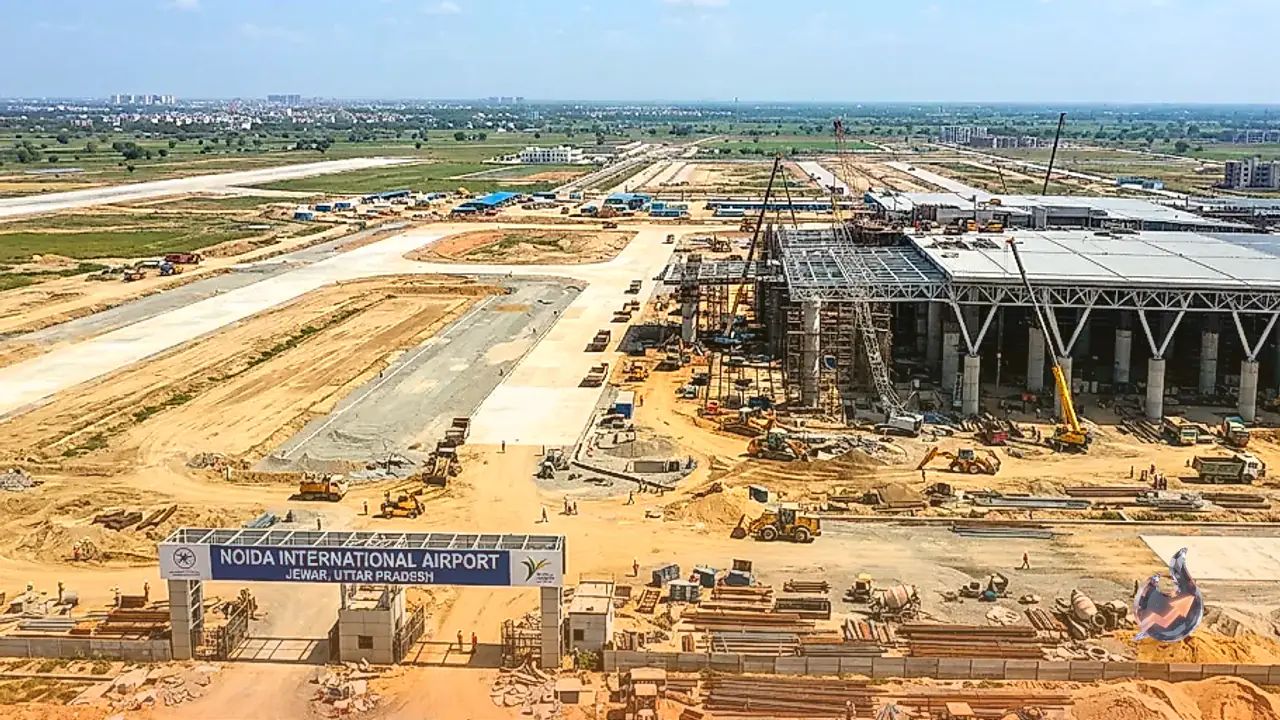

The construction of the international airport at Jewar has dramatically transformed the real estate dynamics of western Uttar Pradesh. What was once seen as an isolated rural stretch along the Yamuna Expressway has evolved into one of the country's most actively monitored property corridors. Institutional developers, commercial enterprises, and retail buyers are increasingly focusing on the region, drawn by commitments to enhanced transport infrastructure, industrial corridors, and fresh employment opportunities. Long before the full completion of the core aviation assets, property valuations across the micro-market experienced sharp upward revisions, turning the belt into a hub for wealth creation.
A Dramatic Five-Year Surge Across Residential Assets
Market assessments covering the period from 2020 to 2025 highlight a steep repricing of both residential plots and multi-storey apartments. In 2020, open residential plots across the Jewar zone traded at an average price of around Rs 3,200 per square foot. By 2025, that benchmark escalated to roughly Rs 9,600 per square foot, registering an overall capital appreciation of nearly 200 percent over the five-year cycle.
Apartment units in the vicinity witnessed a parallel, albeit more measured, upward movement. Average apartment rates stood at approximately Rs 1,100 per square foot in 2020, rising to about Rs 2,500 per square foot by 2025. These figures demonstrate how significant infrastructure commitments often generate substantial capital gains and drive property appreciation well before an urban center reaches full functional maturity.
Windfall Gains for Early Stage Investors
Individuals who committed capital during the project's conceptual and foundational phases have captured the largest share of this land appreciation. Back when initial ground operations were just beginning, early buyers absorbed execution risks that have since translated into substantial balance-sheet gains. Abhishek Raj, Promoter of Jenika Ventures, pointed out that early participants capitalized heavily on the continuous upward revision of benchmark property rates.
To illustrate the scale of this capital growth, consider a 1,000 square foot plot acquired in 2020 at Rs 3,200 per square foot, which required an initial outlay of around Rs 32 lakh. At the 2025 prevailing market estimate of Rs 9,600 per square foot, that identical parcel commands a valuation of roughly Rs 96 lakh. Prior to deductions for taxation, brokerage, and transaction costs, this scenario reflects an estimated gross capital appreciation of Rs 64 lakh. However, realized gains vary widely depending on the legal validity of land titles, plot proximity to key arterial roads, and the exact entry pricing.
The Broader Economic Ecosystem Surrounding Aviation
The impact of this transport hub extends well past passenger boarding gates and runways. The wider district is seeing the development of modern warehousing centers, logistics corridors, hospitality ventures, business parks, and retail avenues designed to serve incoming corporate activity. Improved connectivity through the Yamuna Expressway and associated road networks has lowered travel times between this belt and key business centers in the National Capital Region, making it increasingly viable for enterprise operations.
Commercial flight operations commenced at the facility on June 15, 2026. As business travel gathers momentum, the presence of multinational corporations, domestic enterprises, and service industries will generate structural demand for real estate. This corporate migration will create concurrent needs for commercial office floor space and sustainable residential housing communities for working professionals.
Transitioning from Speculation to End-User Fundamentals
While early speculative participants have largely locked in the initial run-up in land prices, the corridor is now entering a critical consolidation phase. Emphasizing the need for a comprehensive perspective, Abhishek Raj of Jenika Ventures noted,
“The future potential of this region must be assessed on its overall infrastructure and economic growth, not just airport proximity.”The coming cycle will test whether the zone can translate paper wealth into a functional residential and corporate ecosystem.
Sector analysts observe that the Yamuna Expressway market is steadily moving away from purely speculative investor trading toward end-user occupation. The continuous establishment of industrial units, logistics infrastructure, and civic amenities will be pivotal in driving this structural shift. Ultimately, the next leg of sustainable property growth will depend directly on the delivery of reliable public services, job generation within the industrial clusters, and the timely handover of habitable residential developments.