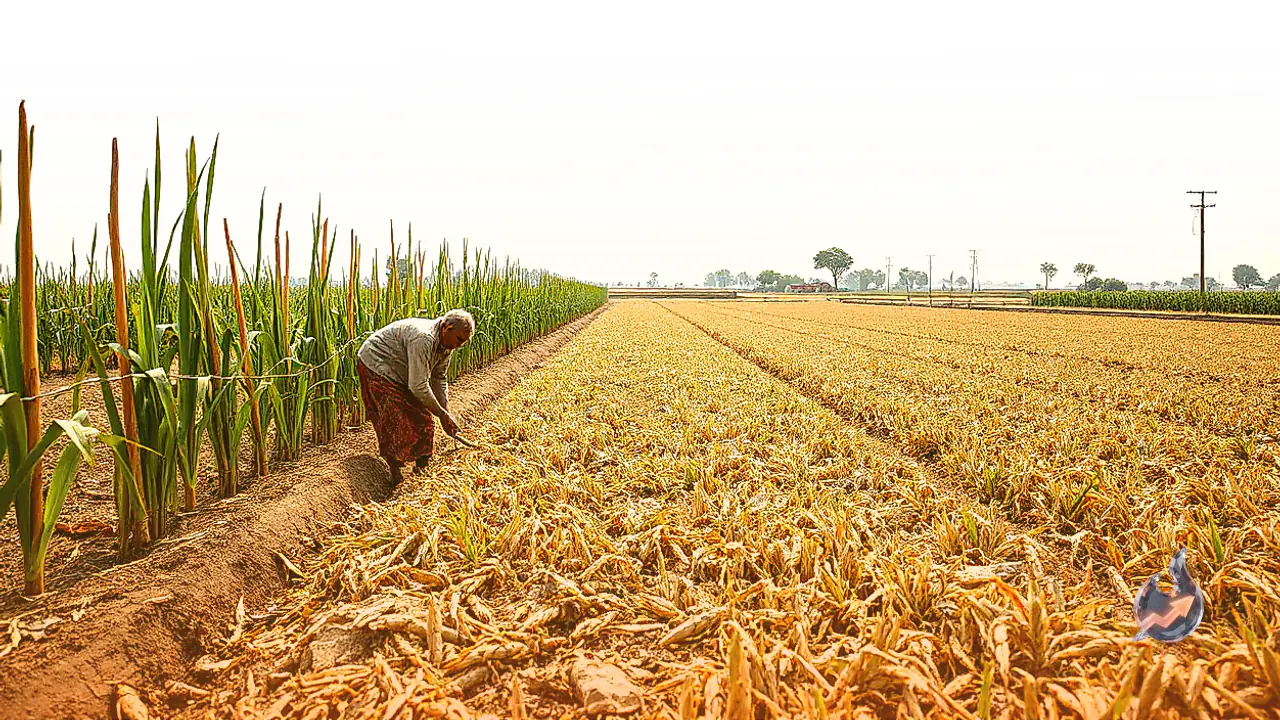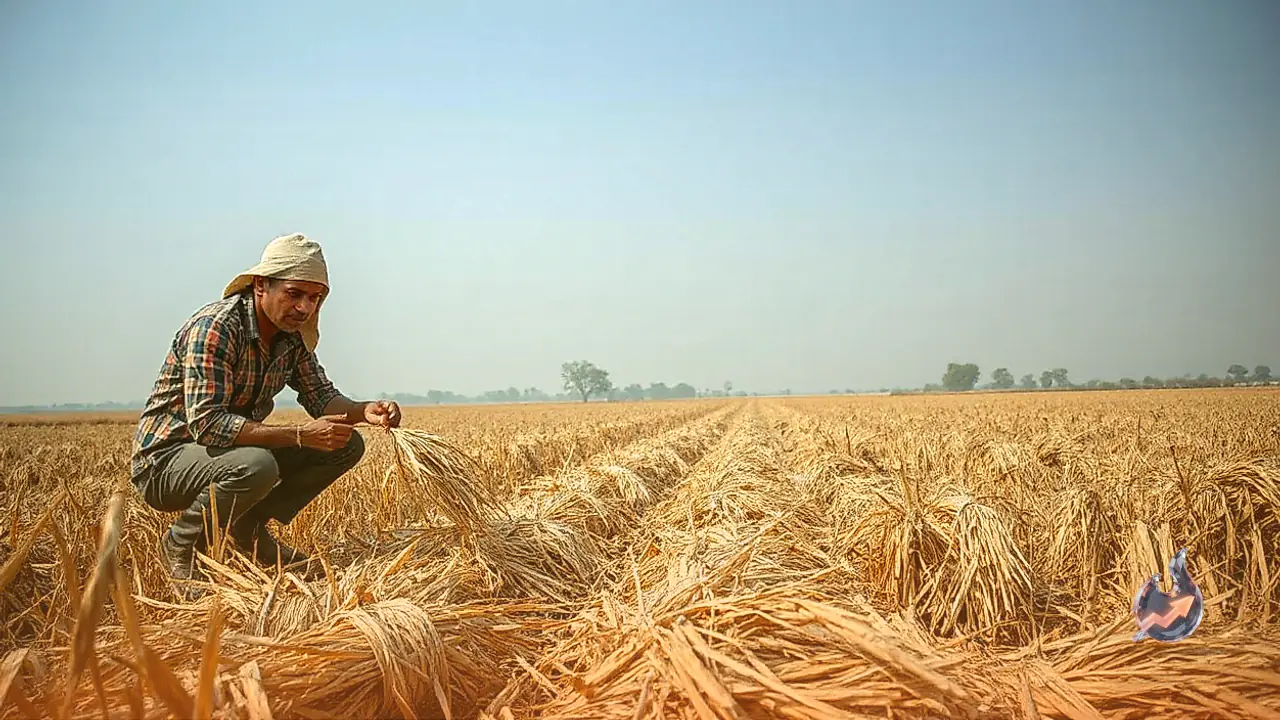






















In Chhattisgarh's Surguja district, farmers concluding their paddy harvest frequently ponder over which subsequent crop will yield the highest financial returns. Once the monsoon departs and winter sets in, agricultural fields naturally tend to remain dry and parched. Consequently, after the paddy is reaped, the land stays entirely vacant. Farmers who wish to cultivate a secondary crop despite lacking adequate irrigation facilities need not worry, as they can successfully farm during the winter without water and secure a dual harvest. In this scenario, nighttime dew droplets act as an effective irrigation tool, making flaxseed an ideal crop that can be grown without watering to generate income. However, exercising proper caution during the process remains equally important.
Leveraging Flaxseed Following the Paddy Harvest
For farmers preparing to plant a second crop in their fields after cutting paddy, flaxseed cultivation can emerge as an excellent option for generating extra income with minimal financial investment. Especially for those cultivators who lack sufficient irrigation resources, flaxseed offers a viable alternative. Agricultural expert Pawan Kumar informed local sources that the flaxseed crop demands very little water. Residual moisture already present in the soil and dew drops falling overnight assist significantly in the overall development of the crop.
Light Tilling and Sowing Seeds After Paddy
According to agricultural experts, farmers can perform light tillage on their fields immediately following the paddy harvest. Deep or intensive tilling using heavy machinery is completely unnecessary here. Once the soil becomes crumbly and loose, flaxseed can be sown directly into the earth. Regarding quantity, roughly 4 to 5 kilograms of seeds are required for one hectare of land. This allows farmers to commence their agricultural work using a minimal amount of seeds.
Dew Drops Help Maintain Soil Moisture
The most distinctive feature of flaxseed cultivation is its remarkably low water requirement. Agricultural expert Pawan Kumar explains that the existing moisture in the soil facilitates the germination of the seeds. Following this, dew drops falling through the night help sustain moisture levels within the crop. This precise factor makes flaxseed farming a highly favorable choice for farmers who do not possess formal irrigation facilities.
Farming Through Organic Manure and Fertilizers
For cultivating flaxseed, farmers can readily utilize organic manures. Cultivators who possess accessible cattle dung manure can apply it directly to their fields. In addition to this, chemical fertilizers can also be used based on specific agricultural requirements. The agricultural expert noted that the agriculture department consistently advises farmers to utilize fertilizers strictly according to the specific testing needs of their soil and crop.
Farmers across multiple regions of the Surguja district actively engage in flaxseed cultivation. The crop is grown extensively in both upland and lowland areas throughout the district. Regions such as Paiga, Asgawa, and Basarpani witness regular farming of this crop. Furthermore, farmers in Darima and its surrounding localities also embrace this traditional harvest. The agriculture department actively provides flaxseed seeds to cultivators and encourages new farmers to adopt this form of agriculture.
Mustard Remains an Option When Irrigation is Available
According to agricultural experts, farmers who possess adequate and reliable irrigation arrangements can alternatively opt for mustard cultivation. However, mustard crops generally demand up to three rounds of irrigation to thrive. In contrast, flaxseed can be grown with remarkably minimal water. Therefore, farmers can choose their specific crops depending strictly on their land characteristics and water availability.
The Need to Promote Traditional Farming Methods
Flaxseed is firmly counted among the traditional crops of the Surguja region. Experts emphasize that this crop has not vanished; rather, numerous farmers across the area continue to cultivate it to this day. The agriculture department also encourages farmers to take up flaxseed through structured seed distribution programs and technical guidance.