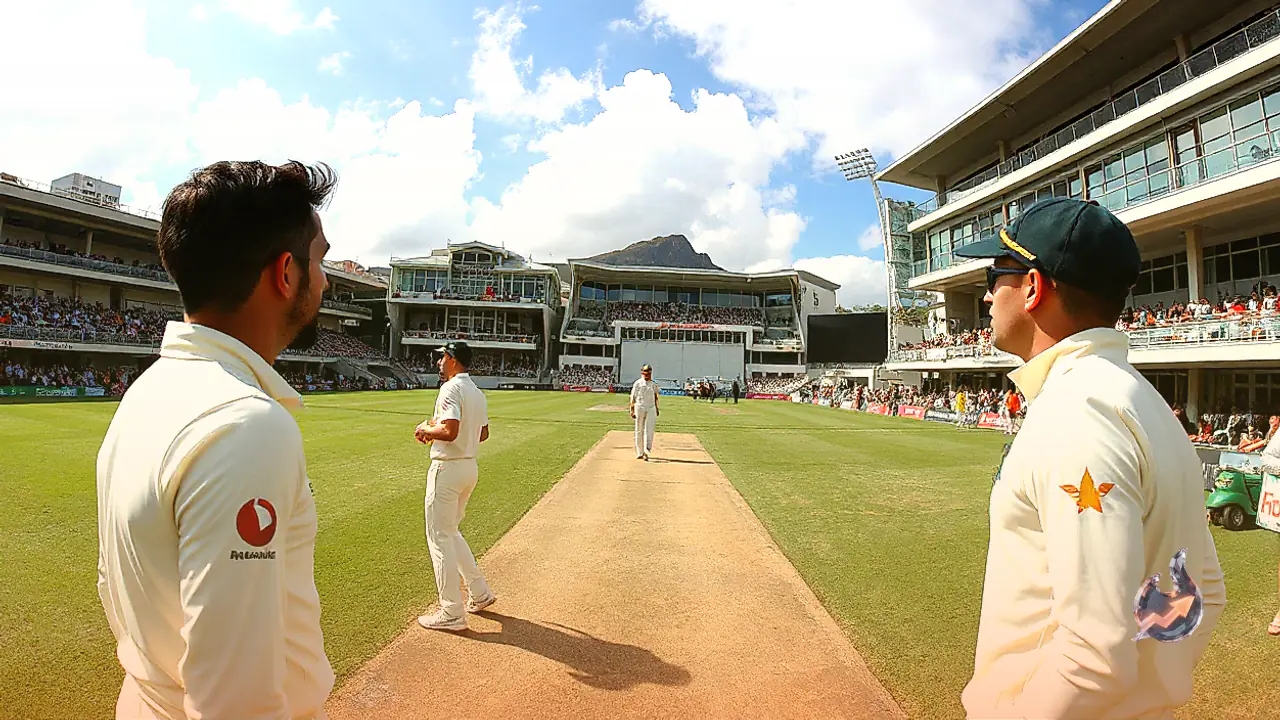

























At the close of the third day’s play in the Galle Test, the entire focus on the field narrows down to two dominant elements, namely the scoreboard and the unpredictable mood of the weather. Looking at the numbers, India holds a lead of 178 runs, but this advantage runs parallel to continuous weather disruptions that have poked into practically every session across the first three days. It is fair to acknowledge that uncertainty in cricket is never restricted to on-field performances alone, as nature itself possesses the capacity to completely overturn a contest.
The Shifting Math of the World Test Championship
Every single fixture carries immense weight in the current World Test Championship cycle as teams battle for a ticket to the ultimate showdown. When India’s opening Test match against Sri Lanka drifts towards a potential washout due to relentless rain, it effectively disrupts the careful planning and mathematical blueprint designed to guide the team to the historic grounds of Lords. Securing victories against sides like Sri Lanka in favourable conditions is widely regarded as the most direct and necessary route to the top of the standings, meaning a drawn fixture completely alters the entire equation.
Decoding the Point System and Heavy Losses
Winning matches holds the highest premium within the World Test Championship points system. According to International Cricket Council regulations, a single Test victory grants a full 12 points to the triumphant side. If the opening fixture is officially declared a washout due to inclement weather, the points are split evenly between the competing nations. In this scenario, both India and Sri Lanka would receive only 4 points each, which directly translates to India losing 8 critical points outright. Because the WTC standings are ultimately determined by points percentage rather than raw totals, failing to secure a win causes India's percentage graph to dip, potentially pushing them behind fierce rivals like Australia or South Africa in the race for the final.
The Risk of Losing a Golden Opportunity
Beginning any series with a resounding victory provides a vital psychological advantage in Test cricket, making the tour of Sri Lanka an ideal and relatively accessible opportunity for India to accumulate valuable points. Across the remaining sessions of the current match, the Indian team will undoubtedly push hard to secure the full quota of 12 points. However, local meteorological forecasts suggest a heavy 70 percent probability of rain, which threatens to impact every remaining phase of play. What was initially perceived as an assured win now turns the subsequent match into a do-or-die encounter, crucial not just for deciding the series outcome but for keeping WTC final aspirations alive.
A Steep Mountain to Climb Ahead
Should the first Test conclude without a definitive result, the road ahead for the Indian squad will become exceptionally arduous and laden with intense pressure. Based on qualification calculations, maintaining a secure position in the race for the final will require India to win at least 7 out of their remaining 8 Test matches under any circumstances. This demanding schedule encompasses not only home fixtures but also fiercely contested overseas series where conditions present severe challenges. Team India no longer possesses any margin for error or the luxury of conceding another draw. While no one can control the elements in cricket, the tangible consequences will inevitably reflect on the points table, making the rain threat in Sri Lanka an alarming wakeup call.