
























A critical installation in Saudi Arabia's energy sector has been singled out in a fresh military assertion emerging from Yemen. The Iran-aligned Houthi faction announced on Tuesday that it launched a ballistic missile toward the Ras Tanura oil refinery, situated in the eastern territory of Saudi Arabia. The facility stands as the largest petroleum processing complex in the kingdom.
Missile Fired at Eastern Province Facility
Houthi military spokesperson Yahya Saree delivered an official statement detailing the missile operation. According to Saree, the ballistic missile was aimed directly at the Ras Tanura facility located in Saudi Arabia's Eastern Province. Saree asserted that the projectile struck its intended target, triggering massive fires across the operational grounds of the installation.
In tandem with the refinery attack, the Houthi movement declared additional operations directed against Saudi military aviation. Saree further stated that Houthi forces successfully checked an advance by Saudi-backed combatants in the vicinity of the Bab el-Mandeb Strait, a vital chokepoint for international commercial shipping traversing the Red Sea.
Civil Defense Alerts and Southern Region Response
Precautionary steps unfolded inside Saudi territory on the same day. The Saudi Civil Defense apparatus broadcast early warning alerts on Tuesday regarding an impending threat across Najran, Abha, and Khamis Mushait. Regional authorities subsequently confirmed that the immediate threat had dissipated, although they withheld technical specifics regarding what had triggered the emergency alert mechanisms.
WTI Crude Reaction and Energy Pricing Drivers
Global energy benchmarks recorded notable movements alongside the unfolding geopolitical developments. West Texas Intermediate (WTI) crude oil slipped 1.25% during the session, trading down to $99.35 per barrel. WTI crude represents an essential grade of petroleum transacted on international commodities exchanges. Alongside Brent and Dubai Crude, WTI forms the primary triad of global crude benchmarks.
WTI is commonly described as 'light' and 'sweet' within commodity circles owing to its low relative density and minimal sulfur content. These intrinsic characteristics establish it as a premium-grade crude oil that refiners can process with notable ease. Extracted within the United States, it moves through the storage and distribution network centered at Cushing, an infrastructure nexus widely regarded as the crossroads of world pipeline systems. Financial reporting routinely references WTI valuations as the core gauge of energy market movements.
Supply, Demand, and Geopolitical Pressures on Oil
The valuation of WTI crude relies fundamentally on the balance between market supply and global consumer demand. Robust international macroeconomic expansion consistently spurs energy consumption, whereas sluggish economic performance dampens requirement levels. Armed conflict, regional instability, and trade sanctions introduce direct vulnerabilities to transport and production, frequently altering price trajectories.
Currency dynamics also exert considerable influence over WTI pricing. Because crude transactions are denominated primarily in US Dollars, a weakening greenback reduces the cost burden for non-dollar purchasers, stimulating commercial interest. Conversely, an appreciating dollar makes oil acquisition costlier for overseas entities, exerting downward pressure on market prices.
Decisions finalized by OPEC (the Organization of the Petroleum Exporting Countries) represent another structural driver of energy markets. Comprising 12 oil-producing states, the body convenes biannual summits to establish collective production quotas for its members. Reductions in these volumetric ceilings curb circulating crude, generally lifting benchmark prices, while decisions to boost output generate the opposite effect. The wider OPEC+ framework incorporates ten additional crude producers, with Russia occupying the leading position among them.
Market participants also monitor weekly commercial petroleum inventories compiled by the American Petroleum Institute (API) alongside the Energy Information Agency (EIA). Declining stockpiles signal rising consumption rates, supporting price increases, whereas inventory builds indicate surplus supply and drag on prices. The API issues its survey every Tuesday, followed by the EIA assessment the subsequent day. Historical correlations show their readings track within 1% of each other 75% of the time, though traders place greater trust in the EIA because of its status as an official government agency.
Foreign Exchange Shifts and Central Bank Decisions
Currency desks mirrored the shifting sentiment seen across commodity venues. The Australian Dollar traded within a defined consolidation pattern for the fourth consecutive session against the US Dollar, managing a fractional gain of 0.11%. Traders maintained cautious positions ahead of the Federal Reserve's looming monetary policy conclusion. An extensive slate of United States economic updates failed to generate momentum, directing focus toward the upcoming Australian Consumer Price Index.
The Australian Bureau of Statistics (ABS) is scheduled to unveil September CPI statistics on Wednesday at 00:30 GMT. Forecasts suggest annual inflation expanded by 4.2%, quickening from the 4% registered in August. The month-over-month inflation figure is anticipated to come in at 0.7%, following a 0.4% outcome in the preceding reporting cycle.
Simultaneously, the USD/JPY currency pair drew buyer interest for the third straight trading day, staging a recovery from a one-month low. The rally developed ahead of Wednesday's FOMC decision and Friday's monetary review by the Bank of Japan (BoJ). Expectations that Japanese monetary authorities will refrain from rapid rate tightening weighed on the Japanese Yen, allowing the US Dollar to climb to a two-week peak and underpin the pair.
Gold bullion advanced to roughly $4,065 during Wednesday's early Asian dealing, gaining support from softer crude prices. Market participants are positioning for guidance from the Federal Reserve's policy deliberations regarding the forthcoming trajectory of United States borrowing costs.
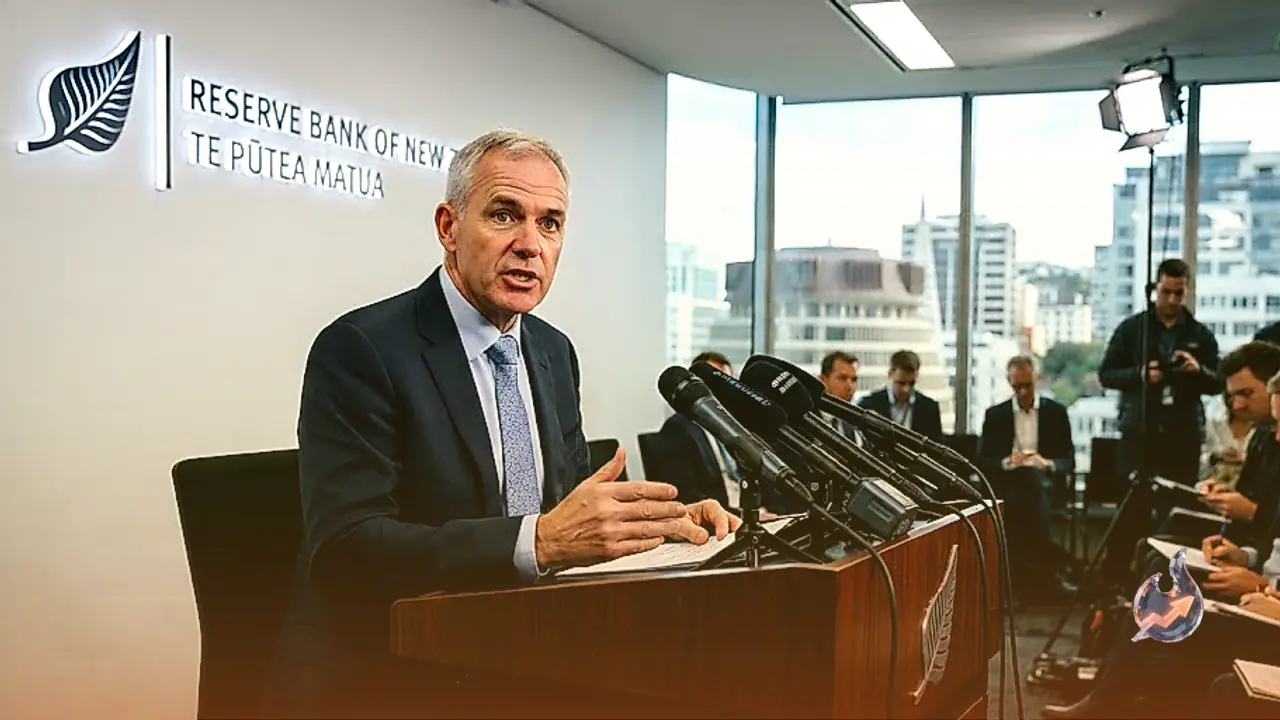
In neighboring monetary developments, the Reserve Bank of New Zealand, under the leadership of Governor Anna Breman, is anticipated to lift its Overnight Cash Rate by 25 basis points on Wednesday, October 28 at 01:00 GMT. The expected move would elevate the policy benchmark from 2.75% to 3%, with financial markets pricing in a 100% certainty for the adjustment. This action would mark the third rate increase overseen by the RBNZ, while money markets assign an approximate 50% probability to a follow-up tightening move in December.