






















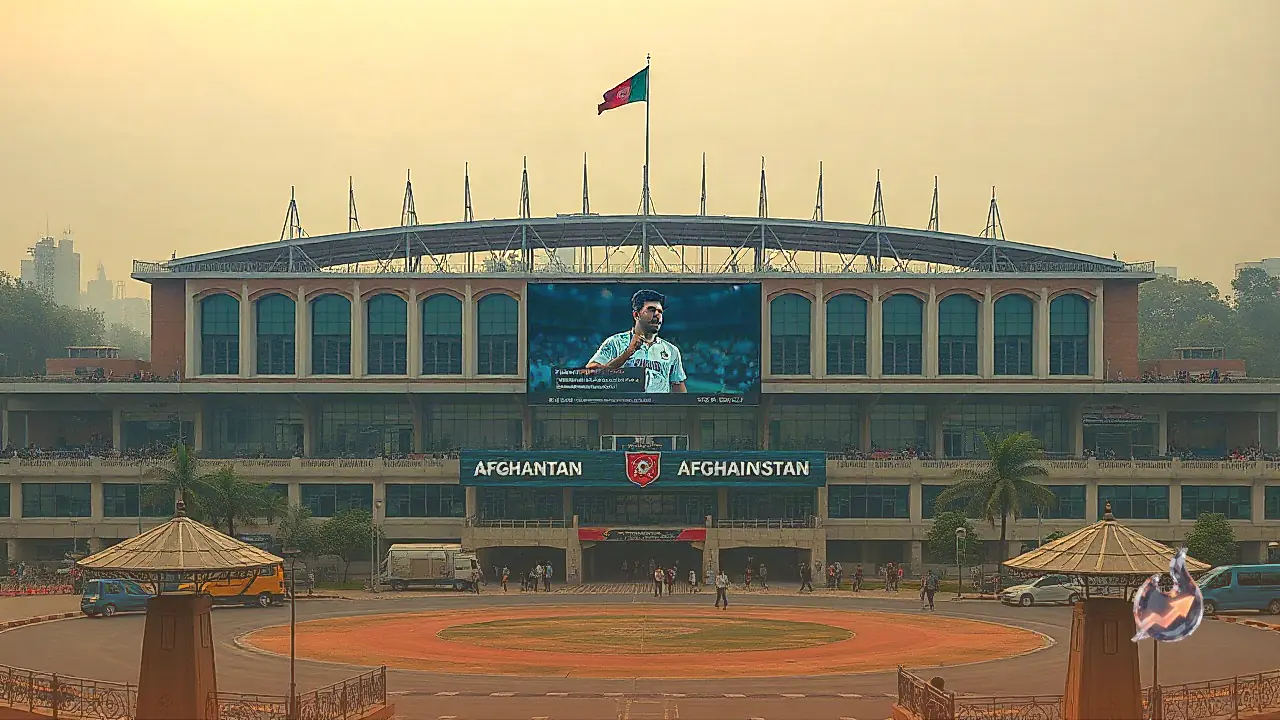

An intriguing financial arrangement has emerged ahead of the bilateral T20 series between India and Afghanistan, scheduled to commence on September 13. Although the matches will be staged at the Arun Jaitley Stadium in New Delhi, the Board of Control for Cricket in India (BCCI) will not cover the venue rental or operational expenses. Instead, adhering strictly to International Cricket Council (ICC) protocols, the Afghanistan Cricket Board (ACB) will fund the entire organization out of its own pocket. While this structure might surprise spectators witnessing an event on Indian soil, it strictly aligns with established global sports governance standards.
ICC Hosting Protocols and Financial Obligations
Understanding the financial structure requires looking at the ICC rules that govern bilateral cricket competitions. On paper and in official record books, the Afghanistan Cricket Board serves as the designated host nation for this series. Because ongoing security concerns and infrastructural limitations render hosting international games inside Afghanistan unfeasible, the board utilizes venues in India as its home ground. Nevertheless, hosting at a neutral or foreign venue does not relieve the official host of its primary financial responsibilities.
According to ICC directives, the board designated as the official host remains legally and financially accountable for covering every operational cost of the tour. Consequently, even though the matches take place in New Delhi, the Afghanistan board must compensate the venue administrators for leasing the Arun Jaitley Stadium and utilizing its matchday facilities.
Breakdown of Expenses: From Venue Rentals to Five-Star Lodging
The financial liabilities assumed by the Afghanistan Cricket Board span across multiple logistical sectors. First and foremost are the stadium lease fees and local operational costs needed to run the venue on match days. In addition, ACB is responsible for footing the bill for five-star hotel accommodations reserved for both participating squads, coaching staff, and support personnel throughout the tournament window.
Comprehensive security provisions, ground transportation, and local travel logistics for players and official delegations also fall under ACB's budgetary obligations. Furthermore, the daily allowances, professional fees, and travel requirements for ICC match referees, on-field umpires, and official match adjudicators must be fully settled by the Afghan administration. Thus, hosting in India creates zero direct operational expenses for the Indian board.
BCCI's Role as Facilitator and Administrative Mediator
While the BCCI maintains total financial neutrality regarding venue expenses, it plays a vital facilitating role behind the scenes. Leveraging its extensive administrative reach and organizational experience, the Indian board assists the ACB in navigating local logistics smoothly. It acts as an intermediary between the Afghan board, regional state bodies like the Delhi District Cricket Association (DDCA), and local government authorities to eliminate operational bottlenecks.
Historically, the Indian board has acted as a supportive mentor in fostering cricket's growth in Afghanistan, previously designating Indian venues such as Greater Noida and Dehradun as home grounds for the Afghan national squad. For the upcoming September series, BCCI continues this administrative assistance, ensuring that the Afghan administration encounters no legal, logistical, or procedural hurdles while executing the event.
Balancing Professional Governance with Cricket Diplomacy
Competitions between India and Afghanistan have long been celebrated for their competitive intensity and strong mutual camaraderie. However, the operational arrangement for this upcoming series underlines how professional sports governance prioritizes regulatory compliance and fiscal accountability over sentiment. Regardless of friendly relations between member boards, financial protocols dictate that official hosting rights carry full financial accountability.
For cricket enthusiasts, these behind-the-scenes administrative details will take a back seat once action begins on September 13. Fans at the Arun Jaitley Stadium can look forward to an engaging, highly competitive bilateral series played in true sportsmanship on Indian soil.