



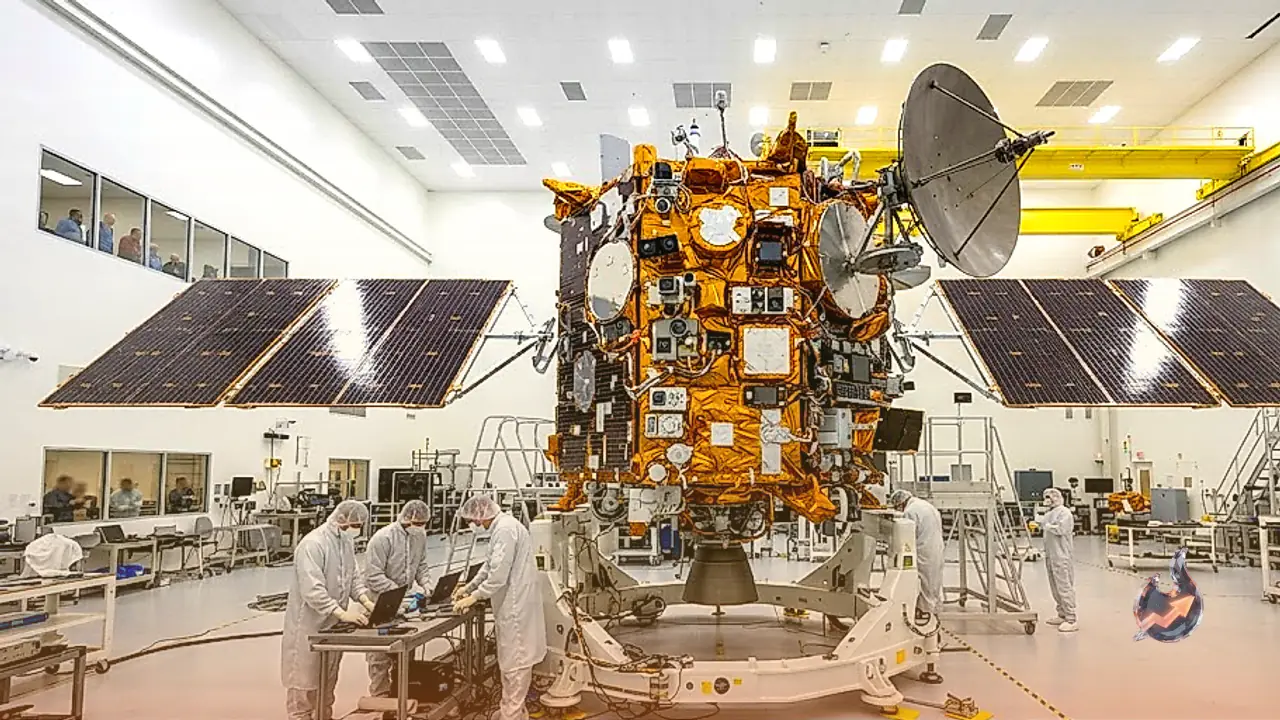


















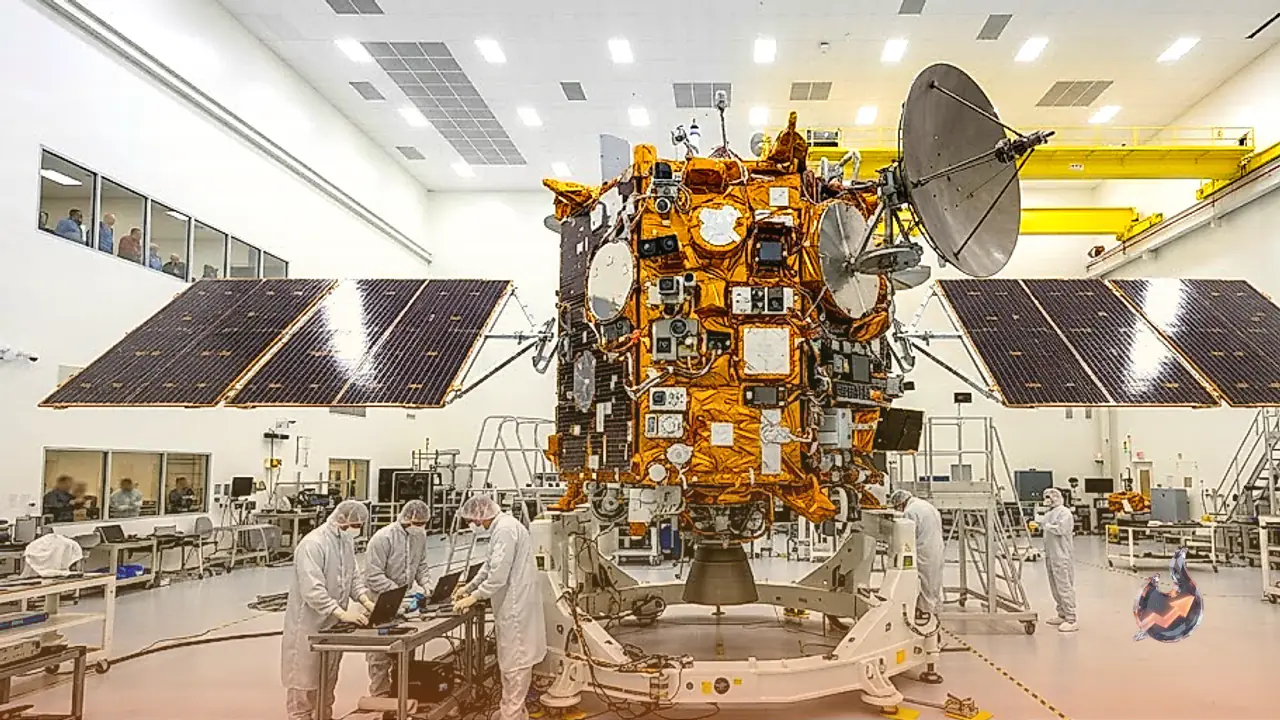

Orbiting high above the dusty red expanse of Mars, NASA's two oldest active spacecraft—2001 Mars Odyssey and the Mars Reconnaissance Orbiter (MRO)—have been conducting observations for far longer than anyone originally anticipated. Designed initially for primary missions lasting just a few years, these veteran orbiters have spent decades revolutionizing humanity's understanding of the Red Planet's hydrologic history, both past and present. Keeping these aging machines functioning in deep space has required a combination of exceptional engineering foresight, inventive troubleshooting, and a necessary measure of luck. Yet, as these orbital workhorses continue to age, planetary scientists are beginning to worry whether Odyssey and MRO represent the final chapter of NASA's flagship-class Mars orbiters.
Decades in Orbit: How Two Missions Rewrote Mars Science
Briony Horgan, a planetary scientist at Purdue University who is not directly involved with either mission, emphasizes that both spacecraft have been fundamental pillars of NASA’s broader Mars exploration roadmap. According to Briony Horgan, "Both Odyssey and MRO are some of the most productive spacecraft that have ever existed." Odyssey's long-term mapping of subsurface ice distribution and MRO's high-resolution tracking of surface features changing across seasons have together transformed Mars from a static, inert ball of rock into a dynamic and active planetary body.
Beyond their direct scientific discoveries, Odyssey and MRO perform an essential infrastructure role for surface exploration. Neither NASA's Curiosity nor Perseverance rovers possess large enough transmitters to send high-volume data streams directly back to Earth across tens of millions of miles. Instead, these rovers transmit their daily findings, photos, and drill telemetry up to Odyssey or MRO as they pass overhead. The orbiters then relay this critical information to the Deep Space Network on Earth. Without these orbiting communication hubs, surface operations on Mars would slow down dramatically.
Navigating the Harsh Reality of Deep Space Operations
Operating a spacecraft in the deep space environment presents relentless technical hazards. Spacecraft hardware is constantly bombarded by high-energy cosmic rays and solar radiation. A single energetic particle hitting a sensitive microchip can cause catastrophic short circuits or corrupt flight computers. While satellites in Low Earth Orbit can be continuously monitored and patched in real-time by ground control, communicating with Mars involves severe bandwidth constraints and signal delays. Rob Lillis, a planetary space physicist at the University of California, Berkeley, who leads new Mars orbital projects, notes that scientific spacecraft around Mars may only establish full contact with Earth ground teams once or twice a week.
Because of these operational boundaries, Rob Lillis stresses that "A Mars craft has to be able to manage by itself." While losing an individual scientific sensor diminishes research capability, losing a central power bus or command computer can permanently kill a mission. To safeguard against total failure, NASA builds deep hardware redundancy into its flagship orbiters. Vital sub-systems feature backup hardware that can automatically engage if the primary unit malfunctions, allowing ground crews time to diagnose and resolve software or hardware anomalies remotely.
Overcoming Space Anomalies: Star Maps and Fuel Management
The sheer longevity of Odyssey and MRO has presented mission controllers with challenges that were never anticipated during initial development. MRO relies on automated star trackers—onboard cameras that capture images of space and cross-reference them against an internal star catalog to establish the orbiter's precise orientation. However, last year, engineers encountered a rare issue. Paul Fieseler, chief engineer for MRO at NASA’s Jet Propulsion Laboratory (JPL), explained that MRO has remained in orbit long enough for proper motion to shift certain reference stars slightly across the night sky. These tiny positional shifts began causing orientation errors, prompting engineers to upload a completely updated stellar map to MRO’s flight computer.
Meanwhile, 2001 Mars Odyssey faces an existential hurdle: depletion of its hydrazine propellant, which is used by small attitude-control thrusters to keep its solar arrays facing the Sun and antennas pointed toward Earth. In microgravity, liquid fuel floats inside tanks rather than settling at the bottom, making it impossible to install a traditional fuel gauge. NASA cannot measure exact remaining propellant volume. To stretch the mission's remaining life, JPL project and mission manager Glen Havens and his team developed novel flight techniques that execute orbital maintenance maneuvers using micro-bursts of fuel, operating the spacecraft on just drops at a time.
Crucial Lessons from the 1999 Mars Mission Failures
Aerospace experts point out that the durability of Odyssey and MRO stems directly from painful lessons learned during NASA's infamous "faster, better, cheaper" push of the late 1990s. In 1999, NASA suffered back-to-back catastrophic losses at Mars. First, the Mars Climate Orbiter was lost when it entered the Martian atmosphere too low and burned up, an accident traced to a unit conversion failure between metric units (newtons) used by the flight software and imperial units (pound-force) used by the ground team. Months later, the Mars Polar Lander crashed onto the surface after a sensor fault prematurely shut off its descent engines during landing.
Investigations revealed that both crashes were preventable errors resulting from compressed schedules and inadequate pre-flight testing. Glen Havens noted that those twin disasters weighed heavily on the minds of the engineering teams building Odyssey and MRO. In response, NASA invested heavily in rigorous testing of every component and built substantial safety cushions, known as "margins," directly into the spacecraft designs. Nilton Renno, a spaceflight engineer at the University of Michigan, points out that "Unexpected things might happen, and you want to make sure the spacecraft will survive." MRO was launched carrying oversized batteries and extra propellant reserves, margins that now allow NASA to project another decade of operations.
Looking Ahead: Commercial Relays and the Future of Mars Exploration
Despite their endurance, space operations remain inherently unpredictable. Last year, NASA suddenly lost contact with the 11-year-old MAVEN (Mars Atmosphere and Volatile Evolution) orbiter after an unexpected power failure on the far side of Mars. As Odyssey and MRO grow older, planetary scientists express deep concern about what will replace them. NASA has contracted commercial space firm Blue Origin to develop a dedicated orbital communication satellite designed for a five-year mission. However, unlike Odyssey and MRO, which were primary science missions that took on communication duties later, this commercial spacecraft will strictly relay data without carrying scientific instruments.
Furthermore, upcoming NASA science missions to Mars feature significantly smaller scale and scope. The EscaPADE mission, led by Rob Lillis, consists of two small orbiters designed to measure solar wind interaction with Mars' upper atmosphere, though Lillis acknowledges the mission sits right on the threshold of being too small for comprehensive science. Similarly, the proposed Skyfall mission aims to deploy three small helicopters via a nuclear-propelled transport vehicle within two years on an aggressive timetable, but with very limited payload capacity for deep research. Briony Horgan cautions that as NASA pushes toward lower-cost models again, "It’s going to be a lot more challenging to do good science in that environment."