



















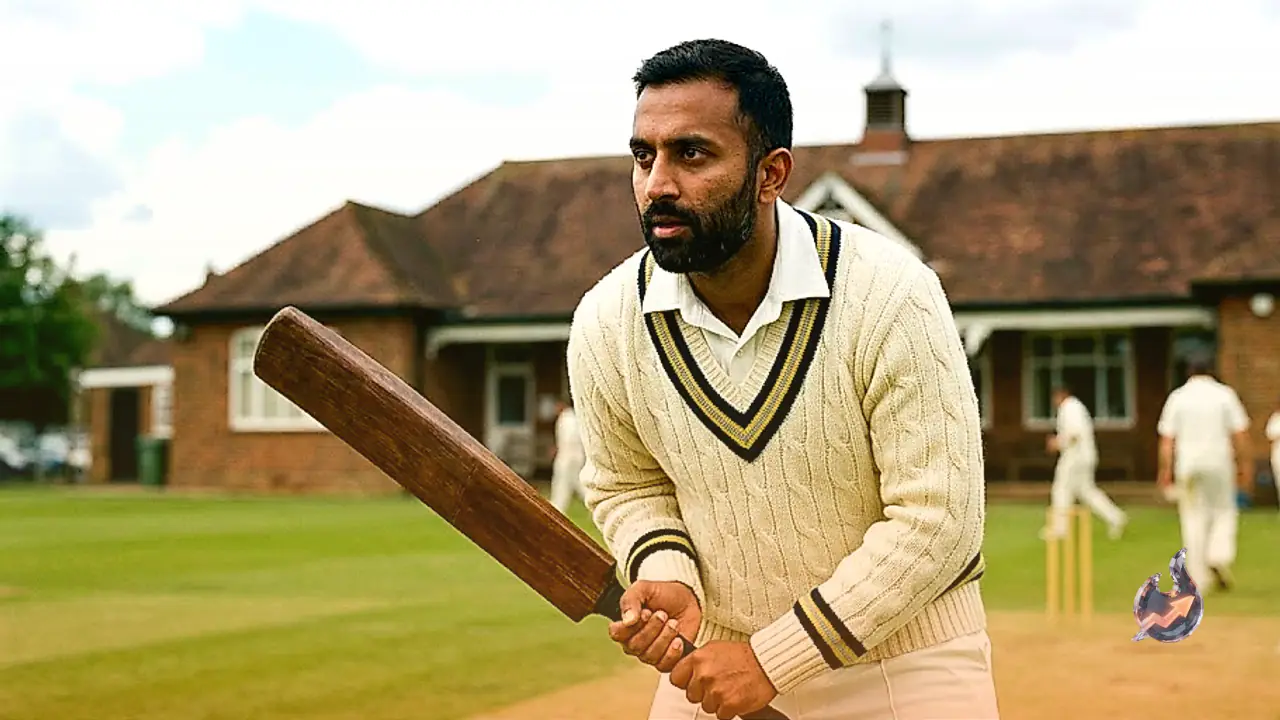

When examining the origins of Indian cricket and the rich history preceding independence, several iconic figures stand out for shaping the sport. While India officially played its first Test match on a tour of England in 1948, the country's representative teams had been active since 1932, and even before that, a pioneering Indian was already conquering English pitches. This is the remarkable story of Maharaja Kumar Ranjit Singh, widely regarded as the patriarch of Indian cricket, whom the British once fiercely vied to include in their own squad. His legacy remains immortalized through India's premier domestic competition, the Ranji Trophy.
Royal Origins and Early Life in India
Before India gained independence, cricket within the subcontinent was largely confined to royal families, nawabs, and aristocrats. Among them was Maharaja Kumar Ranjit Singh of Jamnagar, born on September 10, 1872, in the village of Sarodar in Kathiawar, Gujarat. Had he been alive today, he would have celebrated his 154th birthday. In an era when sending royal offspring to England for higher education was a standard tradition, Ranjit Singh was sent abroad at the tender age of 16 to pursue his studies.
Transition from Student to Cricket Star in England
Upon arriving in England, Ranjit Singh naturally gravitated toward cricket during his school and college years, honing his skills on British grounds. Although his parents named him Ranjit Singh, he earned distinctive nicknames such as Ranji and Smith among his peers in England. Through sheer talent and consistent performances, he eventually earned his stripes and played his debut Test match for England against Australia at the historic Old Trafford ground in Manchester.
Selection Controversy and Triumphant Debut
Despite being of Indian origin, Ranjit Singh was selected to represent the England team in 1896, making him the first cricketer of Asian descent to play at the international level for England. His selection sparked intense controversy at the time. Lord Harris, the chairman of the Marylebone Cricket Club, infamously argued that while Ranjit belonged to a royal family, he remained a subject under British rule, questioning how he could be picked for the English side and why Englishmen should field for a so-called dark-skinned player. Silencing all critics with his bat, Ranjit Singh justified his inclusion by scoring a brilliant 62 and a magnificent 154* in his very first Test match. He thus became the first cricketer in history to score a half-century in the first innings and a century in the second innings on a Test debut.
The Battle to Play Ranji and Stellar Career Records
The following year, during England's tour of Australia in 1897, Ranjit Singh batted at number seven in the first Test held in Sydney and hammered a stellar 175 runs. Remarkably, he was feeling unwell and weak before the match, yet the English team management refused to leave him out of the playing eleven. Over the course of his 15-test career, Ranji accumulated 989 runs at an impressive average of 44.95. Furthermore, his legendary status is cemented by his phenomenal first-class record of 307 matches, in which he amassed 72 centuries and 109 half-centuries.
Returning to India in 1904, Ranjit Singh was crowned the Maharaja of Nawanagar in 1907. He passed away at the age of 60 on April 2, 1933, in Jamnagar. To honor his monumental contribution to the sport, India launched the prestigious Ranji Trophy in 1934. Additionally, Ranji authored The Jubilee Book of Cricket in 1897, which is widely considered one of the finest books ever written on the sport. His nephew, Duleep Singh, also played Test cricket for England, inspiring the creation of the national Duleep Trophy in his honor.